Geely launches 2,250 kW chargers
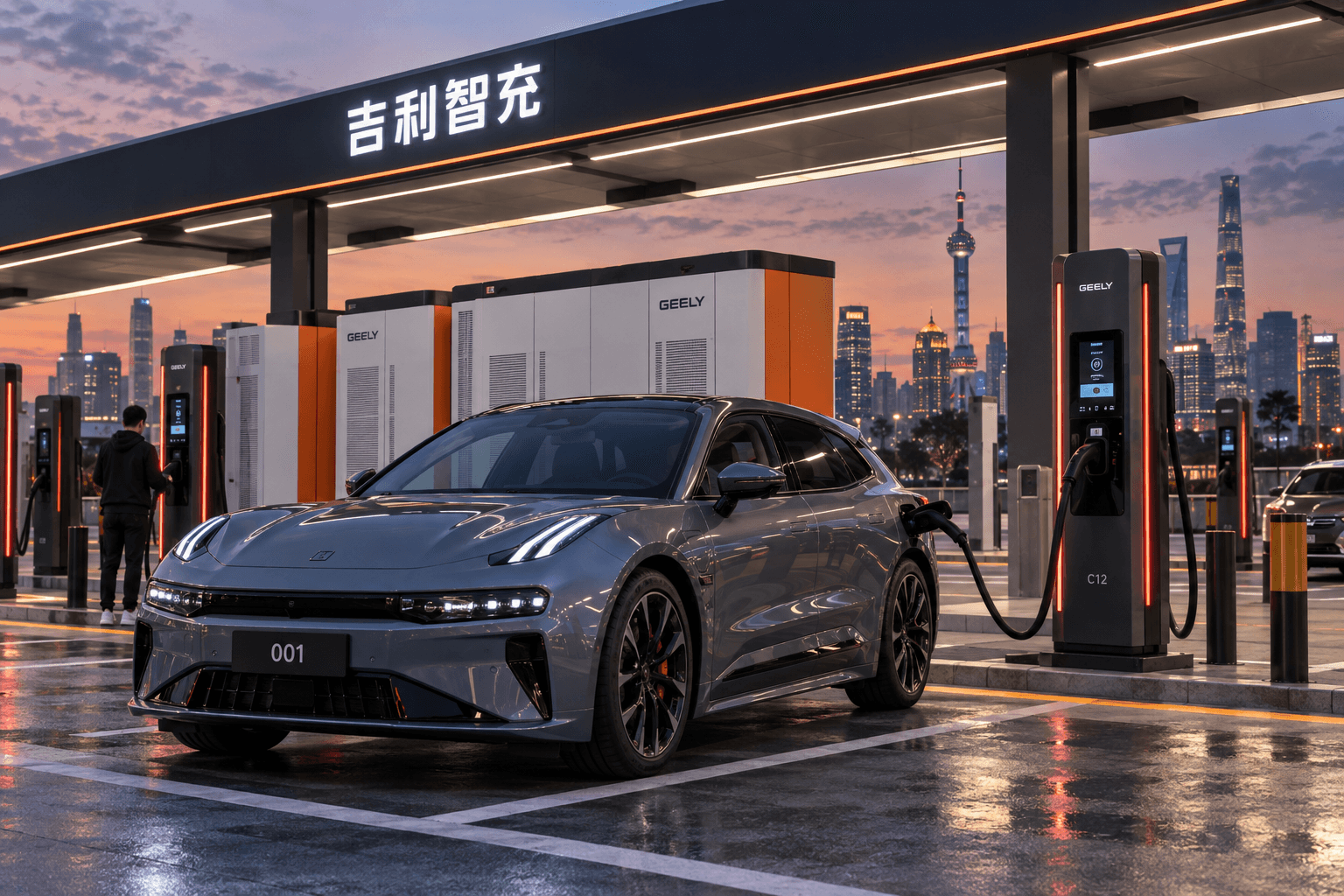
Geely is intensifying the race for ever-shorter charging times. The group has commissioned its first Smart Charging C12 stations in Hangzhou, Shanghai, Ningbo, Jiaxing and Xi’an. Each charging connector is technically designed for a peak output of 2,250 kW.
Among other things, Geely is responding to the rapid expansion of particularly high-powered Chinese charging networks. For example, BYD is planning a 1,500 kW charging network with thousands of locations. Such figures still seem a long way off in Europe, but they show where battery platforms and charging infrastructure are heading.
Zeekr 001 currently charges at up to 1,100 kW
No production model can yet take advantage of the new chargers’ full output. However, the electric Zeekr 001 shooting brake and Lynk & Co 10 sedan are already expected to reach peak rates of up to 1,100 kW. According to Geely, both vehicles support a maximum charging rate of 12C.
| Metric | Figure |
|---|---|
| Maximum output per connector | 2,250 kW |
| Maximum voltage | 1,500 V |
| Maximum current | 1,500 A |
| Current peak vehicle charging rate | up to 1,100 kW |
| Charging time from 10% to 70% | 4 minutes 30 seconds |
| Charging time from 10% to 97% | 8 minutes 40 seconds |
Put simply, a charging rate of 12C means that the charging power is theoretically twelve times the battery capacity. For a 95 kWh battery, that would be around 1,140 kW. However, this level is only maintained briefly, as battery temperature, state of charge and cell voltage determine the shape of the charging curve.
AI to keep battery temperature under control
At charging rates above one megawatt, thermal management becomes critical. Geely is therefore using an algorithm designed to predict temperature changes within the battery around 30 seconds in advance and dynamically adjust the power. The maximum battery temperature is intended to remain below 65°C.
The manufacturer claims that this control system will extend battery life by more than 20%. So far, this figure is a manufacturer forecast rather than an independently verified long-term result. The key questions will be how often drivers use such extreme charging rates and how much the power needs to be limited under real-world conditions.
Peak output alone is not enough: only a stable charging curve can turn 2,250 kW into genuine time savings.
1,000-volt platform to unlock the potential
Geely is working on a new 1,000-volt vehicle architecture that could allow future models to come much closer to the chargers’ maximum output. The goal is to achieve charging times of less than five and a half minutes from 10% to 80%. For comparison, today’s 800-volt electric cars already charge noticeably faster than many vehicles using conventional 400-volt technology, but they remain far below the peak figures announced here.
Charging technology is also developing rapidly within the group. The Zeekr 7X already uses a 900-volt architecture. The new C12 stations now provide the infrastructure for the next generation of particularly fast-charging models.
15,000 stations planned by 2027
Geely plans to expand the network in China to 15,000 stations with a total of 50,000 charging connectors by 2027. That would average just over three connectors per location. It remains to be seen whether the schedule, grid connections and availability of compatible vehicles will allow expansion at this pace.
Comparable stations are unlikely to arrive in Germany, Austria and Switzerland in the near future. Megawatt-level charging places heavy demands on grid connections, cooling, cables and site technology. Nevertheless, the development is likely to influence the European market as well, since Geely already sells vehicles from its Volvo, Polestar, Zeekr and Lynk & Co brands there.
In everyday use, the theoretical maximum of 2,250 kW is unlikely to be the most important factor initially. Broad vehicle compatibility, reliably high average charging rates and a sufficient number of charging points matter more. If Geely can deliver this combination, charging stops for compatible vehicles could indeed take little longer than a short break.