Toyota Plans to Enter the Range-Extender Market
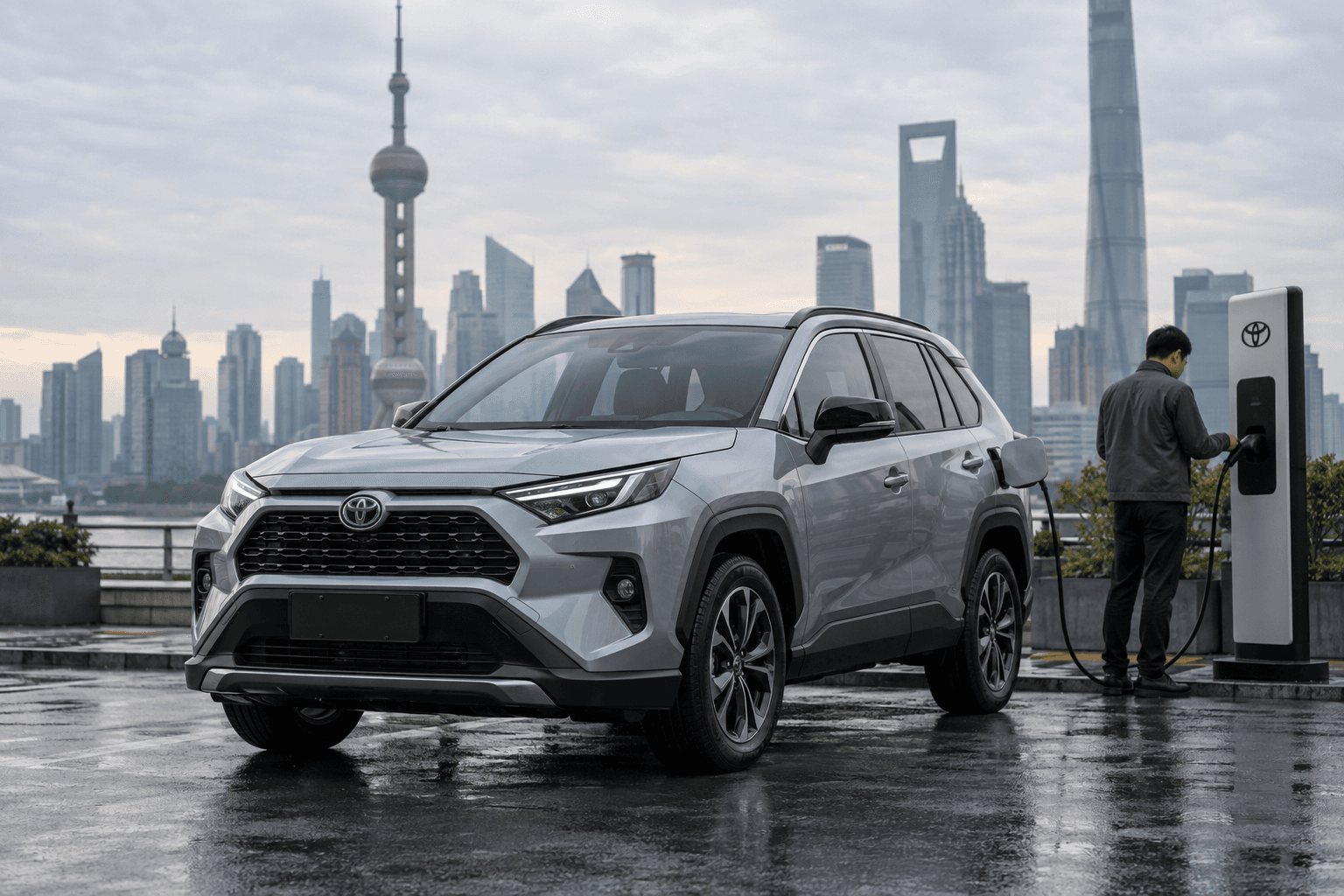
Toyota apparently plans to expand its electrified lineup with range-extended vehicles. According to an industry report, the first model of this kind is set to be produced and sold in China in 2027. However, official confirmation of the model name and technical specifications is still pending.
The move fits Toyota’s technology-neutral strategy. Alongside conventional full hybrids and plug-in hybrids, the manufacturer is expanding its range of all-electric vehicles. An electric Toyota Corolla is also under consideration for the next model generation.
How a Range Extender Works
In a range-extended electric vehicle, the electric motor generally drives the wheels. An additional internal combustion engine acts as a generator, producing electricity when the battery’s state of charge falls. This allows the vehicle to travel longer distances without having to stop at a charging station immediately.
A range extender combines the driving experience of an electric powertrain with an additional energy source for long journeys.
This distinguishes the concept from many plug-in hybrids, in which the internal combustion engine may also be mechanically connected to the wheels. The exact architecture of the planned Toyota model is still unknown. The key questions will be whether the combustion engine generates electricity exclusively and how large the battery and fuel tank will be, as well as how much electric range the vehicle will offer.
| Powertrain concept | How the wheels are driven | Energy supply |
|---|---|---|
| Electric vehicle | Electric motor | Battery and power grid |
| Range extender | Usually an electric motor | Battery, power grid and generator |
| Plug-in hybrid | Electric motor and usually a combustion engine | Battery, power grid and fuel |
| Full hybrid | Electric motor and combustion engine | Fuel and regenerative braking |
China Makes the Concept Attractive to Toyota
Range extenders are particularly popular in China for large sedans and SUVs. They enable electric driving in everyday use while reducing reliance on charging infrastructure during long journeys. Models such as the announced Xpeng L05 with an EREV powertrain demonstrate how firmly Chinese manufacturers have established themselves in this segment.
For Toyota, there is also a regulatory factor. Conventional full hybrids are not automatically classified as New Energy Vehicles in China and therefore do not benefit to the same extent from incentives for electrified vehicles. An externally rechargeable range-extended vehicle may be classified differently if it meets the relevant requirements.
At the same time, the competitive landscape is changing rapidly. Chinese buyers expect modern software, long electric ranges, short charging times and competitive prices. Toyota therefore needs to offer not just a new powertrain variant, but a compelling overall technical package.
Potential Benefits in Everyday Use
A range extender is particularly appealing to drivers who can charge during everyday use but regularly travel very long distances. Battery charged → most daily journeys can be completed entirely on electric power. The generator only starts on longer trips, supplying the powertrain with additional energy.
Advantages
- Electric drive and immediate power delivery
- Less reliance on charging stations during long journeys
- A smaller battery may be possible than in some long-range electric vehicles
Disadvantages
- Additional weight and greater technical complexity
- Fuel consumption, local emissions and engine noise while the generator is running
- Efficiency benefits depend heavily on regular charging
Models such as the Xiaomi SkyNomad with a range extender illustrate how the technology is increasingly being positioned as a distinct solution between plug-in hybrids and all-electric vehicles. However, it is not a substitute for consistent charging. Drivers who mainly operate the vehicle with the generator running sacrifice much of its efficiency advantage.
A European Launch Remains Uncertain
So far, the reported start of production applies only to China. It is not known whether Toyota will later bring a range-extended model to Germany, Austria or Switzerland. In Europe, the price, electric range and real-world CO2 footprint would need to be particularly compelling.
Nevertheless, Toyota’s planned entry into the segment makes strategic sense. The manufacturer is complementing its hybrid expertise with a concept that is already in strong demand in China. Whether it will also succeed outside China will ultimately depend less on the generator than on the battery, charging performance, software and overall price.