AI charging assistant provides help directly at EnBW charging stations
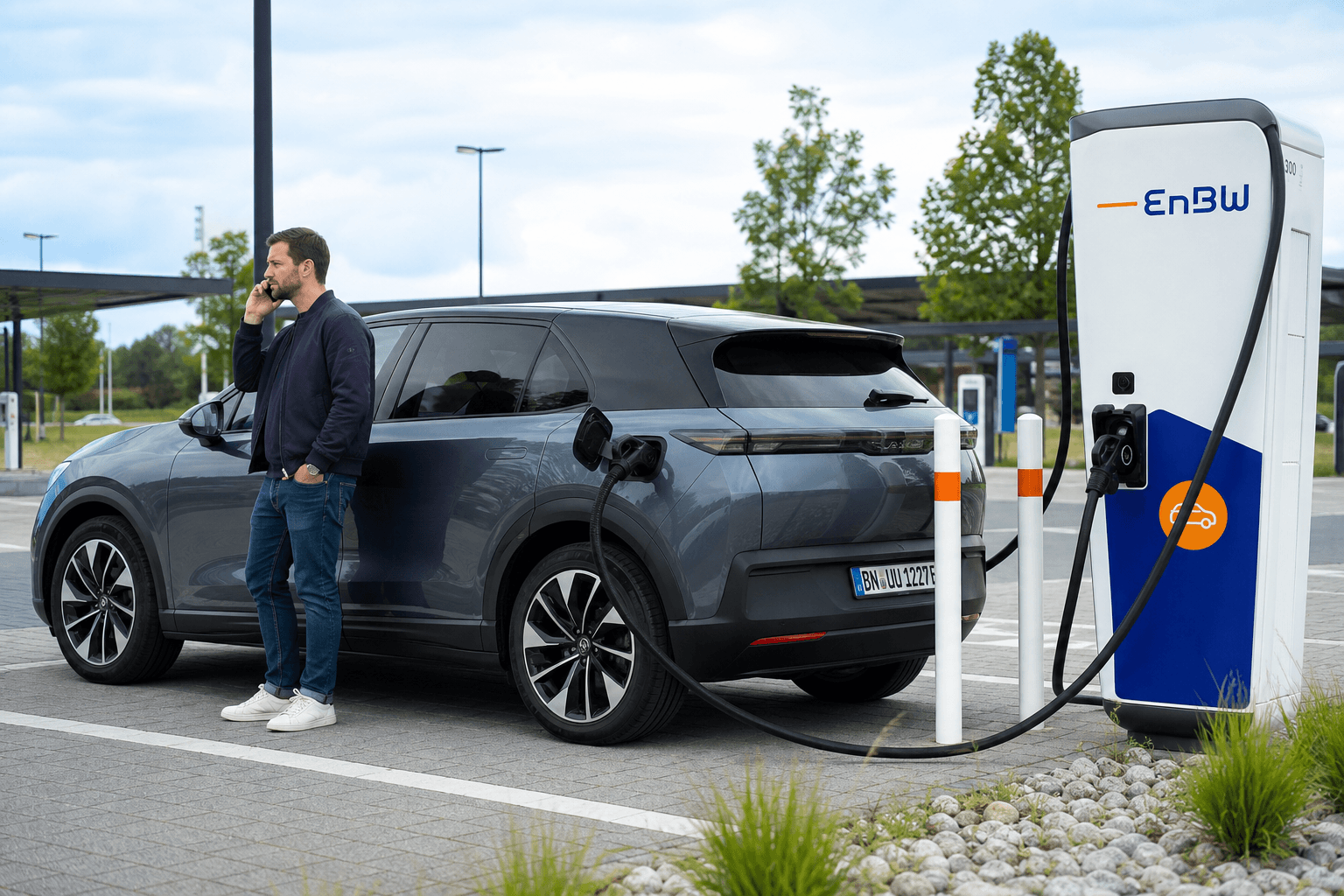
A charging point is not recognized, the app is not working, or the charging session will not start: EnBW aims to resolve such situations more quickly in the future. To do so, the operator is adding an AI charging assistant to its technical phone support.
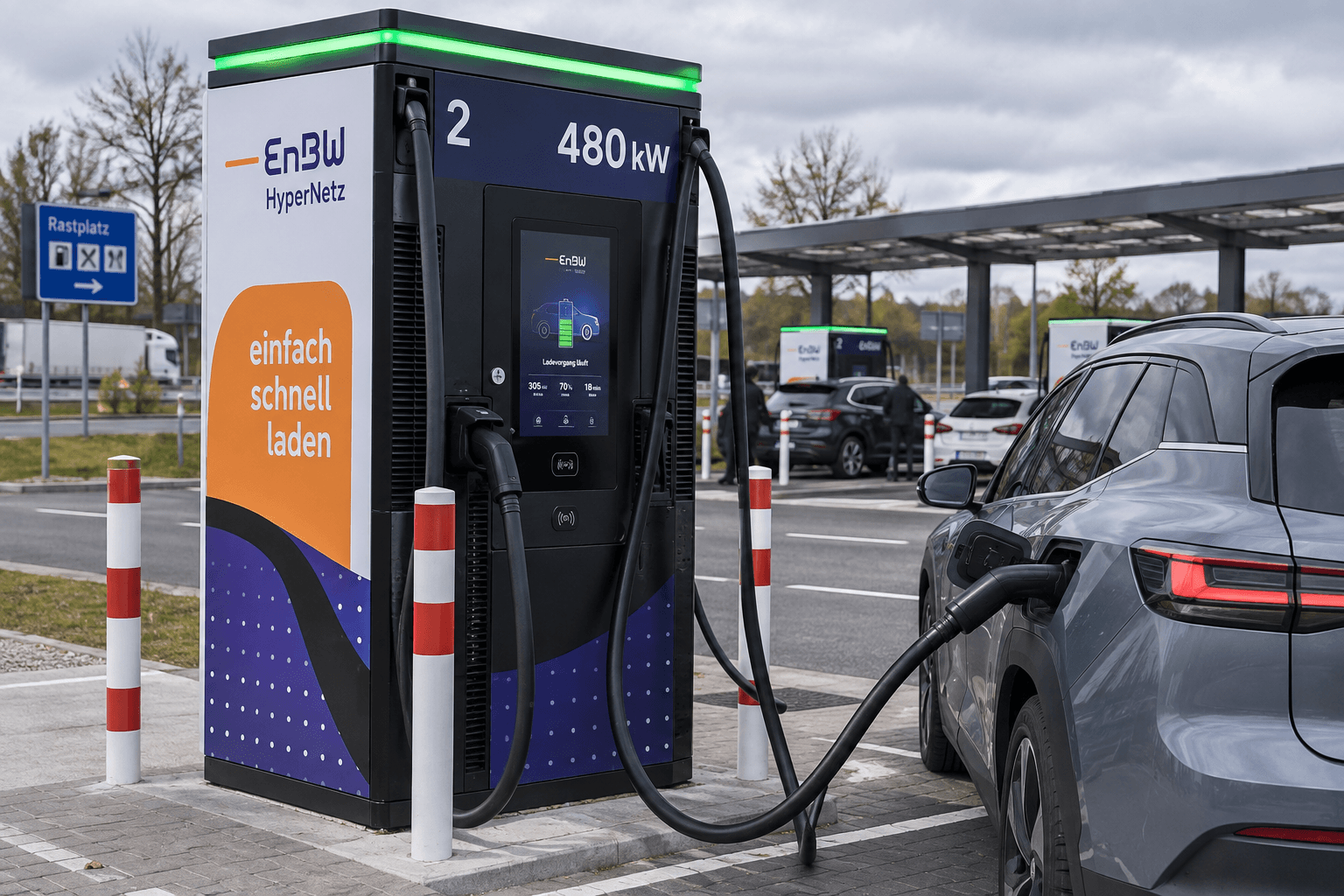
The system is already available around the clock via the service number displayed at EnBW charging stations. Support is initially available in German and English.
The AI is designed to handle common charging problems immediately, allowing technical support staff to focus on more complex cases.
What the AI can help with
The phone assistant guides users through troubleshooting by asking specific questions. This covers not only technical faults but also common user issues encountered at public charging stations.
- Identify the charging station and specific charging point
- Start a charging session
- Narrow down problems with a charging card or app
- Find alternative charging points nearby
According to EnBW, around two-thirds of inquiries can already be handled during the call with the AI charging assistant. If the problem persists, technical support remains available after the automated system has completed its initial assessment.
Key details at a glance
| Feature | EnBW AI charging assistant |
|---|---|
| Availability | Around the clock via the service number |
| Languages | German and English |
| Scope | Questions and problems related to charging |
| Integration | Placed ahead of technical phone support |
| Inquiries handled directly | Around two-thirds, according to the company |
Why phone support is useful when charging
When a charging station is blocked or unresponsive, an extensive help section in an app is of limited use. Guided troubleshooting can save time, particularly when mobile reception is poor, charging point numbers are unfamiliar, or users are unsure about authentication.
The approach is therefore practical: describe the problem → answer specific follow-up questions → try the proposed solution. At the same time, the AI does not completely replace human support. Instead, it is intended to triage common standard cases and, where possible, resolve them directly.
The service is immediately relevant to drivers from Germany. Travelers from Austria and Switzerland can also use the assistant when charging at an EnBW station and in need of support. The English-language option also makes the service easier to use for international customers.
Charging infrastructure requires more than high power
Discussions about expanding public charging often focus on charging power and the number of available locations. Projects such as BYD’s planned 1,500 kW charging network demonstrate how quickly the hardware is evolving. In everyday use, however, reliable access, payment, and assistance with faults are just as important.
Combining access to large numbers of charging points in a single app is also becoming increasingly important. One example is Togg’s integration of 220,000 charging points in Germany. EnBW is now addressing a different aspect by improving service directly at the charging station.
EnBW plans to expand the range of functions
The AI charging assistant is designed as an additional service component for EnBW HyperNetz, the company’s charging network. Further charging-related support services are expected to be added in the future, although the company has not yet specified any particular features.
The key will be how reliably the system recognizes different types of faults and when it transfers callers to a human agent. If this handover works without unnecessary repetition, the AI could provide tangible benefits, particularly for frequently encountered standard problems.