40,000 Electric Vehicles for Letters and Parcels
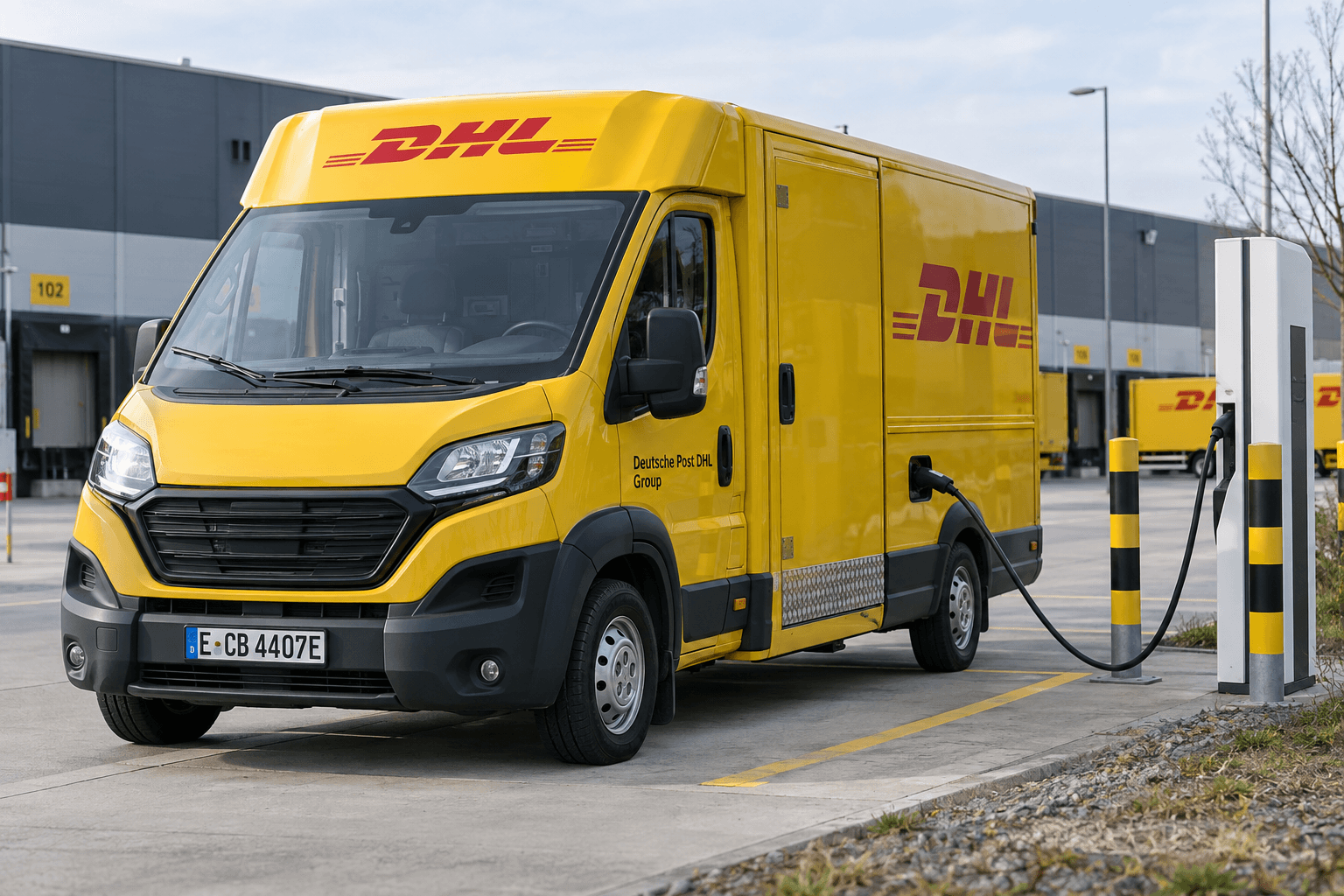
Deutsche Post has reached a new milestone in electrifying its delivery operations. There are now 40,000 electric vehicles delivering letters and parcels in Germany.
According to the company, this makes it the world’s largest electric delivery fleet operated by a postal company within a single market. The key factor is not only the number of vehicles, but also the charging infrastructure developed alongside them.
| Category | Current Status in Germany | Context |
|---|---|---|
| Electric delivery vehicles | 40,000 vehicles | Primarily used for daily letter and parcel delivery |
| Charging infrastructure | 44,400 charging units | Predominantly located at company sites |
| Electricity supply | 95% renewable electricity | Further reduces operational CO2 emissions |
| Electric trucks | 50 vehicles | Used to transport letters and parcels |
| Bio-CNG trucks | 570 vehicles | Transitional solution for routes that are difficult to electrify |
Why Delivery Operations Are Well Suited to Electric Mobility
The last mile offers favorable conditions for electric vehicles. Delivery routes are generally predictable, vehicles return to the depot regularly, and they can be charged there during longer periods of downtime.
Electric vans offer additional advantages in urban traffic. They produce no local exhaust emissions, operate more quietly at low speeds, and can recover energy through regenerative braking during frequent stops. New vehicles such as the announced Kia PV7 electric van show that manufacturers are increasingly targeting this application with purpose-built models.
Fixed routes combined with predictable downtime create particularly favorable conditions for an electric delivery fleet.
44,400 Charging Units Become an Energy System
A fleet of this size requires more than individual wall chargers at a depot. Charging power, grid connection capacity, and departure times must be coordinated to ensure that enough vehicles are ready in the morning without creating unnecessary demand peaks.
Intelligent charging management can prioritize vehicles according to their actual energy needs. In the future, bidirectional charging and smart charging could also become attractive for large fleets. However, the information provided does not indicate whether Deutsche Post already uses this technology.
The reported share of 95% renewable electricity significantly improves the carbon footprint of operations. Nevertheless, electric mobility is not completely emissions-free across its entire life cycle, as vehicle manufacturing, batteries, and infrastructure also generate emissions.
Long-Haul Transport Remains the Greater Challenge
Electrifying heavy trucks over long distances is considerably more demanding. High energy requirements, limited charging windows, and the necessary charging power pose greater challenges for logistics companies and grid operators than small delivery vehicles do.
The 50 electric trucks deployed so far show that the transition has begun. At the same time, the 570 bio-CNG trucks demonstrate that the company continues to rely on a mix of different powertrains for long-haul transport. Comprehensive decarbonization will require more electric heavy-duty vehicles and high-power charging points along major transport routes.
Postal Industry Has Significantly Reduced Emissions Since 2008
Postal operators belonging to the International Post Corporation report that they have reduced their total annual emissions by 41% compared with 2008. The target is a 50% reduction by 2030. These figures apply to all participating companies, not Deutsche Post alone.
Renewable energy at logistics sites and the conversion of vehicle fleets are considered important levers. Areas such as international long-haul transport and air freight remain more difficult because electric solutions are currently available only to a limited extent.
CO2 Data to Become More Transparent for Online Retailers
The comparability of individual shipments is also receiving greater attention. Thirteen postal operators now use a shared calculator designed to record emissions along the transport chain. Corresponding data has already been collected for around 95 million parcel shipments.
A survey of 2,500 online retailers from 19 countries also found a 70% satisfaction rate with postal operators’ sustainability performance. Germany, Austria, and Switzerland were included in the survey. For retailers in the DACH region—Germany, Austria, and Switzerland—reliable emissions data is particularly relevant when comparing shipping options and preparing their own carbon footprints.
The milestone of 40,000 electric vehicles shows that large delivery fleets can already be systematically electrified today. The next major opportunity now lies less in the last mile and more in heavy-duty long-haul transport and transparent accounting across the entire supply chain.