Sunwoda enters the race for charging in minutes
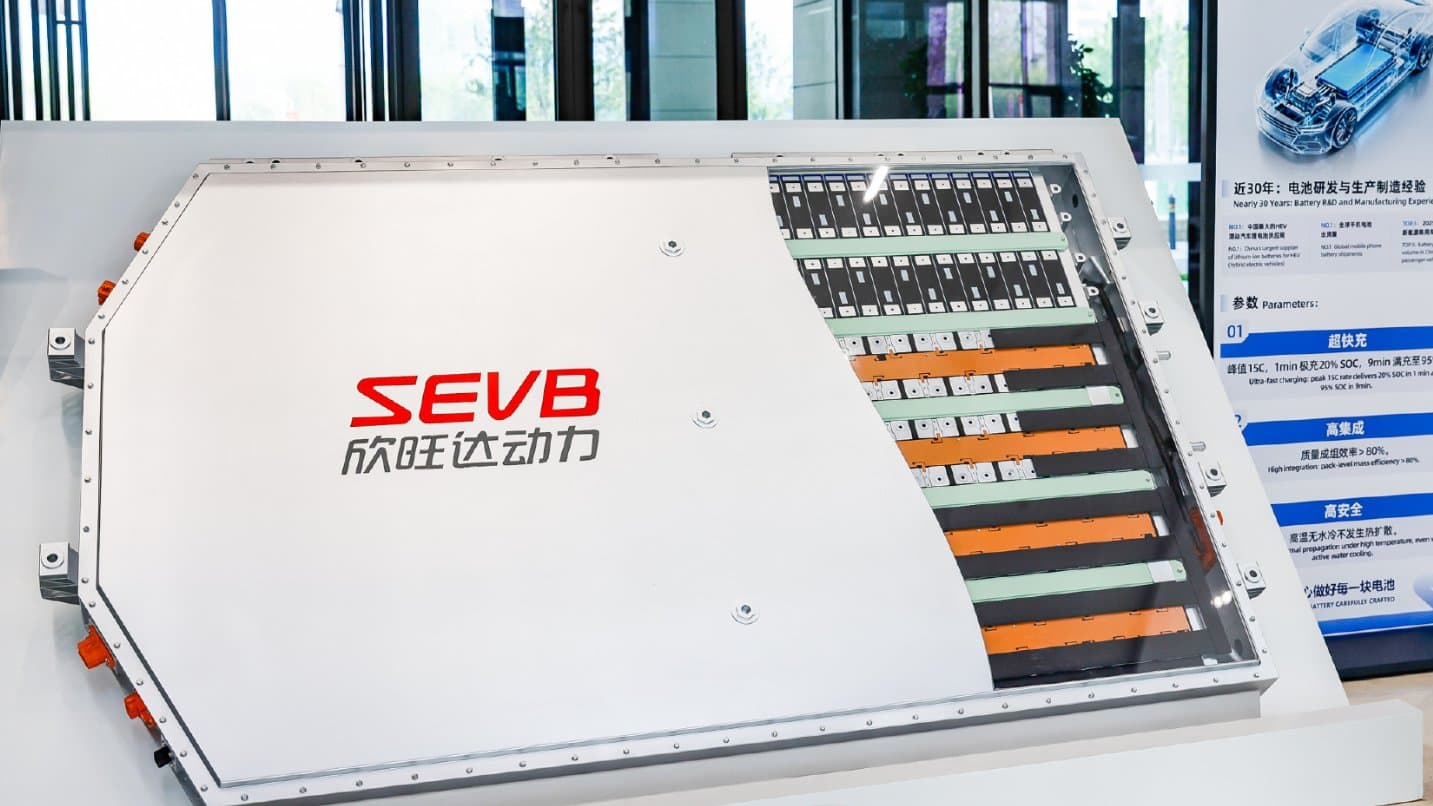
Chinese battery manufacturer Sunwoda has unveiled a new 15C battery system designed for extremely short charging stops. According to the company, the state of charge rises from 10% to 70% in five minutes at room temperature. Charging from 10% to 97% is said to take nine minutes.
One minute at a suitable fast charger is said to provide enough energy for another 100 km. Sunwoda also claims a range of more than 700 km, but does not specify the underlying driving cycle or battery chemistry.
The charging times are impressive, but for now they remain manufacturer claims without a confirmed production vehicle.
Technical specifications at a glance
| Metric | Sunwoda’s figure |
|---|---|
| Charging rate | up to 15C |
| 10% to 70% at room temperature | 5 minutes |
| 10% to 97% at room temperature | 9 minutes |
| 10% to 97% at -20°C | 15 minutes |
| Range added per minute of charging | up to 100 km |
| Claimed range | more than 700 km |
| Target warranty requirement | 10 years or 300,000 km |
What a 15C charging rate means
The C-rate describes the relationship between charging current and nominal battery capacity. In theory, 15C would mean that the energy equivalent of a full battery could be transferred in four minutes at constant power. In practice, however, the battery management system reduces power depending on temperature, state of charge, and cell voltage.
The claim of nine minutes to reach 97% therefore shows that Sunwoda is not promising a constant 15C charging rate across the entire charging window. The decisive factors will be the real-world charging curve, usable battery capacity, and how long the system can maintain its peak power.
The claim of 100 km of range per minute is also only partially comparable. The result depends on the vehicle’s energy consumption and the test cycle used. What ultimately matters to drivers is how many practical, real-world kilometers can actually be added during a typical charging stop.
Focus on cold weather and battery lifespan
At -20°C, Sunwoda says charging from 10% to 97% takes 15 minutes. That would still be fast, but would likely require effective battery preconditioning and a suitably powerful charging station.
Sunwoda aims for the system to meet warranty requirements of 10 years or 300,000 km. For vehicles not used commercially, there is also expected to be no limit on the number of ultra-fast charging sessions. However, the specific warranty terms will only become reliable once the respective production vehicles arrive.
For monitoring, the manufacturer combines smart battery cells, a central energy controller, and an AI-supported cloud platform. This is intended to detect more than 20 possible types of fault two to ten days in advance. The stated accuracy rate of 99.77% is also a manufacturer claim and will need to be verified in production use.
10,000 megawatt charging stations by the end of 2027
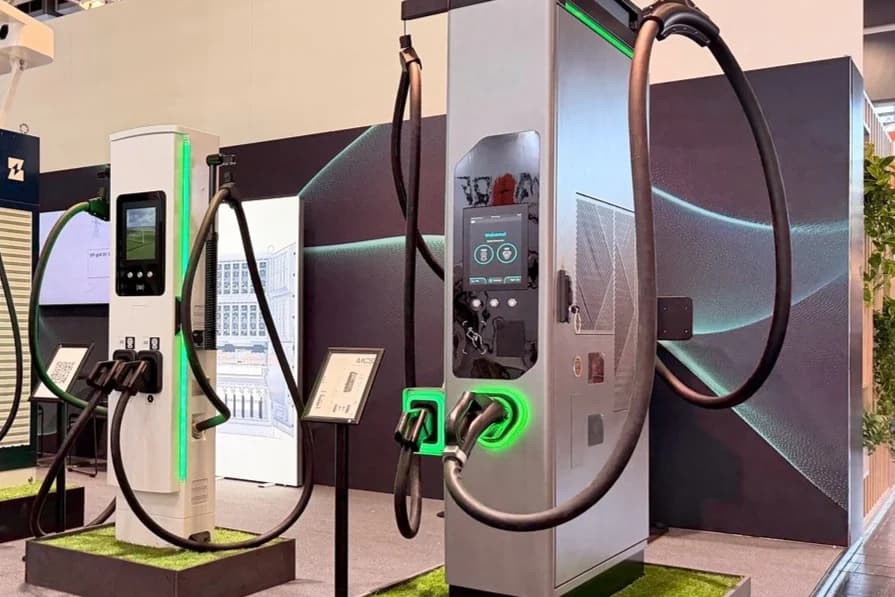
Sunwoda is considering not only the battery but also a complete energy and charging ecosystem. This includes battery storage, liquid-cooled charging terminals, solar power, and a central control platform. The technology is intended to support vehicles from different brands.
Sunwoda is proposing a network of 10,000 megawatt charging stations by the end of 2027. Locations, investment amounts, and a specific timetable for the first installations have not yet been announced.
Stationary storage is especially important at these power levels. It can store energy while placing less strain on the grid and release it at high power for short periods during charging. Although this does not reduce total energy demand, it can mitigate expensive demand peaks and the need for complex grid connections.
BYD, Dongfeng, and Xpeng increase the pressure
Sunwoda is entering a market where competition has already shifted from laboratory figures to the expansion of real-world charging networks. BYD quotes the same time frames for its second-generation Blade Battery: five minutes to reach 70% and nine minutes to reach 97%. At the same time, the manufacturer is pressing ahead with its 1,500 kW charging network comprising thousands of stations.
Other Chinese manufacturers are also reporting progress. Hongqi demonstrated a battery that it says can charge from 10% to 70% in three minutes and 41 seconds at 25°C, but did not provide a date for mass production. Dongfeng unveiled a prototype delivering up to 1,500 kW per connector.
Meanwhile, Xpeng has opened a brand-neutral charging station in Hong Kong offering up to 1 MW of power and featuring 400 kWh of storage. However, the station’s rated power is not the same as the charging power actually received by a car. The battery, voltage level, temperature, and charging curve continue to set the limits.
Key details for Europe are still missing
For Germany, Austria, and Switzerland, Sunwoda’s announcement is initially a preview of future technology. The manufacturer has not named any initial vehicle models, a date for mass production, or European locations. Details on certification and compatibility with local charging protocols are also missing.
Megawatt-level power alone is not enough. Vehicles need a suitable high-voltage architecture, powerful cooling, and battery cells capable of handling high currents over the long term. Our comparison of 800-volt and 400-volt systems shows the role voltage plays.
Nevertheless, Sunwoda is sending a clear technological signal: charging times comparable to a short break are moving closer to production. Whether this translates into a real benefit for European drivers will only become clear once specific cars, verified charging curves, and a sufficiently dense network of compatible fast chargers are available.