Volvo takes its electric truck into long-haul transport
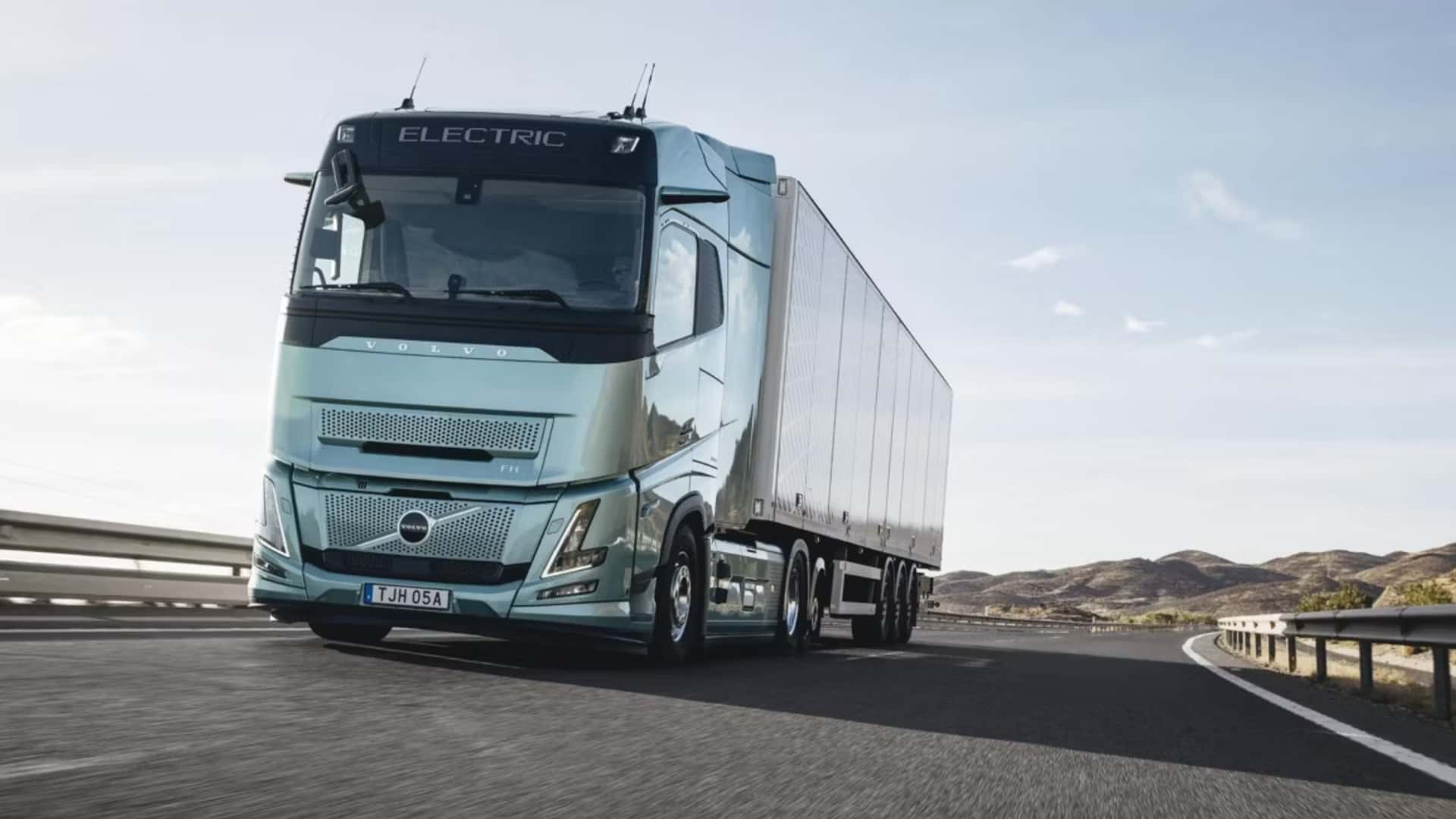
Volvo Trucks has started series production of its new generation of heavy-duty electric trucks. The flagship model is the extended-range Volvo FH Aero Electric, which is designed to travel up to 700 km on a single charge.
The first vehicles are rolling off the production line at the Tuve plant near Gothenburg, Sweden. Additional production is also planned in Ghent, Belgium, while customer deliveries have already begun.
With a range of 700 km and megawatt charging, electric long-haul transport is, for the first time, coming very close to the standard operating patterns of the European haulage industry.
New e-axle creates space for eight batteries
The technical basis is a compact e-axle housing two electric motors and a six-speed transmission. Because the powertrain takes up less space in the chassis, Volvo can install a total of eight battery packs.
The e-axle delivers up to 460 kW. The maximum permitted gross combination weight is up to 48 tonnes, while Volvo specifies a maximum payload of 28 tonnes. As with any heavy-duty electric vehicle, the range achieved in practice will depend on the load, topography, weather and speed.
| Specification | Volvo FH Aero Electric |
|---|---|
| Range | up to 700 km |
| Power output | up to 460 kW |
| Powertrain | two electric motors, six-speed transmission |
| Battery packs | eight |
| Maximum payload | up to 28 tonnes |
| Gross combination weight | up to 48 tonnes |
| MCS charging | up to 700 kW, 20% to 80% in around 50 minutes |
| CCS charging | up to 350 kW, 20% to 80% in around 85 minutes |
MCS turns the mandatory break into a charging break
For rapid recharging, the FH Aero Electric supports the Megawatt Charging System, or MCS. The new standard was developed specifically for heavy-duty commercial vehicles with large batteries and correspondingly high energy requirements.
What matters is not so much a spectacular peak figure as integration into everyday operations. The driver’s break and the charging session can largely be combined → the additional time required compared with a diesel truck can be significantly reduced on suitable routes.
CCS remains available as an alternative. It is slower, but is likely to remain important while a European MCS network is being developed, as high-power megawatt charging points are still far from universally available in Germany, Austria and Switzerland, collectively known as the DACH region.
Electric power take-off replaces additional diesel equipment
Volvo has also integrated an electric power take-off that can supply equipment such as a refrigeration unit. In suitably equipped vehicles, this eliminates the need for a separate diesel generator, reducing local emissions, noise and maintenance requirements.
This is particularly relevant in temperature-controlled logistics. An electric truck can only operate consistently without emissions if its refrigeration system and other body equipment also work without an additional combustion engine.
FH, FM and FMX Electric cover additional applications
Alongside the long-haul model, Volvo is also updating the FH Electric, FM Electric and FMX Electric. These variants are designed for regional distribution, construction sites, urban logistics, waste management, utility work and demanding specialist applications.
Their dual-motor powertrain delivers up to 540 kW and works with an eight-speed transmission. Depending on the version, a maximum permitted gross weight of up to 65 tonnes and a range of up to 470 km are possible. For challenging terrain, Volvo offers features including tandem drive axles and a lower gear ratio.
Auxiliary equipment such as concrete mixers, cranes, tipper bodies or refuse compactors can be operated electrically while driving. This means Volvo is not only electrifying the tractor unit but also addressing the energy-intensive operating functions of different truck bodies.
What the start of series production means for the electric truck market
The combination of long range, practical payload capacity and MCS charging removes several key obstacles to battery-electric long-haul transport. Nevertheless, charging infrastructure, grid connections and appropriate route planning remain crucial to cost-effective operation.
Volvo also brings an important advantage: the manufacturer has an established sales and service network in the European commercial vehicle market. For fleet operators, this infrastructure may be at least as relevant as the range and charging power listed on the specification sheet.