Chery Fulwin T7: New Electric SUV Enters China’s Price War
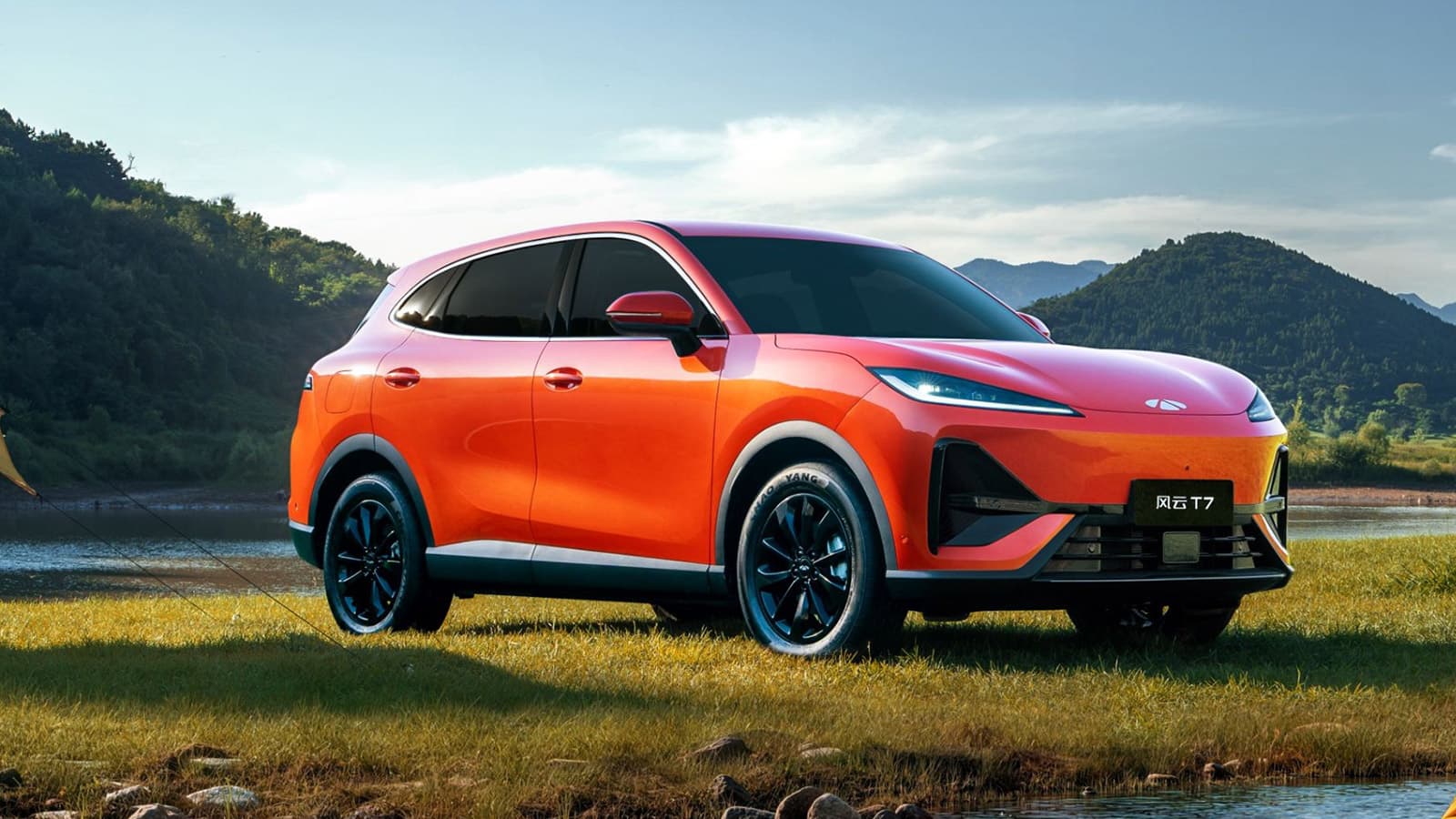
Chery is launching a new compact electric SUV in China: the Fulwin T7. The model is clearly tailored to the country’s fiercely competitive entry-level market and is offered in three versions. Alongside its price, Chery is emphasizing a package that combines solid motor output, an LFP battery, and strikingly modern infotainment.
For readers in the DACH region—Germany, Austria, and Switzerland—this is particularly interesting as a market signal: The high level of equipment now reaching Chinese roads at low prices is setting the pace for technology and cost pressure that will also reach Europe in the medium term. However, that does not yet mean the Fulwin T7 will appear here, or indicate when it might do so.
Dimensions and Key Specifications: Compact, but Not Small
In terms of dimensions, the Fulwin T7 sits squarely in the European compact SUV class. Chery lists a length of 4,570 mm, a width of 1,852 mm, and a height of 1,694 mm, with a wheelbase of 2,700 mm. Its curb weight is 1,780 kg, while the drag coefficient is 0.286.
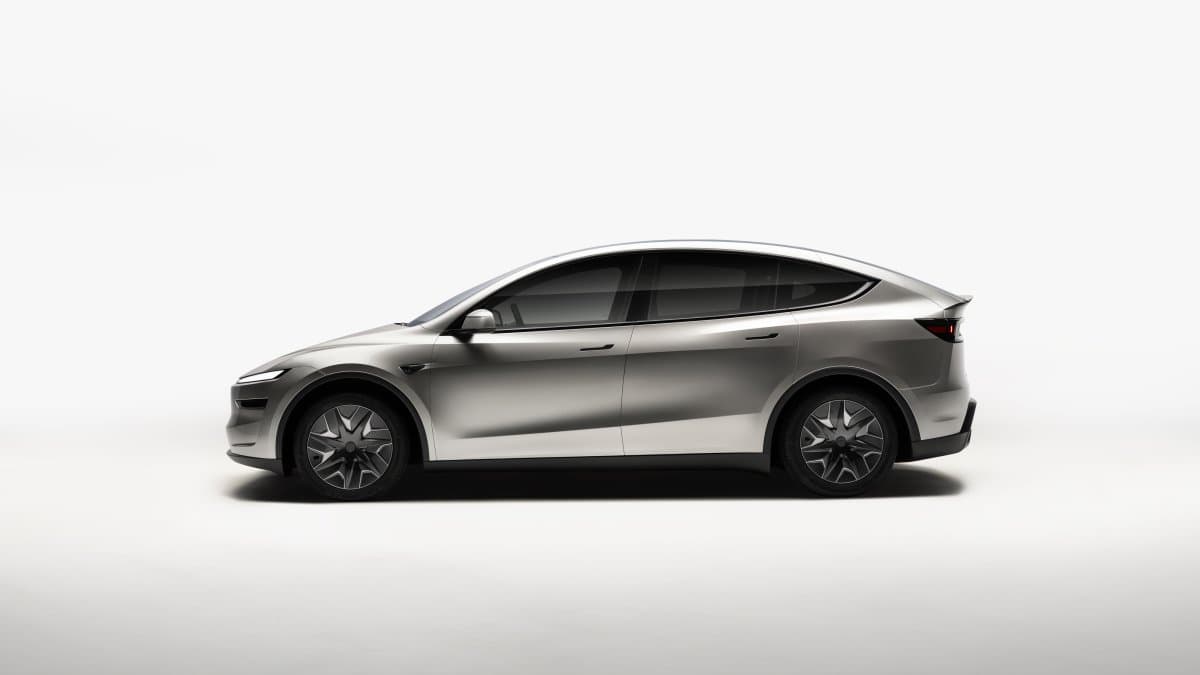
That puts Chery in precisely the segment currently in particularly high demand here: vehicles around the size of a Tesla Model Y, albeit slightly shorter. For a size comparison, you can find the key specifications of the Tesla Model Y in our database.
Powertrain and Battery: 178 kW, LFP, and 600 km Under CLTC
All three versions use a single electric motor producing 178 kW and 275 Nm. Chery quotes a top speed of 180 km/h. The battery is also the same across the range: Every version is fitted with a 65.05-kWh LFP battery, which Chery calls the “Rhino Battery.”
Range is quoted at 600 km under CLTC, with energy consumption of 12.9 kWh/100 km. An important point for context: China’s CLTC test cycle is considerably more optimistic than WLTP, so the figures would be noticeably lower under the European standard. This discrepancy is a recurring issue when Chinese models appear with high range figures that are then assessed more realistically here.
The current momentum in the battery market also provides useful context: LFP cells are clearly gaining ground in China, partly because of their cost, cycle life, and robust thermal management. If you are interested in the topic, our article on China’s battery market and the share of LFP technology is worth reading.
Charging and Vehicle-to-Load
For rapid charging, Chery quotes a time of around 20 minutes from 30% to 80%. The Fulwin T7 also supports external power output via vehicle-to-load (V2L) at up to 6.6 kW, which is enough for typical camping and worksite applications, from an electric kettle to an e-bike charger.
Bidirectional charging is also increasingly becoming more than just a “nice-to-have” feature among established brands, particularly as the focus shifts toward smart charging and energy ecosystems. Also interesting in this context: Hyundai and Kia are advancing bidirectional charging as a dedicated initiative.
Cockpit and Chips: 8155 for the Base Version, 8775 with 5G in the Flagship
Inside, Chery uses a distinctly digital layout: an 8.8-inch instrument display plus a 15.6-inch central screen with 2.5K resolution. Chery calls the software “Lingxi Smart Cockpit 2.0,” while a large language model from ByteDance (“Doubao”) is also mentioned as supporting voice functions.
The division of computing power is technically noteworthy: The two less expensive versions use Qualcomm’s 8155, while the flagship switches to the 8775, which more closely integrates cockpit and driving functions and supports 5G. In practice, this could make a difference particularly for driver-assistance features, maps, interface responsiveness, and update capability.
Driver-Assistance Systems in Focus: Falcon 500 with 22 Sensors
In its highest trim level, Chery includes the “Falcon 500” driver-assistance package. According to the manufacturer, it uses 22 sensors, including 3 millimeter-wave radars, 7 cameras, and 12 ultrasonic sensors. The system is intended to support features including highway assistance and more than 300 parking scenarios.
This is a typical pattern in the Chinese market: Many features vary significantly by trim level, allowing the least expensive model to set an attractive entry price while the flagship generates the technology headlines.
Safety: Extensive Use of High-Strength Steel and 9 Airbags
Regarding the body structure, Chery says that 80% consists of high-strength steel and describes the design as a “cage” construction. The vehicle is also expected to come with 9 airbags. To enable a genuine comparison under everyday European conditions, future Euro NCAP tests and transparent driver-assistance and crash data would be crucial. Naturally, this information is not yet available under the EU assessment system at the time of the Chinese launch.
Assessment: Competitive Pressure on Bestsellers Such as BYD
Chery is positioning the Fulwin brand as a core product line for “New Energy Vehicles,” a Chinese category covering both BEVs and plug-in hybrids. In China’s high-volume segment, the Fulwin T7 directly targets successful models such as the BYD Yuan Plus.
Anyone wanting to see how broadly BYD is already represented in Europe’s SUV and crossover market can, for example, take a look at the BYD Atto 3. Here, it is better known as a global high-volume model, while China’s market operates in parallel with more aggressive pricing and, in some cases, different specifications.