BYD Sealion 08 launches on September 2 as a BEV and plug-in hybrid
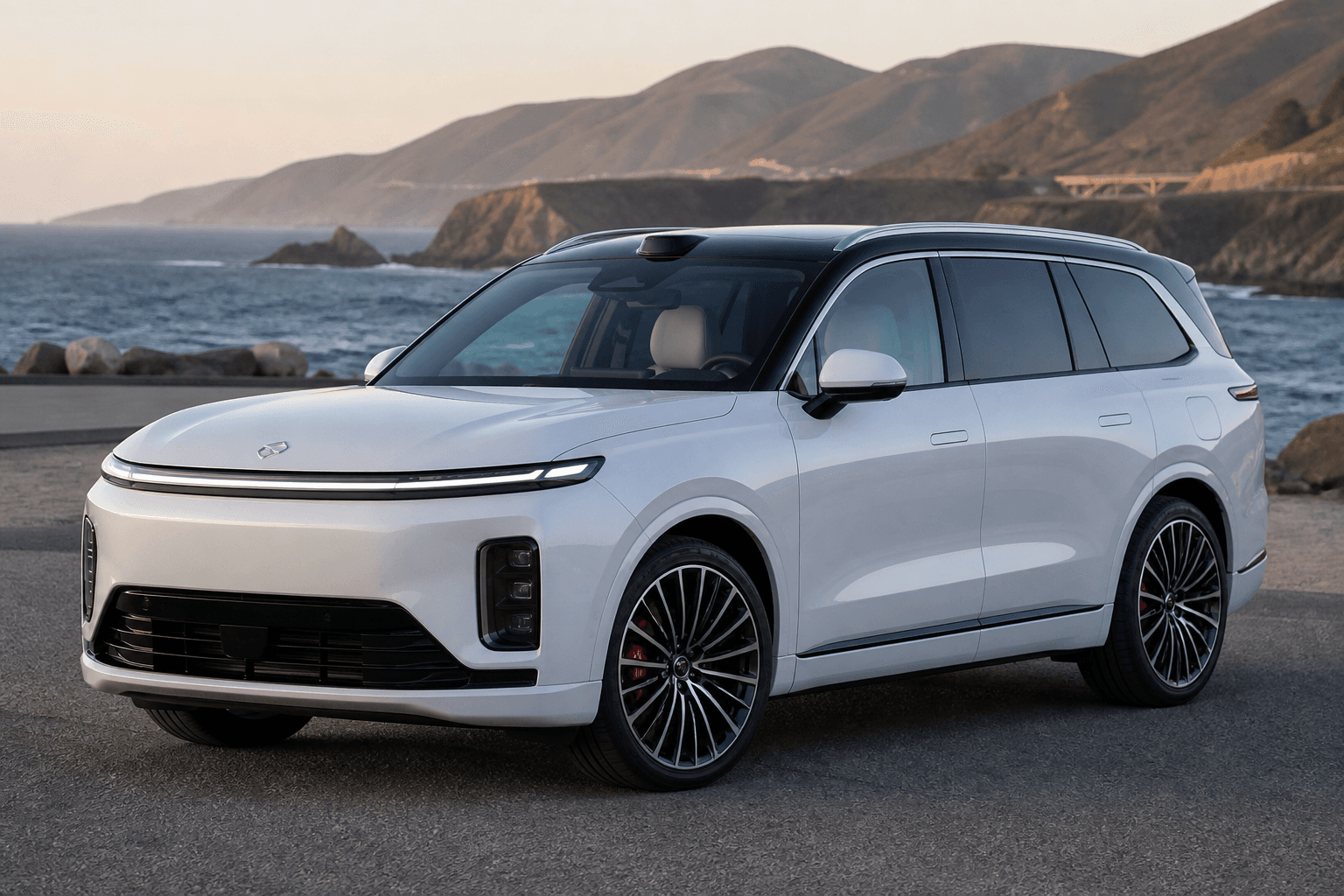
BYD has officially announced the Sealion 08 for September 2. The new model is positioned as the flagship SUV of the Ocean family and will be offered with two types of powertrain: as a fully electric vehicle (BEV) and as a plug-in hybrid (PHEV).
For Europe, this is initially more of an indication of what is to come: BYD is launching a large, technology-packed SUV in China that is clearly aiming to challenge rivals in battery capacity, charging performance and driver-assistance systems. Whether and when the Sealion 08 will arrive in the DACH region—Germany, Austria and Switzerland—remains unclear, but the direction is evident.
Dimensions and platform approach: clearly a luxury-class SUV
At 5,115 mm long, 1,999 mm wide and 1,800 mm tall, with a 3,030 mm wheelbase, the Sealion 08 competes in the large family and executive SUV segment. BYD uses modern integration concepts such as Cell-to-Body (CTB), which structurally integrates the battery into the body.
The objective is typical of this approach: greater rigidity, more efficient use of space and, ideally, less weight for the same structural strength. The benefits may be noticeable in everyday driving, for example in stability and noise comfort.
Interior: six seats, ceiling-mounted display and refrigerator
In the cockpit, BYD remains faithful to the Ocean line with a wrap-around layout. A large, freestanding infotainment display takes center stage, estimated at 15.6 inches in the official information, complemented by a digital instrument cluster.
Things get more interesting in the second row: BYD lists a 21.4-inch ceiling-mounted display, a 25-speaker system from Devialet, an onboard refrigerator, an additional control panel and a small folding table. A six-seat configuration has also been shown, featuring so-called Zero Gravity seats in the second row with ventilation, heating and massage functions. A five-seat version is also expected to be offered.
Powertrain and technology: air suspension, rear-wheel steering and assistance systems
BYD has packed in almost everything currently available from its technology portfolio: rear-wheel steering, the DiSus-A chassis control system, dual-chamber air suspension and a Road Preview system that anticipates the road surface ahead. It also features the latest “God’s Eye” 5.0 package as the next evolution of its driver-assistance technology.
An important point for the DACH region: systems like these are often marketed very aggressively in China. How much of this technology would be available here in exactly the same form will ultimately depend on homologation, legislation and regulatory approval of individual functions.
BEV: up to 115 kWh LFP and up to 900 km under CLTC
Several power outputs are planned for the fully electric version. These include two rear-wheel-drive variants with 320 kW or 370 kW, as well as an all-wheel-drive version with 215 kW at the front and 370 kW at the rear.
BYD uses LFP batteries and lists capacities of 92.1 kWh or 115.1 kWh. In China, these are advertised with ranges of 710 km, 800 km or up to 900 km under the CLTC test cycle.
CLTC is noticeably more optimistic than WLTP. Significantly lower, more realistic figures would therefore be expected for Europe, even if the hardware remains identical.
PHEV: 1.5-liter turbo system and long electric range under WLTC
The plug-in hybrid variant combines a 1.5-liter turbocharged gasoline engine producing 115 kW with one or two electric motors. The PHEV is expected to be offered with a single electric motor (200 kW) or a dual-motor setup (200 kW at the front plus 200 kW at the rear).
The claimed electric range is notable: 275 km to 300 km under WLTC, with an additional claim of “up to 400 km” under CLTC in China. This highlights the direction of the market: PHEVs in this class are increasingly positioned as “electric cars with backup,” rather than as conventional transitional powertrains.
Flash Charging and Blade Battery 2.0: why they matter
BYD says the Sealion 08 will feature the second generation of its Blade Battery as well as Flash Charging technology. The Blade design is closely associated with LFP chemistry and focuses on robustness, safety and a favorable cost structure. Flash Charging is BYD’s label for particularly high charging performance, which primarily delivers one benefit in everyday use: shorter charging stops on long journeys, provided the vehicle, battery temperature and charging infrastructure are suitable.
How significant the benefits are in practice will depend on the actual charging curves, system voltage (400 volts or 800 volts) and suitable infrastructure. Anyone interested in the fundamental differences can find an overview in our comparison of 800V vs. 400V architectures in electric cars.
European perspective: a major move by BYD, but not all range figures are equal
The Sealion 08 demonstrates how aggressively BYD is now upgrading its large SUVs, from CTB and air suspension to very large LFP batteries. At the same time, it is important to note that up to 900 km under CLTC is more an indication of substantial battery capacity and efficiency reserves for European buyers than a figure that can be applied directly.
If you are specifically interested in BYD models for Europe, it is also worth looking at the BYD Seal U or the BYD Sealion 7. And if you want a broader sense of how very long ranges compare across the market, our 2026 range ranking provides a useful reality check.