Audi and SAIC Establish AUDI Development Center in Shanghai
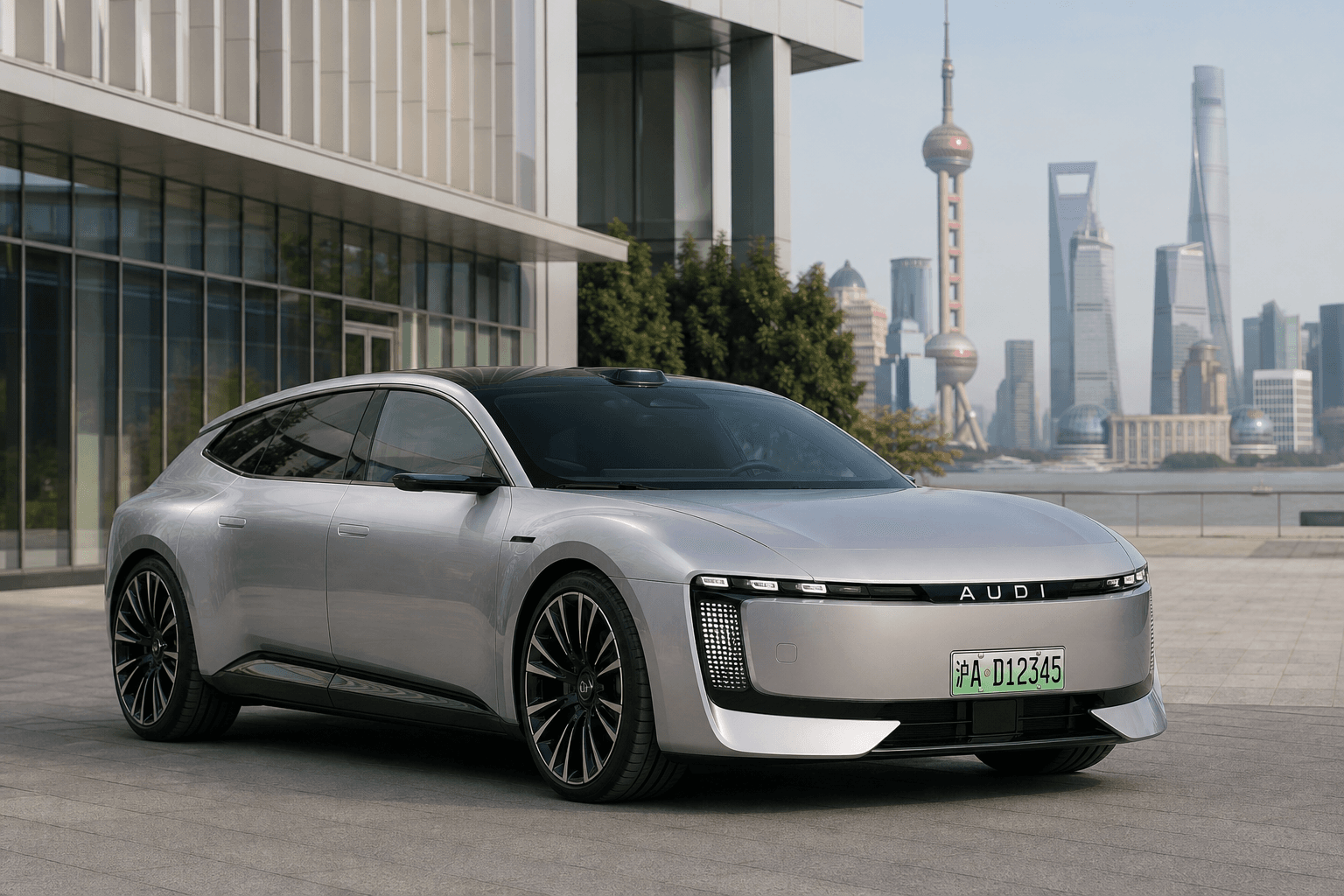
Audi and Chinese automotive group SAIC are further expanding their collaboration in China and have launched a dedicated innovation and technology center in Shanghai. Its name: AUDI Innovation & Technology Center (AITC). One important distinction: This is not the traditional Audi brand with the four rings, but AUDI, a sister brand created specifically for China with its own branding.
The new center is intended to serve as the local R&D backbone and expand the existing partnership, which has largely focused on products and the supply chain, into a complete local development ecosystem. For Audi, this is a clear step toward significantly shortening development cycles in the world’s most important electric vehicle market.
Four New Models Based on ADP 2.0, First Debut from 2028
The AITC is set to develop four new AUDI models. They will be based on the ADP 2.0 (Advanced Digitized Platform 2.0). The first of these vehicles is scheduled to be unveiled in 2028. The new models are planned as a second product wave for the Chinese market and are intended to broaden the existing AUDI lineup.
AUDI is already on the market: The launch of the E5 Sportback was followed by an SUV called the E7X, while another model has also been announced for 2027. The four ADP 2.0 vehicles will follow as the next major stage of expansion.
Of interest to Europe: China-exclusive platforms and software stacks like these do not automatically mean that the technology will come to Europe unchanged. However, the direction of innovation is relevant because it shows which functions and development approaches are being prioritized within the group and which features could later also appear in EU models.
Focus: Smart EV Technology, Cockpit AI and Driver Assistance Systems
AITC will focus on “smart EV” technologies, specifically vehicle development including driving dynamics and handling, AI-powered cockpits, and next-generation driver assistance systems. Audi also names Software-defined Vehicles (SDV) and AI-defined Vehicles (AIDV) as key areas. In everyday terms, this means that functions will increasingly be defined and regularly expanded through software and data rather than being finalized at the time of purchase.
For buyers in China, this has become a decisive factor: Fast updates, highly integrated infotainment, and powerful driver assistance features are now expected to a much greater extent than they were just a few years ago. With AUDI, Audi is therefore deliberately aligning itself more closely with the development and usage patterns that are becoming standard in the Chinese market.
Team Size, Roles and Ownership Stakes
The AITC is launching with a team of around 300 employees. Matthias Pfister will take charge of operations as General Manager, while SAIC has appointed Shan Yunwei as Deputy General Manager. Pfister brings experience from SAIC Volkswagen and is expected to bring together strategy, development integration, and business development at the center.
The structure is also noteworthy: SAIC, Audi, and Volkswagen Group China all hold stakes in the joint venture. The shares are 49% for SAIC, 41% for Audi, and 10% for Volkswagen Group China. This makes it clear that the venture is not merely about supplying components, but about creating a serious, long-term development platform with a local focus.
What It Means for the DACH Region: Why This Still Affects Us
Even though AUDI as a brand is initially aimed squarely at China, the initiative has broader implications for the DACH region—Germany, Austria, and Switzerland. First, it shows how heavily premium manufacturers now rely on local development operations in China to keep pace in software, AI cockpits, and driver assistance systems. Second, group technology could gradually filter through to other regions, for example in user interfaces, computing architectures, or update strategies.
Anyone following the China strategies of premium brands will also recognize a pattern: Platforms, software, and supply chains are increasingly being planned on a regional basis to gain speed. This is not a departure from “German engineering,” but rather a hybrid approach: German development standards plus Chinese speed and component availability → faster product launches.
Related Context on Audi Imports from China
If you are generally interested in how Audi could bring models from China to Europe, our overview of the Audi E5 and E7X from China in Europe is also worth reading. For a look at the broader market trend in China, the article on the Chinese battery market and its strong share of LFP batteries also provides useful context, as platform and battery decisions are closely linked.
Technology Context: Why Platforms and Charging Architectures Matter
New platform generations often also involve the electrical architecture, including 400-volt or 800-volt systems, charging capabilities, and the computing platform for driver assistance functions. If you want to understand the topic in more detail, our 800V vs. 400V comparison shows which differences will really matter in everyday use in 2026.