Xpeng is building its own charging network in Europe
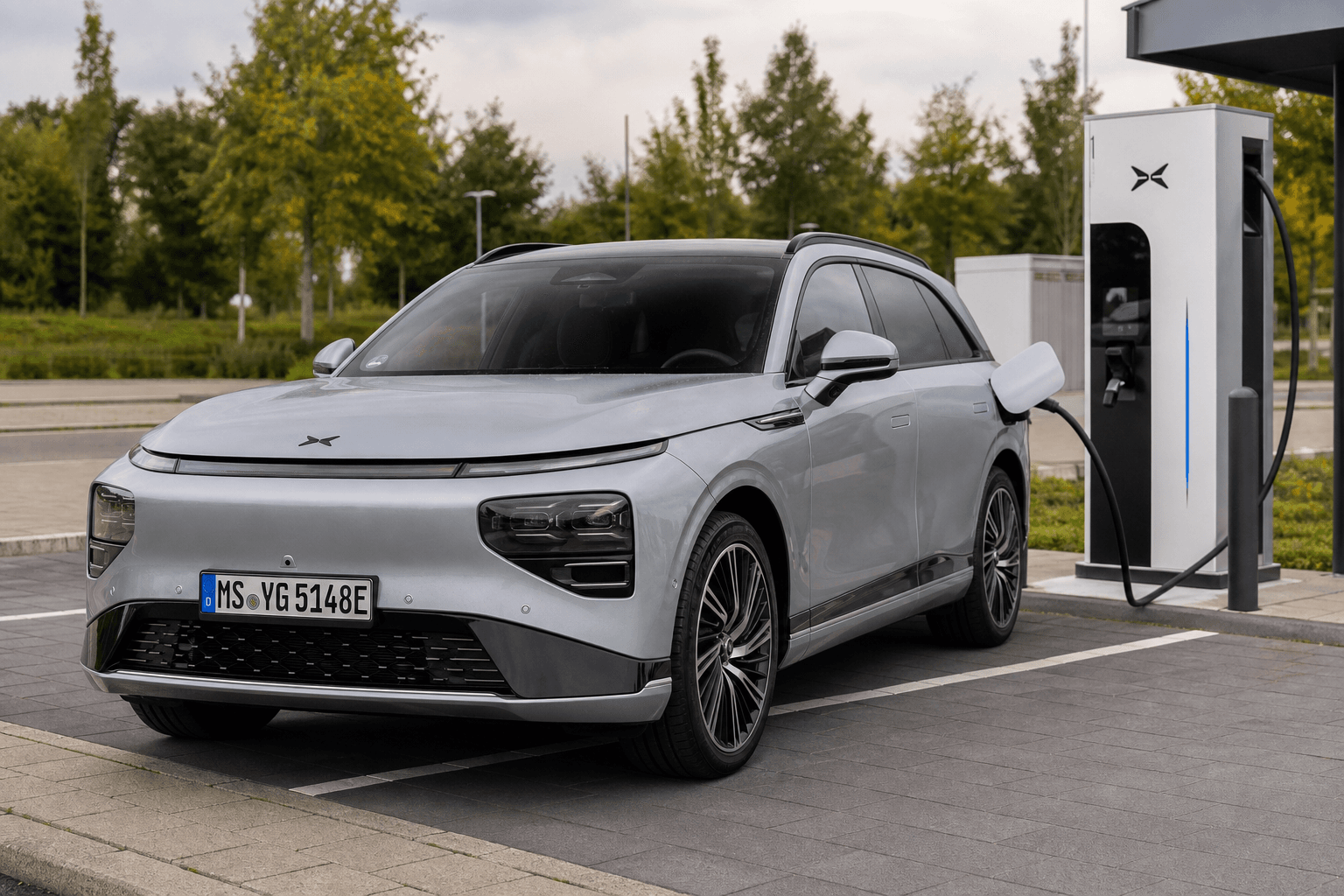
Xpeng wants to do more than sell electric cars in Europe: it also plans to provide the necessary charging infrastructure. By 2028, more than 4,000 fast-charging points are to be installed across 31 countries and regions. The first sites are scheduled to open in 2026.
For Germany, Austria and Switzerland, the Chinese manufacturer is working with Elmi Power. The local partner will identify suitable sites, assist with permitting processes and handle the technical implementation of the charging hubs.
| Metric | Xpeng’s plan |
|---|---|
| Expansion target | More than 4,000 fast-charging points |
| Time frame | By 2028 |
| Geographic scope | 31 countries and regions |
| First sites commissioned | Planned for 2026 |
| DACH partner (Germany, Austria and Switzerland) | Elmi Power |
| Existing network in China | More than 3,500 proprietary charging stations in over 430 cities |
Battery buffers are intended to accelerate network expansion
Battery-based fast-charging stations are a central element of the strategy. A stationary battery is charged from the power grid at a relatively moderate rate. When an electric car arrives at the charger, the battery can briefly provide significantly more power.
Weak grid connection → high charging power at the vehicle regardless. This can make new sites viable where a conventional fast-charging hub would only be possible after a lengthy and expensive upgrade to the regional power grid.
However, this approach does not solve every problem. Suitable sites, permits, transformer equipment and a reliable long-term energy supply remain essential. At times of high demand, the battery storage system must also be large enough or recharge quickly enough to allow several vehicles to charge at high power one after another.
Germany will be a focal point of the expansion
Germany is set to play a central role in Xpeng’s European charging plans. This is consistent with the brand’s growing presence: Xpeng operates a European research and development center in Munich while also expanding its sales network across the continent.
Xpeng’s newer models in particular can take advantage of high charging power. The Xpeng G9 is one of the brand’s vehicles already available, while the differences between 800-volt and 400-volt technology illustrate why high-performance chargers matter for modern platforms.
The number of charging points is not the only thing that matters. What is crucial is whether they are located along frequently used routes, operate reliably and can be reached without unnecessary detours.
Working with a partner that has regional experience therefore makes sense. Permitting procedures, grid operators and site requirements in Germany, Austria and Switzerland differ considerably from conditions in Xpeng’s home market of China.
China provides Xpeng with practical experience
According to Xpeng, it already operates more than 3,500 of its own charging stations in over 430 cities across China. The distinction is important: for China, the company refers to stations, whereas its European target counts individual charging points. A charging hub can include several such points.
Nevertheless, the existing network gives Xpeng valuable experience with hardware, software, billing and operational monitoring. Construction is likely to be more challenging in Europe because permits and grid connections often take longer.
Automakers building their own charging networks is no longer an unusual approach. Alongside established networks such as Tesla’s Supercharger system, other car manufacturers are also investing in charging infrastructure. BYD is currently taking a particularly aggressive approach, building a charging network with power levels of up to 1,500 kW in China.
Important details remain unclear
Xpeng has not yet disclosed how many of the planned charging points will be located in the DACH region. Specific locations, charging power, prices and potential access conditions for vehicles from other brands have also not yet been announced.
These details will be crucial for everyday use. A dense network with transparent pricing and high reliability could benefit not only Xpeng drivers but also increase competition among European fast-charging providers overall.
The goal of installing more than 4,000 charging points within just a few years is ambitious. However, Xpeng’s experience in China, local partners and battery-buffered charging hubs provide several of the key elements needed to make rapid expansion more realistic.