Xiaomi takes its next performance step, this time apparently with a two-door model
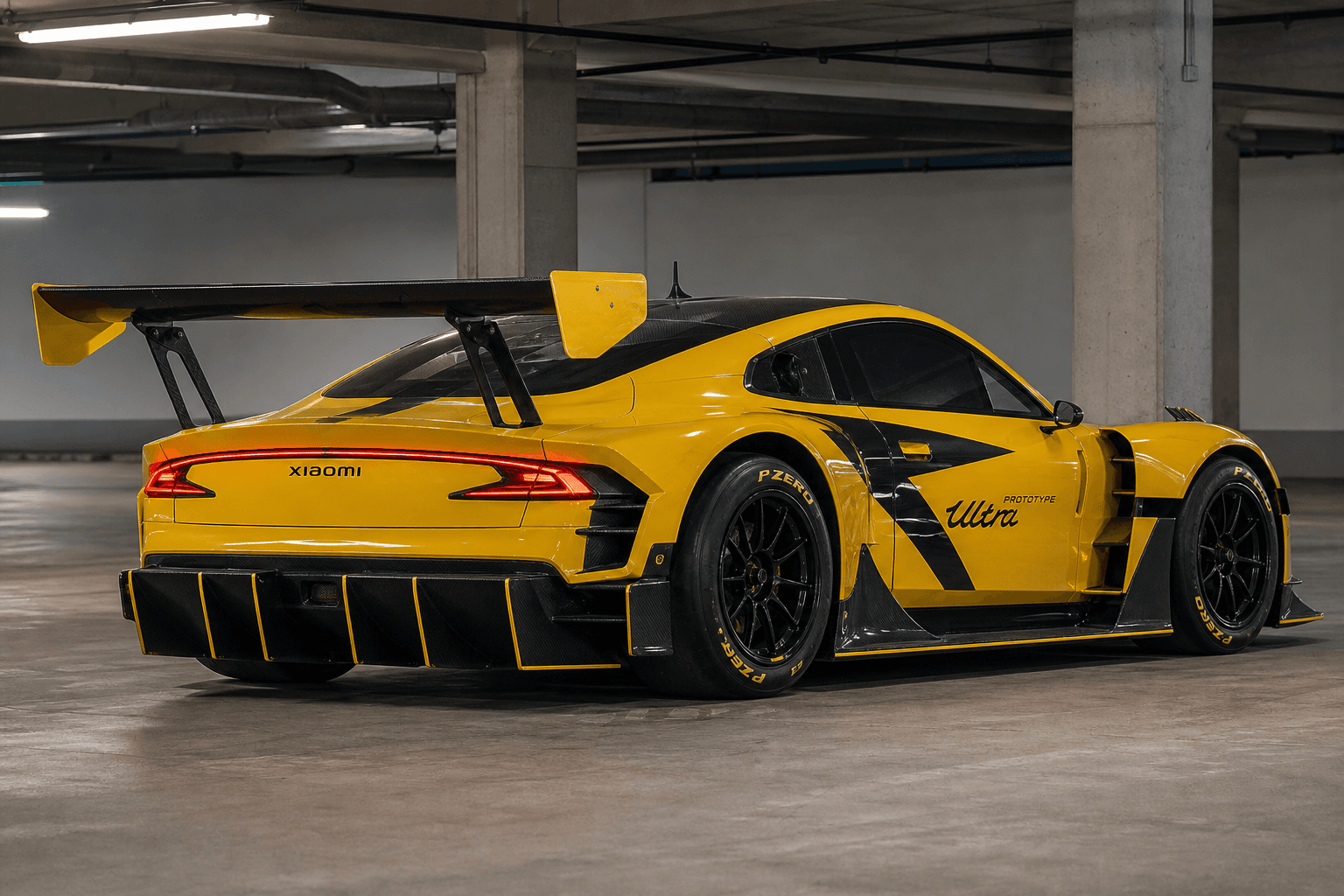
Xiaomi is still a newcomer to the electric car market, but the brand is already making plenty of noise when it comes to performance. Following the decidedly sporty SU7 Ultra, the manufacturer now appears to be working on a standalone two-door electric sports car. This is suggested by new images of a heavily camouflaged prototype spotted on Xiaomi’s campus.
Importantly, this is very unlikely to be a minor facelift or routine update. Instead, it appears to be a new body style with an unmistakable track-inspired look. And despite the covers, that look cannot be completely concealed.
The rear wing reveals its ambitions
The prototype’s most striking feature is a massive rear wing that remains clearly visible even beneath the cover and camouflage material. In road cars, aerodynamic elements like this are not merely about design; they usually send a clear signal that downforce is intended to play a role, improving stability at high speeds and through fast corners. Whether Xiaomi ultimately makes the aerodynamic package genuinely functional or primarily uses it as a performance statement will only become clear when the production version arrives.
The silhouette is also intriguing: low, elongated and clearly designed around two doors. That suits a vehicle aiming to be less of a “sports sedan” and more of a true “sports car.”
Will it use SU7 technology or be an entirely new car?
At present, there are many indications that Xiaomi will not start from scratch with the two-door model. A derivative based on the SU7 platform is more likely, meaning a model that retains key components such as the powertrain, electronic architecture and battery technology, but combines them with a different body and a stronger performance focus.
That makes sense from a manufacturer’s perspective: development costs remain manageable, time to market is reduced, and the company can still create an emotive halo car. In China in particular, models like these are often more than niche products because they can be marketed effectively as showcases for a company’s technology.
Why China approaches electric sports cars differently from Europe
While some European sports car brands remain more hesitant about fully electric supercars, the Chinese market appears far more willing to experiment. Extremely powerful variants generally serve two purposes: they are sold as genuine range-topping models, and they generate attention around the world. In this environment, outputs beyond 700 kW are no longer an exotic exception but part of a “look what we can do” contest.
Xiaomi’s decision to continue in this direction is therefore less surprising than it may initially seem from the perspective of the DACH region—Germany, Austria and Switzerland. In these countries, two doors, a large wing and extreme power figures tend to appeal mainly to enthusiasts. In China, they are often also seen as a sign of technological leadership.
Context: Xiaomi is not alone as competitive pressure increases
Xiaomi would not be the only contender with a car like this. BYD and its premium subsidiary Denza have also recently demonstrated that sporty electric flagships are a strategic priority. Anyone interested should also take a look at the Denza Z, which is likewise clearly intended to become a performance icon.
For Germany, Austria and Switzerland, the key question is whether Xiaomi will eventually bring vehicles like this to Europe, and under what homologation and pricing conditions. For now, the prototype is above all a very clear signal that Xiaomi is not abandoning the sports car segment. Instead, its next attempt could be even more extreme.
What can realistically be expected from a Xiaomi two-door model
- Platform sharing with the SU7 is likely in order to simplify development and scaling.
- Aerodynamic focus signaled by the large rear-wing design, potentially combined with a track package.
- Halo-car strategy: maximum attention and a high-tech image, even if production volumes remain limited.
Performance is not everything: Charging and efficiency also matter
As impressive as such figures and aerodynamic claims may be, everyday electric cars are still judged on factors such as charging time, thermal management and efficiency. In particularly powerful models, high performance can quickly mean more weight, larger tires, greater energy consumption and more demanding thermal requirements. Anyone who wants to understand why many manufacturers are therefore adopting 800-volt technology can find a useful overview in our comparison 800 V vs. 400 V: Which electric-car architecture you need in 2026.
And for anyone wondering how much of “range” is psychological and how to plan with confidence, our guide Electric-car range anxiety: Causes, facts and strategies can help.