VW Adjusts Production to EV Demand
At Volkswagen, the balance between combustion-engine vehicles and electric cars is shifting. Planned extra shifts at the company’s main Wolfsburg plant are to be canceled because demand for the combustion-engine models built there is weaker. At the same time, the Emden and Zwickau plants, which specialize in electric cars, are reporting better capacity utilization.
This is an important signal for the group’s transformation. However, it does not mean that all combustion-engine vehicles have suddenly become slow sellers or that all of VW’s problems have been resolved. Rather, the model mix is changing, while the overall European market remains below the levels seen in previous years.
The key development is not only the growing share of EVs, but also the shift in demand between individual models and plants.
Emden and Zwickau Benefit
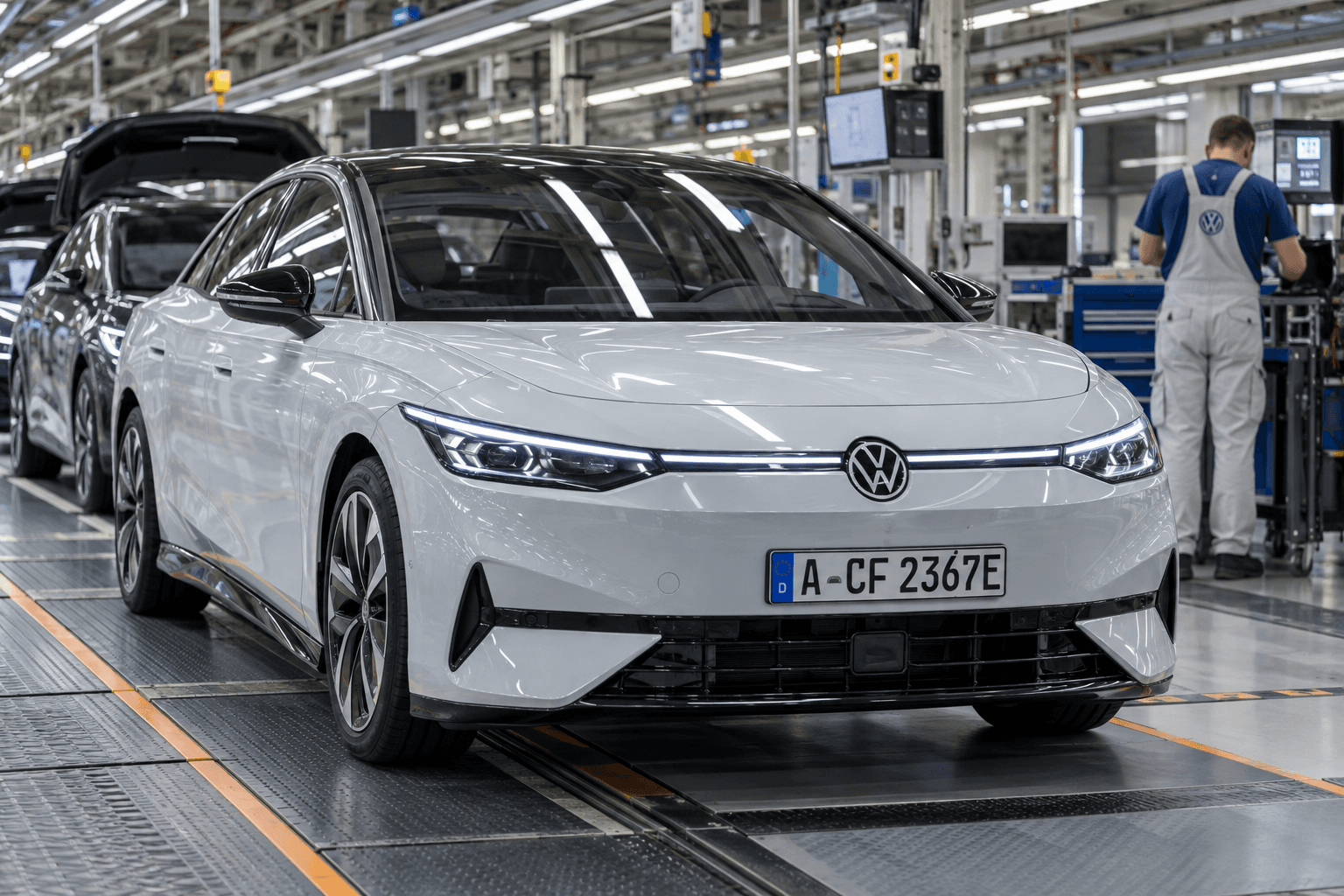
In Emden, strong order intake for the VW ID.7 is creating additional work. Under current plans, at least two more extra shifts are scheduled. This shows that a competitive electric car can utilize additional production capacity even in an overall challenging market.
Meanwhile, Zwickau is benefiting from demand for the updated ID.3 range. The VW ID.3 therefore remains an important part of the group’s electric portfolio. Model updates, software improvements and a higher-quality interior are intended to bring the compact car closer to the expectations of traditional Golf customers.
| Location | Current Development | Strategic Importance |
|---|---|---|
| Wolfsburg | Planned extra shifts for combustion-engine vehicles canceled | EV production is not scheduled to begin until the coming years |
| Emden | Additional extra shifts for the ID.7 | Important German site for electric midsize models |
| Zwickau | Better capacity utilization due to demand for the ID.3 | Already converted entirely to electric-car production |
| Salzgitter | Battery production is to be ramped up | Benefits indirectly from the expansion of electric small cars |
Electric Cars Will Come to Wolfsburg Later
So far, the main plant has produced only models with combustion engines. Under current plans, electric cars are not expected to follow for another four to five years. Key projects include an electric T-Roc and the future ID. Golf.
Until then, Wolfsburg will remain more dependent on the performance of conventional model ranges. The current adjustment highlights why flexible manufacturing is so important for Volkswagen: if demand for a particular powertrain or model declines, capacity cannot be shifted quickly between plants designed around different technologies.
ID. Tiguan Set to Strengthen Emden Further
The planned electric Tiguan could provide additional momentum. The model is considered the prospective successor to the VW ID.4 and is set to be built in Emden. Initial indications regarding the VW ID. Tiguan with MEB+ technology point to a concept more closely aligned with the familiar Tiguan.
This could make strategic sense for VW. Familiar model names lower the psychological barrier to switching to an electric car for many customers, while the modernized platform could deliver improvements in efficiency, software and charging performance.
Electric Small Cars Will Initially Come from Spain
The group’s new electric small cars, including the ID. Polo, are initially set to be manufactured in Spain. German vehicle plants will therefore not benefit directly from the start of their production. However, battery-cell production in Salzgitter is to be ramped up, ensuring that at least part of the value creation remains in Germany.
For the group, this is a balancing act between competitive production costs and the utilization of existing sites. Every cost item matters, particularly for affordable electric cars, because smaller vehicles leave less room for high margins.
The Overall Market Remains the Second Major Challenge
Stronger demand for individual electric cars should not be mistaken for a general automotive boom. Fewer new cars are still being sold in Europe than before the pandemic. This structural decline affects manufacturers regardless of whether they offer combustion-engine vehicles, hybrids or electric cars.
This leaves VW with a dual task: the group must meet the growing demand for electric vehicles while simultaneously adapting its overall capacity to a smaller market. The additional shifts in Emden and the cutbacks in Wolfsburg are therefore primarily a sign that the transformation is now becoming directly visible in plant utilization.