VW ID. Tiguan to arrive in late 2026 and replace the ID.4
Volkswagen is charting a new course for its electric SUV: The upcoming VW ID. Tiguan is set to make its official debut in late 2026 and then gradually replace the ID.4. In doing so, VW is continuing to move away from its previous numbering system and bringing one of its strongest model names back into the spotlight.
Important for the DACH market—the German-speaking region comprising Germany, Austria, and Switzerland: While recent discussion in North America has focused primarily on the production and model strategy surrounding the Chattanooga plant, the key point for Europe is that the electric Tiguan will be positioned as the clear successor in VW’s mass-market segment.
Design: much more “Tiguan,” less “ID. look”
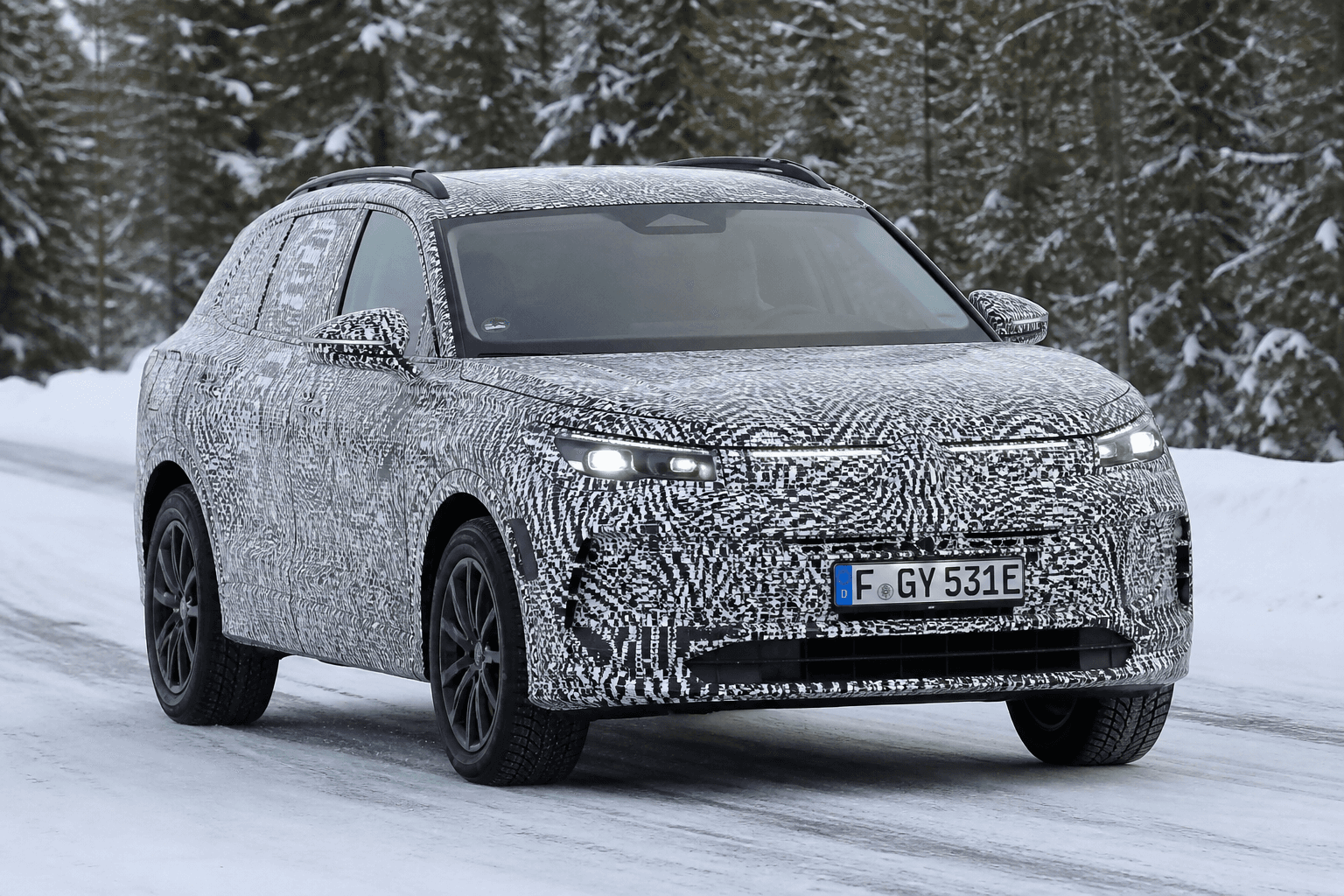
Recent images of almost undisguised prototypes show that the ID. Tiguan does not look like a rebadged ID.4, but rather like a distinct SUV whose styling is closer to the combustion-engine Tiguan. The front end appears more angular and more like a “traditional” SUV, complemented by new headlights and a redesigned hood.
There are also noticeable changes along the sides: new doors and extending, conventionally styled door handles that are more reminiscent of current Tiguan design cues than those of the existing ID.4. Overall, this should appeal to precisely those customers who liked the ID.4’s rounder, almost van-like design but also wanted “more SUV.”
Interior: VW is putting greater emphasis on buttons again
There are no final photos of the ID. Tiguan’s interior yet, but the direction is clear: VW is rolling out its new cockpit and infotainment concept, which is already being introduced in its newer models. The focus is on one feature many drivers have requested: more physical controls instead of touch-only surfaces.
Physical buttons for climate functions are planned below the central display and on the steering wheel. This is not about nostalgia, but about a tangible everyday benefit: faster operation without navigating menus, less distraction, and more reliable inputs on rough roads.
Technology: MEB+ as the basis for greater range and better charging
The ID. Tiguan is expected to use the MEB+ platform. This evolution of the familiar MEB architecture is intended to deliver improvements primarily to the powertrain and battery—the areas that truly matter in today’s competitive landscape: efficiency, range, and charging speed.
VW has not yet officially announced specific figures. What is clear, however, is that the current ID.4 offers a WLTP range of up to 566 km, depending on the version. Expectations in this segment have risen considerably, so the ID. Tiguan will need to deliver tangible improvements in energy consumption and rapid charging, not just a new face.
If you want to see where the ID. Tiguan fits into the current model landscape, our comparison Electric Compact SUVs 2026 provides a useful overview of the electric compact SUVs available in Germany. Those interested in the technical side can find the key differences in charging performance and hardware explained in 800V vs. 400V.
Analysis: the name change is a strategy, not a cosmetic exercise
VW’s decision to turn the ID.4 into the ID. Tiguan is about more than marketing. For years, the Tiguan name has represented a familiar format in Europe, and that familiarity can be a selling point for electric cars, especially among drivers switching from combustion-engine vehicles.
Whether the package succeeds will ultimately depend less on the badge than on the details: stable software, a well-rounded control concept, and measurable advances in efficiency and charging. If MEB+ delivers on these points, the ID. Tiguan could give VW significantly more momentum in the mass-market segment.