FSD V15 Is Intended to Enable Continuous Operation
Tesla is preparing the next major step for its Robotaxi service. With FSD V15, autonomous rides in active US markets are expected to be offered 24 hours a day. Tesla’s AI leadership has given approximately October 2026 as the target timeframe.
Until now, fixed operating hours have applied depending on the city and service area. Although Tesla has already tested nighttime rides, seamless availability has yet to be achieved. The planned continuous operation is therefore more than simply an extension of operating hours, as it requires reliable vehicle control in changing light conditions, heavier traffic, and a wide range of situations.
The date is not yet a firm launch commitment. Tesla says 24/7 operation depends on the successful integration and validation of the new FSD V15 technology.
What Will Change With FSD V15
FSD V15 is expected to introduce seven major changes to the software architecture. According to Tesla, the centerpiece is a neural network with around 10 billion parameters. It is intended to detect hazards earlier, react more quickly, and plan evasive maneuvers more precisely.
However, the size of the AI model is not the only critical factor. For a Robotaxi service, the software must predict how situations will develop over time and remain stable even when other road users behave unusually. Tesla’s claims regarding response times and collision avoidance must still be confirmed in large-scale fleet operation.
| Area | Current Status | Goal With FSD V15 |
|---|---|---|
| Operating hours | Limited availability | Rides around the clock |
| Hazard detection | FSD V14 architecture | Earlier predictions and faster responses |
| Fleet deployment | Gradual testing in limited areas | Broader validation and additional service areas |
Model Y and Cybercab Use the Same Software Platform
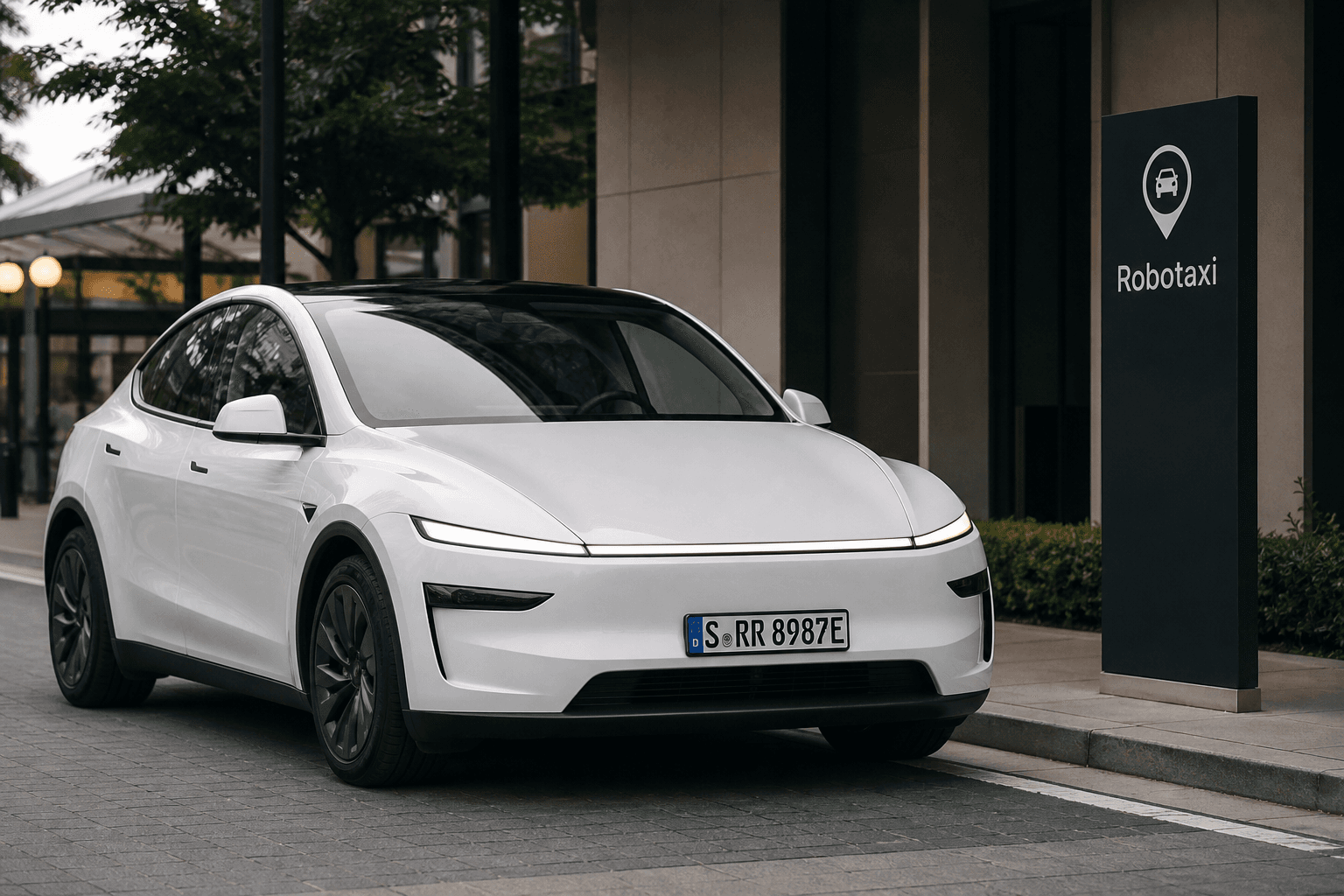
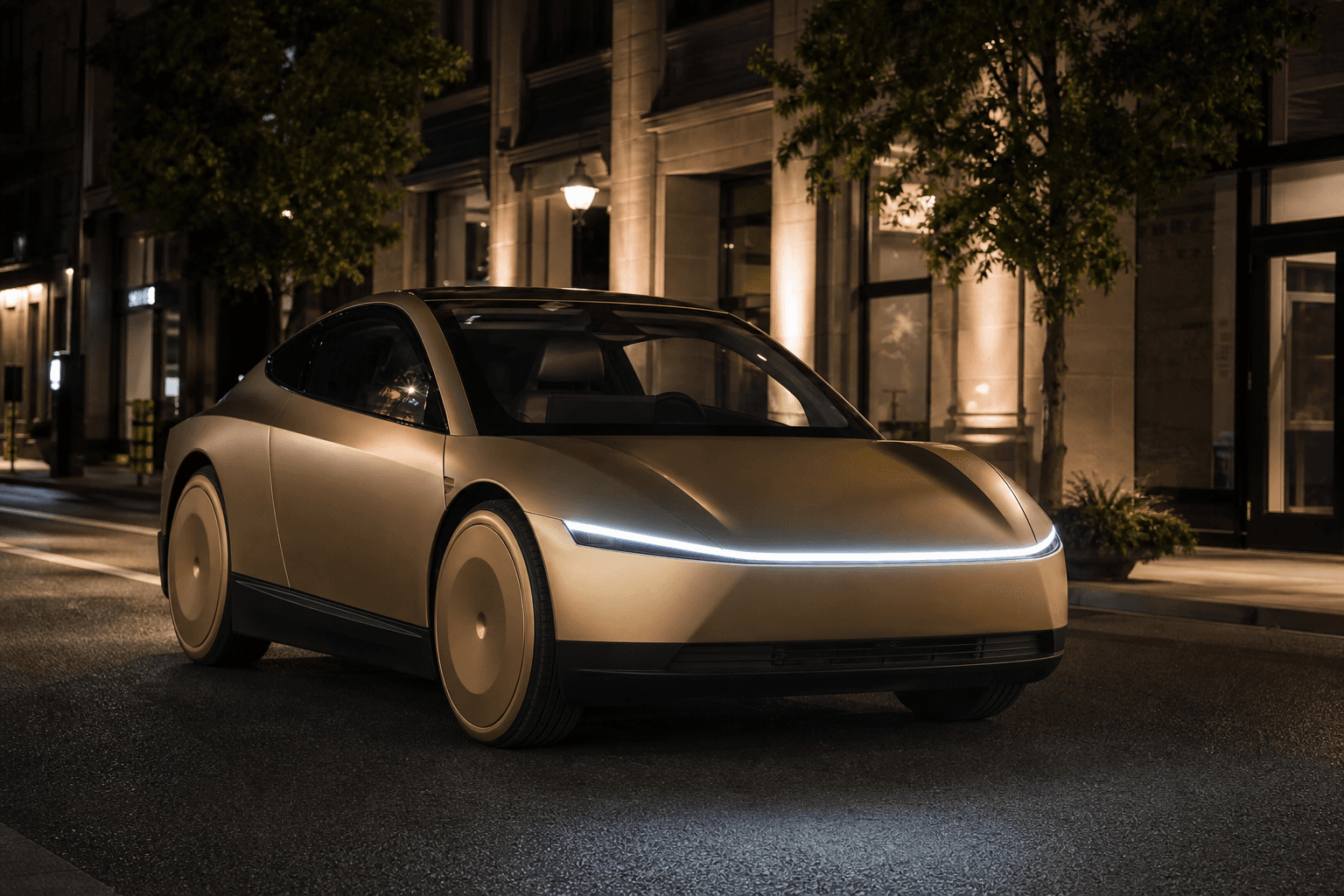
In its Robotaxi fleet, Tesla combines converted Model Y vehicles with the Cybercab, which was developed specifically for ride-hailing services. Both platforms are expected to use FSD V15. This allows Tesla to test the software on different vehicle concepts without having to develop two separate systems.
According to Tesla, current vehicles equipped with Hardware 4 have sufficient computing power for FSD V15 and, eventually, for unsupervised autonomous driving as well. The Cybercab will receive an even more powerful FSD computer. However, greater computing power alone does not guarantee regulatory approval, as software quality, redundancy, and regulatory clearances remain equally important.
Why the Commercial Fleet Comes First
A controlled Robotaxi operation provides Tesla with large volumes of real-world driving data from clearly defined service areas. Unusual situations can be analyzed, and new software versions can initially be deployed within a monitored fleet. Successful fleet testing → lower risk when the software is later released for customer vehicles.
Tesla is still targeting late 2026 or early 2027 for FSD V15 in privately owned Hardware 4 vehicles. Additional technical statements regarding FSD V15 and Hardware 4 show that the new version plays a central role in Tesla’s autonomy plans.
Even so, a Robotaxi version and a software release for private customers are not automatically identical. The commercial service operates within limited areas and can be centrally monitored and operationally managed. A customer vehicle, by contrast, must cope with a far wider variety of roads, regions, and usage patterns.
Regulation Remains Crucial for the DACH Region
The planned launch initially applies to North America. Even technically stable 24/7 operation in US cities would not mean that Tesla could offer the same service in Germany, Austria, or Switzerland—the countries collectively known as the DACH region—at short notice. These markets have different approval procedures as well as national and European rules governing automated driving functions.
FSD V15 is nevertheless relevant to Europe. If the architecture proves itself in a large commercial fleet, it would strengthen Tesla’s technical foundation for subsequent approvals and local adaptations. The announced continuous operation would therefore be an important real-world test, but not evidence that a European Robotaxi launch is imminent.