What is Tesla’s new patent about?
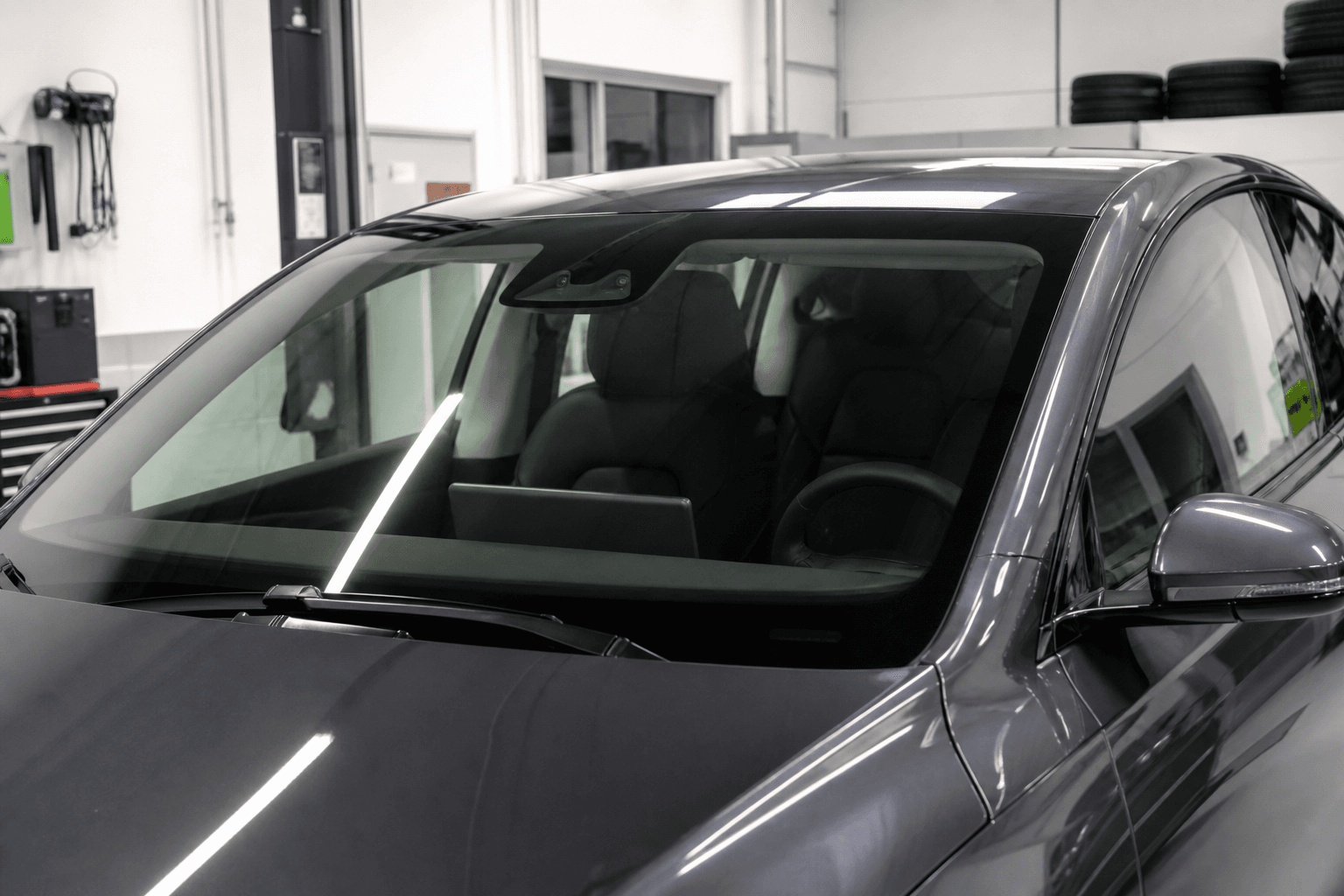
Tesla has published a patent application addressing an annoying everyday issue: haze, a light film on the inside of the windshield directly in front of the front-facing cameras. This can cause the car to issue camera-visibility warnings even though the outside of the windshield is clean.
For camera-based driver-assistance systems, this is more than a cosmetic issue. As soon as contrast and sharpness deteriorate, reliability declines in backlighting, rain or at night, and the system becomes more cautious or restricts certain functions.
What causes the film in the first place?
According to Tesla, the haze is linked to VOCs (volatile organic compounds) as well as semi-volatile compounds. These can be released over long periods by plastics, adhesives and other materials in the interior.
In certain areas, such as around the camera module behind the rear-view mirror, these substances can settle on the windshield and condense into a film. The problem is particularly frustrating for owners because normal exterior glass cleaning does not help.
A known issue: Cleaning is possible, but cumbersome
This issue is not new to Tesla. Some affected vehicles require targeted cleaning behind the cover around the camera area. Depending on the model, this involves removing the mirror or camera trim to gain proper access to the affected section of glass.
A service for this has previously been offered in the US, typically costing around 50 to 89 US dollars. For the DACH region—the German-speaking markets of Germany, Austria and Switzerland—the main takeaway is that the issue can be resolved in principle, but it is not simply a matter of “quickly cleaning the windshield.”
The patent’s approach: Trap VOCs before they reach the windshield
The interesting aspect of the patent application is its change in perspective: Tesla describes not only how cleaning could be made easier, but also how the buildup could be reduced preventively.
Specifically, it proposes plastic components near the front-facing cameras containing microporous, crystalline aluminosilicate particles. These are zeolite-like structures with tiny pores that can attract and trap certain molecules.
How the material is intended to work
- The base material is polypropylene mixed with absorbent particles.
- Depending on the design, the pores are intended to be around 3 to 10 Å in size to “capture” different compounds.
- In example designs, Tesla specifies a very high particle content of around 70% by weight.
Importantly, Tesla is not proposing merely coating a surface. Instead, the absorbent particles would be distributed throughout the plastic, allowing the components to continue trapping VOCs over a longer period.
What would this mean in everyday use, particularly for FSD cameras?
If the approach makes it into production vehicles, its real-world impact would be fairly clear: less film on the inside of the windshield around the cameras → fewer warnings about restricted camera visibility and, ideally, more consistent driver-assistance performance over the years.
This is particularly relevant for vehicles that rely heavily on cameras. Although “FSD,” Tesla’s Full Self-Driving system, has a different functional and regulatory status in Europe—and therefore in the DACH region—than in the US, camera systems everywhere benefit from the clearest possible view.
Will this appear in new Teslas immediately?
No, a patent does not confirm that a technology will enter production. Patents primarily indicate what a company is considering and which potential solutions it wants to protect. However, the fact that Tesla has already publicly identified the issue as a priority and is now describing a specific passive countermeasure is a positive sign.
If you are generally interested in the development of Tesla’s cameras and FSD, it is also worth looking at Tesla’s current discussion surrounding HW4 and its FSD models. And for context on which vehicles are most often used as benchmarks in the local market, the model page for the Tesla Model Y is a good starting point.
Assessment: A small cause with a major impact
A milky haze covering just a few square centimeters of glass may sound trivial, but with camera-based perception it can make the difference between the system operating unobtrusively and displaying a “please clean camera” warning. Tesla’s patent targets precisely these invisible long-term effects, which are barely noticeable in a new car but can suddenly become annoying after several years.
It also fits a broader trend: Rather than improving software alone, companies are refining the physical conditions around sensors to ensure they continue operating reliably. In practice, this is often the factor that delivers a genuine improvement in reliability.