Grok is set to compose text messages in Tesla vehicles
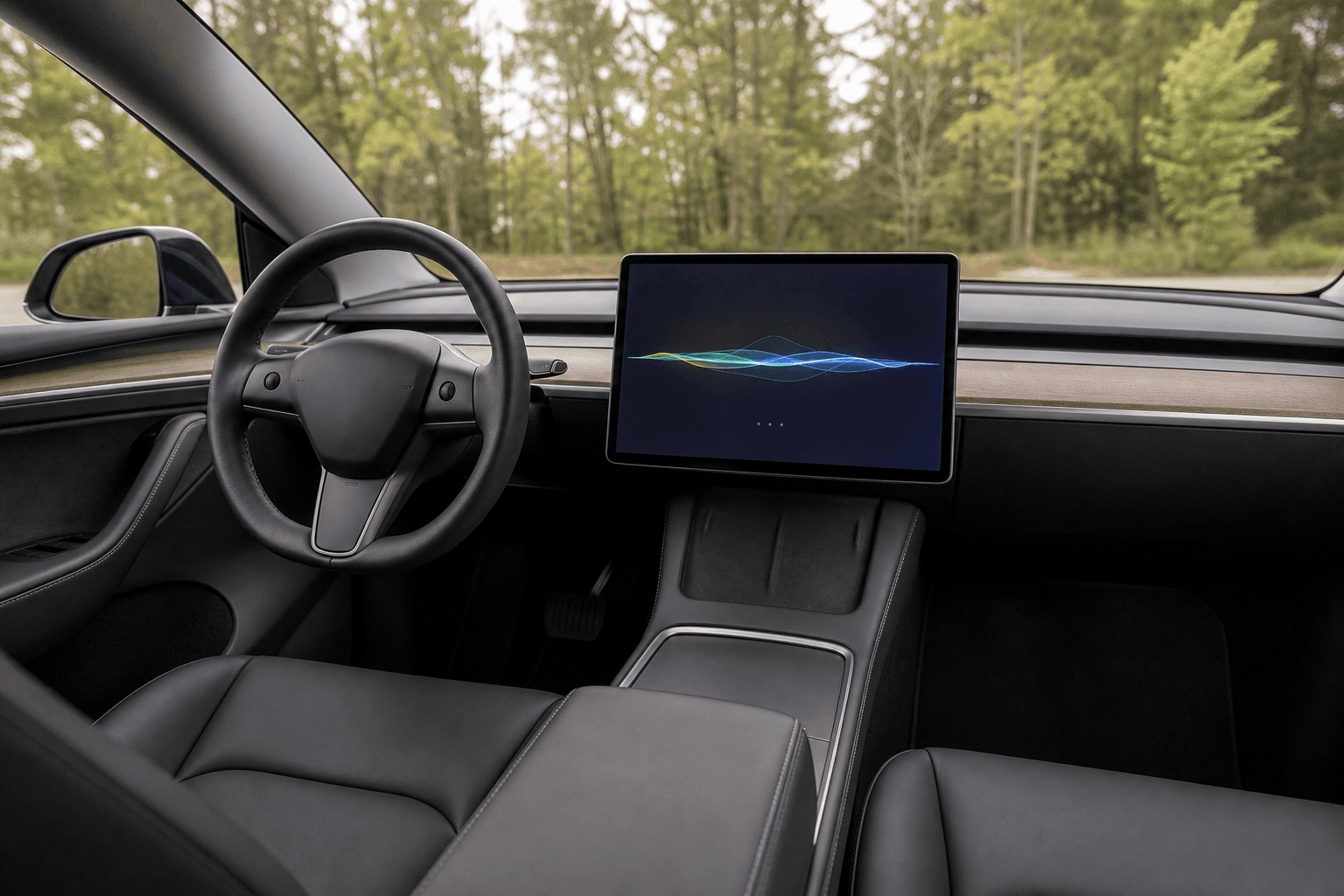
Tesla is gradually developing Grok from a conversational companion into a practical in-car assistant. According to an updated description in the official Tesla Model Y manual, the AI will eventually be able to send text messages to contacts or directly entered phone numbers.
Drivers will be able to use a natural-language voice command, for example asking it to tell someone that they will arrive soon. The feature is already listed in the manual for Grok’s Assistant personality, but it is not yet generally available in vehicles.
The entry in the manual is a strong indication that the feature is planned, but it confirms neither a launch date nor regional availability.
What Grok can already do in a Tesla
Grok initially launched in vehicles primarily as an AI chatbot for general questions. Tesla has since integrated the assistant much more deeply into navigation, media, and vehicle functions. In each case, the relevant feature must be enabled for the vehicle, software version, and region.
| Area | Function | Status according to documentation |
|---|---|---|
| Navigation | Search for destinations, start routes, and add or remove waypoints | Supported |
| Phone | Call contacts or phone numbers | Supported |
| Media | Search for and play content | Supported |
| Vehicle settings | Find relevant menus and options | Supported |
| Vehicle controls | Control climate settings, heated seats, the heated steering wheel, and other functions | Supported |
| Vehicle information | Answer questions using the digital manual | Supported |
| Text messages | Compose and send messages using natural-language voice commands | Announced, no date yet |
Natural language is the key advantage
Tesla has long supported conventional voice commands and the dictation feature of a smartphone connected via Bluetooth. Grok could make this process more convenient because the AI does not merely recognize individual keywords; it also processes the context of a freely spoken instruction.
In everyday use, that means: natural sentence → appropriately worded message. Instead of having to say a rigid command exactly right, drivers could express what they want in conversational language. This lowers the barrier to use and may reduce the time spent paying attention to menus or corrections.
The crucial factor will be how reliably Grok recognizes names, phone numbers, and the intended content. A clear audible confirmation before sending would be advisable so that misunderstood wording or confusion between address-book entries does not result in a message going directly to the wrong recipient.
Greater convenience is no substitute for attention
Good voice controls can reduce distraction from the touchscreen, but they do not automatically make communication while driving risk-free. A spoken conversation or composing a message also requires attention. Regardless of the control method, drivers therefore remain responsible for monitoring traffic.
For Germany, Austria, and Switzerland, it is also important to note that the specific rules governing the use of electronic devices may differ between the three countries. Hands-free operation is generally advisable, but it is not a license for lengthy communication behind the wheel.
No date yet for the software update
Tesla has not yet named a software version or a firm release date. Because the feature already appears in the vehicle documentation, technical preparations are likely at an advanced stage. Even so, activation could be delayed by testing, regional requirements, or integration with smartphone services.
Grok was initially introduced in North America and subsequently expanded to other markets, including Europe. It remains unclear whether message sending will launch simultaneously in all supported regions. Tesla often rolls out new features gradually via over-the-air updates.
In the long term, Grok is expected to work even more closely with Tesla’s vehicle systems. However, statements about a possible connection with Tesla FSD and future AI features go far beyond the messaging function now documented. For now, the focus is on a clear improvement in convenience: fewer rigid voice commands and more natural communication in the car.