FSD V14 Lite is ready for older Tesla flagships
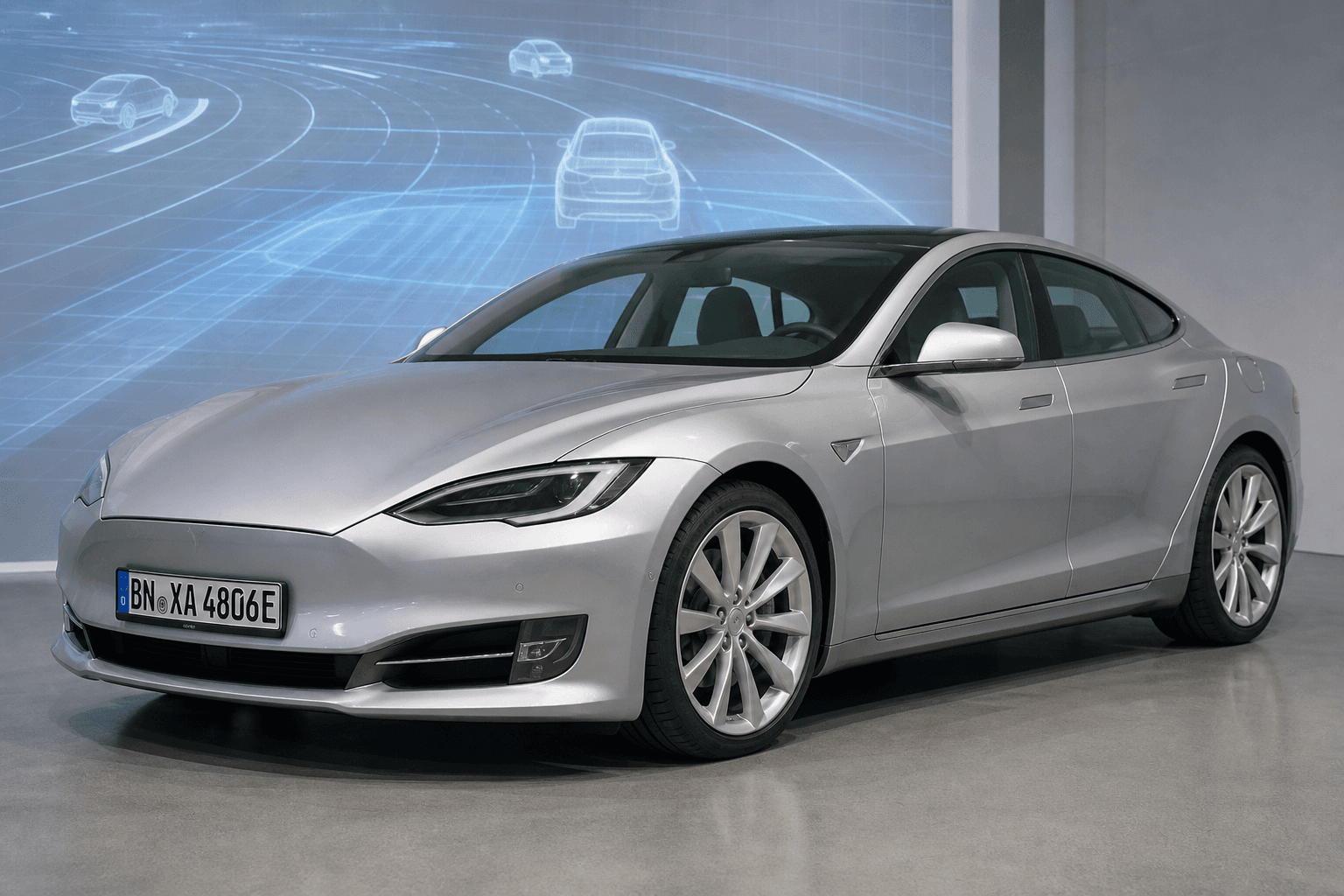
Tesla may soon close the next gap in its software rollout. FSD V14 Lite is also expected to be released for older examples of the Tesla Model S and Tesla Model X with Hardware 3.
Tesla’s head of AI, Ashok Elluswamy, suggested during a conversation on the sidelines of an event that the release had already been planned. However, there is still no confirmed date or specific list of supported model years.
FSD V14 Lite is intended to bring modern driving decisions to older Tesla hardware without glossing over the technical limitations of HW3.
Why Model S and Model X are getting it later
The Lite version initially launched on Model 3 and Model Y vehicles with Hardware 3. Tesla therefore focused first on its highest-volume model lines before adapting the software to the older platforms and vehicle configurations of the Model S and Model X.
The delay was nevertheless noticeable for owners of the two premium models. While newer vehicles with Hardware 4 benefited more quickly from the latest FSD developments, HW3 offered significantly less computing power for complex neural networks.
| Feature | FSD V14 | FSD V14 Lite |
|---|---|---|
| Target hardware | Primarily Hardware 4 | Hardware 3 |
| Model size | Full main version | Compressed and optimized variant |
| Computing requirements | Higher | Adapted to older onboard computers |
| Level of autonomy | Still a supervised system | Still a supervised system |
How Tesla gets V14 onto the HW3 computer
Hardware 3 reportedly has only around 15% of the memory bandwidth of the current HW4 platform. Larger AI models therefore cannot simply be transferred unchanged to the older computer.
Instead, Tesla uses distillation. This transfers the behavior of a larger AI model to a more compact version. Analyze the large model → condense the relevant driving decisions → optimize a smaller version for HW3.
This is technically demanding and could extend the useful life of older vehicles. However, V14 Lite will not necessarily offer every feature included in the full version, nor does it overcome the computer’s physical limitations.
HW3 remains the critical bottleneck
Tesla has already indicated that Hardware 3 is unlikely to be sufficient for unsupervised autonomous driving. The next major generation is also expected to depend on more powerful computers, as statements about FSD V15 and Hardware 4 show.
For affected customers, V14 Lite is therefore likely to be the most important major development within the limits of the existing hardware. Tesla has also raised the prospect of computer upgrades if HW3 performance proves inadequate. How these would be implemented technically and which vehicles would qualify remains unclear.
What the rollout means for Germany, Austria, and Switzerland
A software launch in North America does not automatically mean immediate activation in the DACH region—Germany, Austria, and Switzerland. Driver-assistance systems are subject to different approval requirements here, so features may be restricted, released later, or initially unavailable depending on the market.
Despite the Full Self-Driving name, FSD V14 Lite remains a supervised driver-assistance system. The driver remains responsible and must be able to intervene at any time.
The development is still positive for HW3 owners. If Tesla can deploy the optimized software reliably on the Model S and Model X, older premium vehicles will also benefit from newer AI models without immediately requiring new hardware.