Smart #2 Returns as a Compact Electric Two-Seater
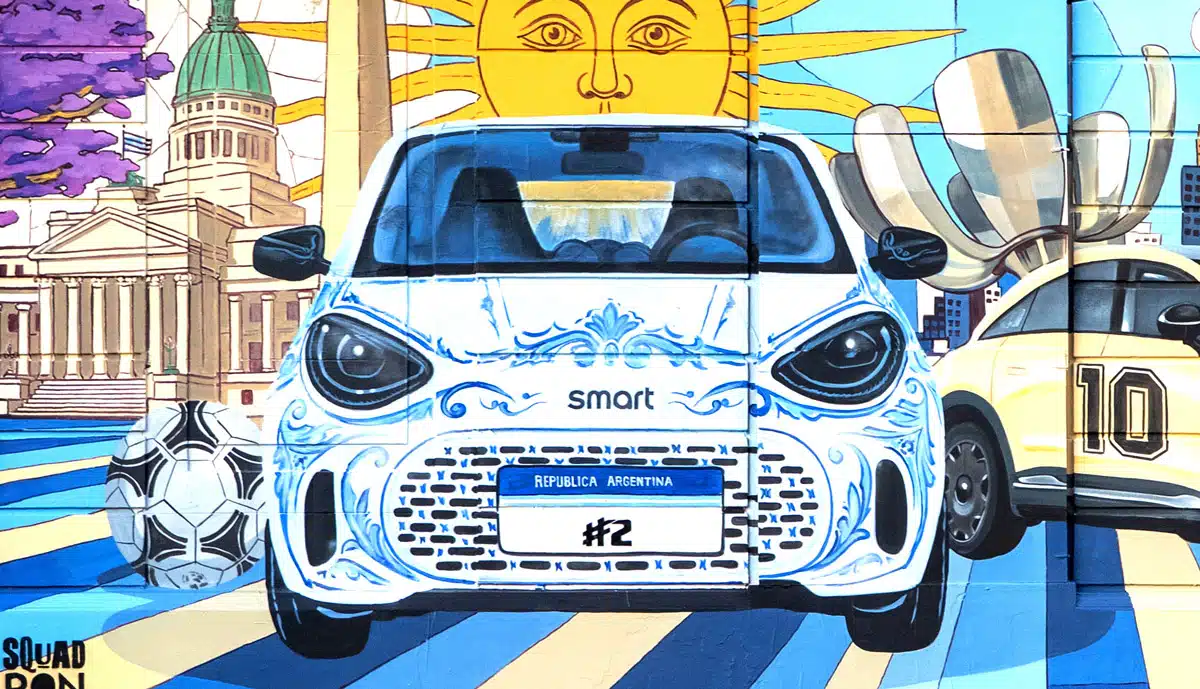
With the #2, Smart plans to launch another car designed uncompromisingly for the city: two seats, ultra-compact exterior dimensions, and a full-fledged safety concept nonetheless. This would make the #2 the smallest electric car in Smart’s future lineup, which has recently expanded primarily into larger segments.
Importantly, the #2 is intended to have a clearly recognizable connection to the original ForTwo, but without nostalgic styling. Instead of going retro, Smart is adopting a design language that fits its current model family.
Design Concept: ForTwo Character, but Modern and Crash-Safe
According to statements from the design team, the main focus was on proportions, surfaces, and the look and feel of the materials. This is an understandable strategy because the segment is price-sensitive, and “premium” can quickly come across as expensive or overstyled here.
Technically, a new electric platform helps achieve the Smart look: wheels positioned far out at the corners, short overhangs, and plenty of usable space within a small footprint. This basic shape was precisely what made the ForTwo so practical in everyday use.
A central element remains the idea of the Tridion safety cell, now presented as an advanced safety concept. On the #2, this is visually interpreted through a two-tone, floating “Halo Roof”. At its core, it is a modern revival of the philosophy of “making the safety cell visible,” simply presented in a contemporary way.
New Platform: Electric Compact Architecture (ECA) for Ultra-Compact Cars
The Smart #2 is expected to use an Electric Compact Architecture (ECA) developed specifically for very small electric vehicles. This is interesting because ultra-short vehicles face particular challenges when it comes to crash requirements, packaging, and costs. A dedicated architecture can offer more benefits here than a platform from a larger vehicle class that has simply been “cut down.”
The fact that Smart is now jointly backed by Mercedes-Benz and Geely puts the #2 into a clear context: premium ambitions, but with China serving as the development and production base and providing access to local supply chains.
Initial Data from China: Dimensions, Power, Battery, and Charging
Initial technical specifications for the #2 are already circulating in China. According to these figures, the car is around 2.75 m long, just under 1.67 m wide, and about 1.56 m tall, with a wheelbase of around 1.89 m. This keeps Smart firmly in its core urban territory, even though today’s safety and comfort expectations are significantly higher than they were in the ForTwo era.
The powertrain is said to feature a 60-kW motor, while curb weight is expected to be 1,130 kg. Top speed is listed as 140 km/h. For everyday use, however, the battery and charging performance are more important: the car is expected to use a 35.7-kWh LFP battery with CATL cells, while the preliminary range figure is around 300 km.
For fast charging, a target of 10 to 80% in about 20 minutes is being discussed. If Smart can achieve that consistently in the production version, it would be a genuine convenience factor for a city car, making short stops feel “normal” again without requiring long waits at an HPC high-power charging station.
Smart #2 Preliminary Specifications at a Glance
| Specification | Value |
|---|---|
| Length | around 2.75 m |
| Width | just under 1.67 m |
| Height | about 1.56 m |
| Wheelbase | around 1.89 m |
| Power | 60 kW |
| Battery | 35.7 kWh (LFP) |
| Range | around 300 km |
| Fast charging | 10 to 80% in about 20 min |
| Curb weight | 1,130 kg |
| Top speed | 140 km/h |
Why LFP Makes Sense Here
Smart’s apparent decision to use LFP in the #2 suits the vehicle’s concept: LFP batteries are generally more robust in everyday use, contain no cobalt, and are often more cost-effective. Particularly in the city-car segment, what ultimately matters is a well-balanced package of price, durability, and sufficient range rather than maximum energy density at any cost.
For real-world conditions in the DACH region—Germany, Austria, and Switzerland—this means that the 300 km figure “on paper” is likely to vary noticeably depending on speed and season, but it is often more than enough for typical urban driving and commuting. And if the 20-minute charging time is achieved, occasional longer-distance trips will also become more relaxed.
Assessment: Smart Is Targeting the Urban Niche Again
The Smart #2 is aimed at a niche that has recently had few contenders: genuinely short, simple electric two-seaters with modern safety and charging capabilities. At the same time, the car is intended to serve as a small flagship that clearly repositions Smart as a city-car brand, albeit with today’s interpretation of premium quality and technology.
If you are interested in ultra-compact electric cars, it is also worth looking at what Smart has already revealed about the concept and direction of the #2: Smart #2 as a ForTwo comeback with 300 km of range. And for anyone who wants to know how seriously Smart is taking its development: the Smart #2 test program on pothole-ridden roads offers a good indication.
For comparison within the world of compact electric cars, many buyers consider not only the vehicle itself but also its charging architecture crucial. If you are currently weighing up what will truly matter in everyday use in 2026, this overview is helpful: 800 volts vs. 400 volts in an electric car.