Smart #2: The two-seater returns, but avoids the retro trap
Small two-seaters are a rare breed in 2026. Crash safety requirements, cost pressures in the entry-level segment, and the “hardware” of electric mobility—an underfloor battery and high overall vehicle weights—make ultra-short cars unattractive to many manufacturers.
Smart is nevertheless returning to this niche with the Smart #2, an electric successor to its iconic city car. The message is clear: this is not a nostalgic remake, but a modern entry-level model that is also intended to serve as an anchor for the brand’s identity.
Design DNA: Recognizable, but deliberately not “like the old days”
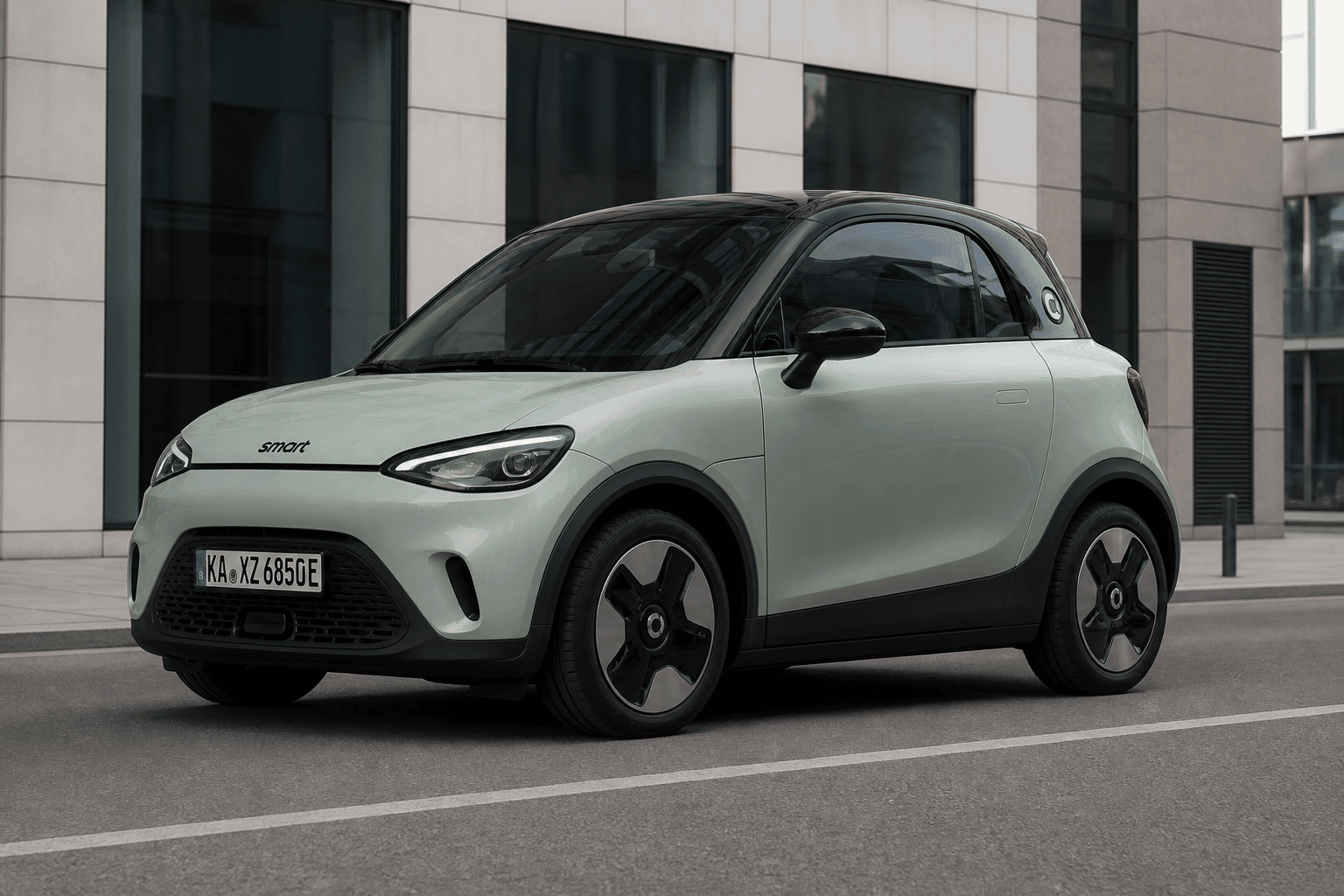
Smart clearly places the #2 in the lineage of the City-Coupé and Fortwo. Its recognizable character is intended to come primarily from its proportions and silhouette—in other words, the features that immediately read as “Smart.”
One particularly interesting aspect is how Smart has handled one of its most iconic elements: the Tridion safety cell. The underlying principle of a protective structure around the occupants remains, but it has been further developed to meet today’s safety requirements.
Visually, the cell is much more understated on the #2. Instead of prominently displaying its protective structure on the outside, a two-tone, seemingly floating roof provides the visual distinction. Smart calls this a modern interpretation of the Tridion concept.
Technology meets packaging: “Wheels-to-the-corners” as the core principle
For a two-seater to remain genuinely “Smart” in everyday use, it needs to feel larger inside than it looks from the outside. This is precisely where the new Electric Compact Architecture comes in: the wheels are pushed far into the vehicle’s corners. The result is short overhangs, the signature silhouette, and, above all, more usable interior space within a small footprint.
Smart describes this advantage as a high “Body Space Index”—an especially efficient ratio between exterior dimensions and usable interior space. In everyday terms, that means easier parking without an interior that feels compromised.
Cost focus: Fewer “features,” more substance
The #2 is intended to work as an entry-level model, so the concept had to be cost-conscious from the outset. According to Smart, the aim was not to take a finished car and later cut it down to save money, but to develop it from an early stage with clear priorities.
The focus is on space, proportions, surfaces, and perceived material quality. Expensive or excessive gimmicks that would ultimately only drive up the price were deliberately avoided. That fits the original Smart philosophy: purposeful simplicity, not cost-cutting for its own sake.
Why only now? Smart first wanted to prove that the brand could do more
Many people wonder why Smart did not bring back the two-seater when the brand was relaunched. The explanation is understandable: Smart first wanted to demonstrate in other segments that the brand is defined not only by a car’s length, but by solutions for urban mobility and space efficiency.
The two-seater was always part of the plan, but deliberately not the first step. According to Smart, it was no coincidence that the model number “2” remained unused for so long.
Development pace with Geely: “China speed” plus new tools
The #2 is being developed in collaboration with Geely, under conditions many describe as “China speed”: faster cycles, more closely integrated processes, and intense pressure to deliver. Smart does not see this as a break with tradition, but as the industry’s new normal.
Modern tools such as AI are also being used during the creative phase. The idea is to move more quickly from an initial concept to robust designs. However, final creative authority is intended to remain with the design team.
What it means for Germany, Austria, and Switzerland
For the DACH market—the German-speaking region comprising Germany, Austria, and Switzerland—the Smart #2 will be particularly compelling if Smart gets two things right: a genuinely city-friendly footprint despite today’s safety requirements, and a price that does not climb into territory where electric compact SUVs are already uncomfortably close.
If you are interested in mini EVs in general, take a look at our preview of the Smart #2 as a Fortwo comeback with a range of around 300 km. And because charging speed is often more important in everyday use than on-paper figures, it is also worth looking at Smart’s 800-volt plans for the #1, which show where the brand’s technology could be heading overall.
Also of interest: Details of the test program involving months of driving over potholes explain why Smart is subjecting the #2 to such demanding real-world testing ahead of its premiere.