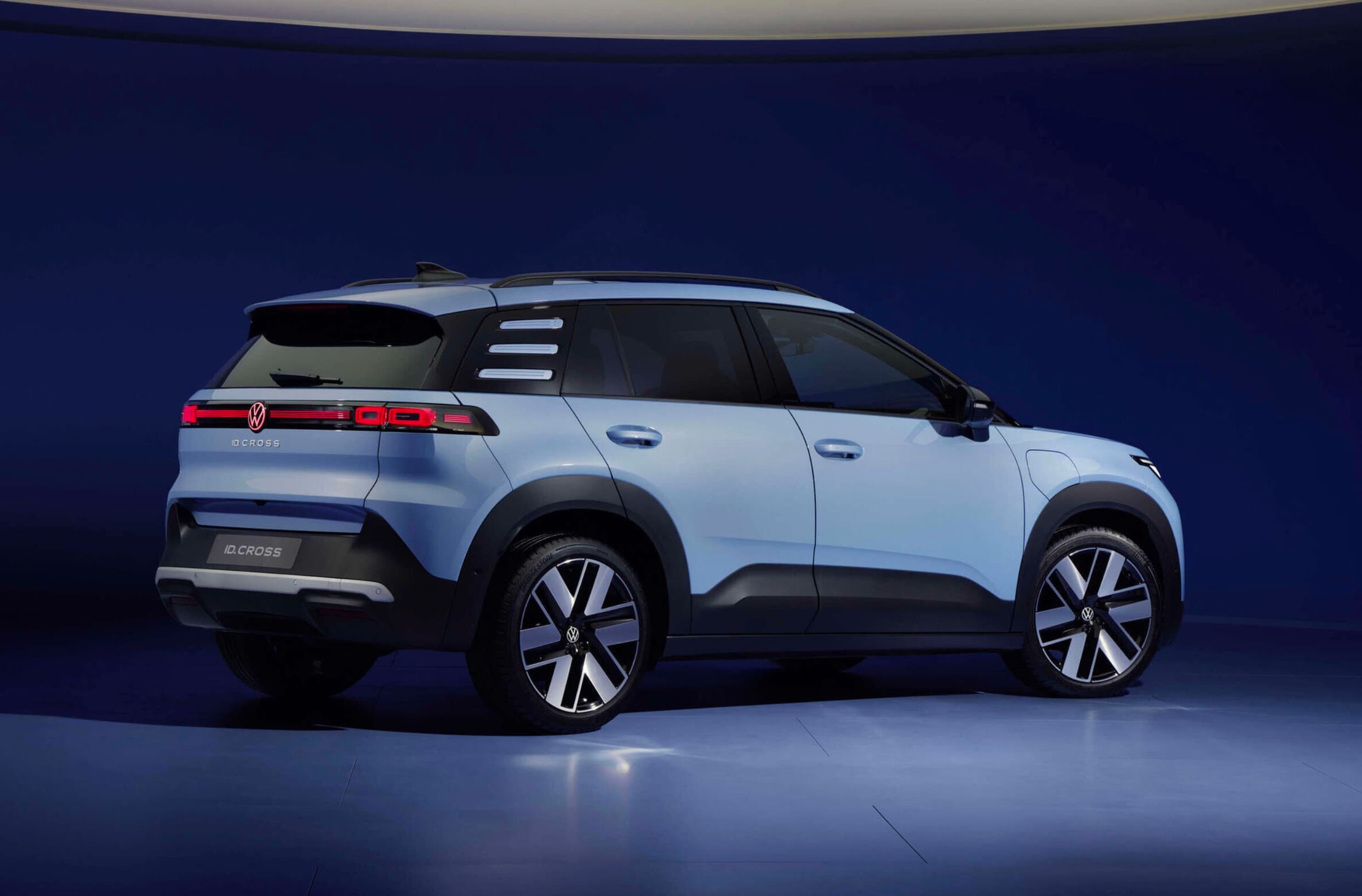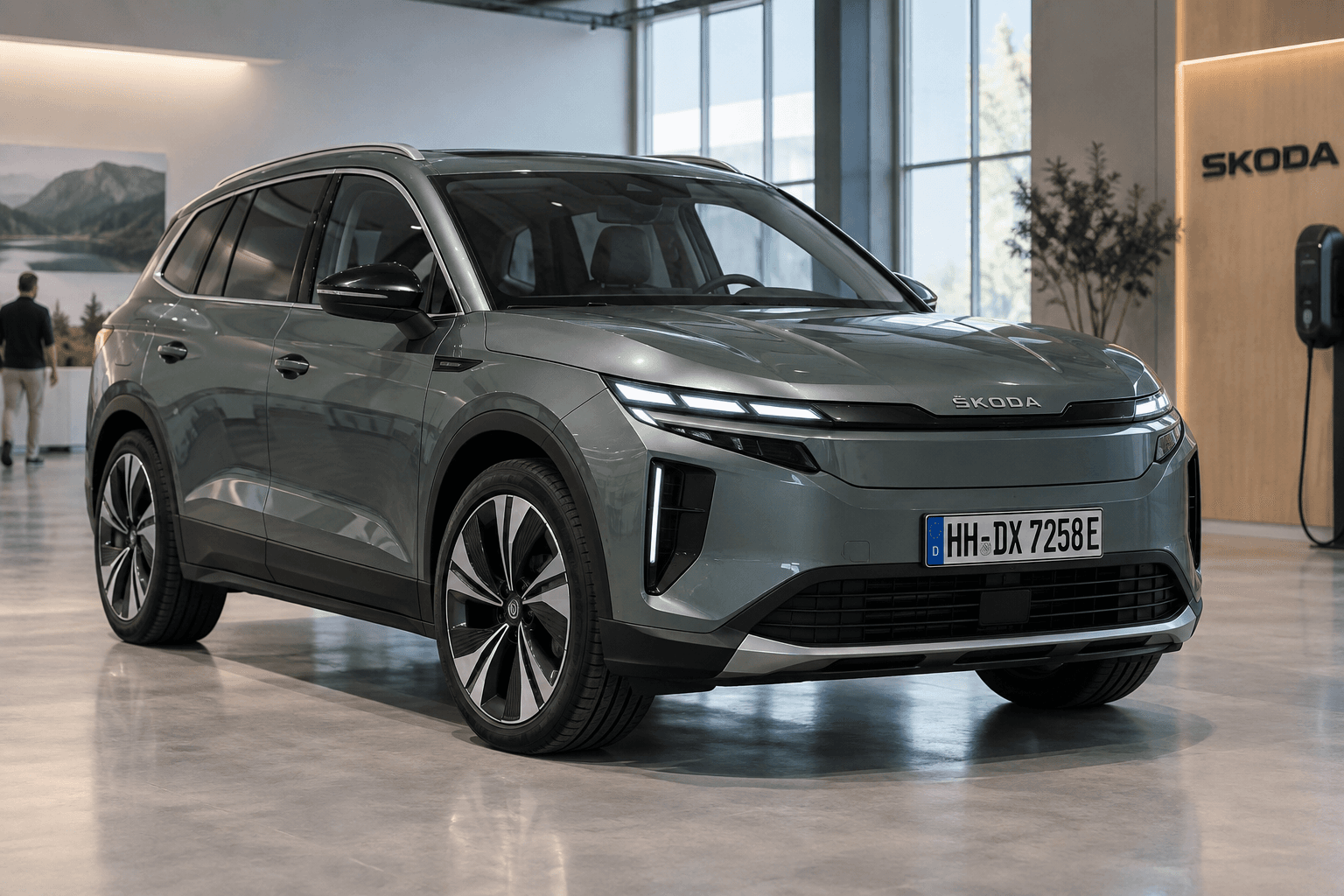
Skoda Peaq targets families and fleets
With the Peaq, Skoda is expanding its electric lineup with a large SUV offering up to seven seats. The new model is the brand’s largest vehicle to date and is aimed at families, company-car drivers, and fleet customers who find the Skoda Enyaq insufficiently spacious.
The positioning is smart: Electric seven-seaters remain rare and are often offered by significantly more expensive premium brands. Skoda is attempting to fill precisely this gap with plenty of space, extensive equipment, and a comparatively down-to-earth brand image.
The Peaq scores particularly well for space and everyday usability, while its charging technology does not quite match its ambitious positioning.
Peaq 90 should manage around 500 km in everyday driving
The focus is on the Peaq 90 with its large battery. This version is said to offer approximately 500 km of range under realistic conditions. Depending on the route, speed, and weather, observed energy consumption ranged from about 15 to 18 kWh/100 km.
That range is plausible for a large SUV. The lower figures are likely to be achievable mainly on quiet country roads and in urban traffic, while highway speeds, low temperatures, or the optional all-wheel drive will increase consumption.
A separate 936 km range test with the Skoda Peaq demonstrates its efficiency potential, but it should not be equated with typical everyday range. For journey planning, around 500 km therefore remains the much more realistic benchmark.
200 kW charging only looks impressive at first glance
At a fast charger, the Peaq reaches a peak of up to 200 kW. That sounds respectable, but with a large battery, the maximum figure alone is not what matters. A stable charging curve and the actual time required to reach a high state of charge are important as well.
A longer charging stop is expected to take just under 30 minutes. That makes the Peaq fully suitable for long-distance travel, but it does not set a benchmark in its vehicle class. Newer 800-volt models can replenish energy significantly faster under suitable conditions.
Whether this technology is genuinely inconvenient in everyday use depends on the driving profile. Those who mainly charge at home and only occasionally travel long distances should manage well with 200 kW. Frequent long-distance drivers, by contrast, should take a closer look at the difference between 400- and 800-volt systems.
| Metric | Skoda Peaq 90 |
|---|---|
| Everyday range | around 500 km |
| Observed consumption | about 15 to 18 kWh/100 km |
| DC charging power | up to 200 kW |
| Duration of a longer fast-charging stop | just under 30 minutes |
| Seats | up to 7 |
| Luggage capacity with 5 seats | around 900 liters |
| Luggage capacity with 7 seats | around 300 liters |
| Frunk | 37 liters |
Plenty of luggage space, small third row
The Peaq’s greatest strength is its spaciousness. When only five seats are in use, approximately 900 liters of luggage capacity are available. With the third row raised, around 300 liters remain, which is still useful for groceries or smaller travel bags.
The two rearmost seats are likely to be best suited to children or shorter journeys with adults. That is typical in this vehicle class. The key advantage is that families can switch flexibly between the maximum number of seats and a very large luggage compartment.
The front storage area is less generous. The frunk holds just 37 liters, enough for charging cables or smaller bags. Some models from Tesla and Chinese manufacturers make considerably better use of the space beneath the hood.
New infotainment and fewer unnecessary controls
Inside, Skoda uses a vertically oriented touchscreen. The latest Android-based infotainment system from the Volkswagen Group is designed to respond faster and supports additional apps. However, a previously discussed rotating function for the display does not appear to be planned.
The conventional start-stop button has been eliminated. Get in, select a gear, and drive off: In an electric car, that is the more logical solution. Voice control, on the other hand, still appears to have room for improvement and is unlikely to be a reliable alternative to touchscreen operation in every situation.
The restriction on the steering-wheel paddles for regenerative braking is hard to understand. They are apparently reserved for higher trim levels and cannot simply be added to the base models. Such paddles are particularly useful on changing routes because they allow drivers to adjust deceleration without navigating through the display.
Comfortable suspension rather than sporty showmanship
The Peaq is not a performance SUV, but it offers power appropriate for its size and intended use. The Peaq 90 is also expected to be available with all-wheel drive. Those seeking significantly more power are still more likely to find it at BMW, Audi, or Mercedes.
For a family SUV, ride comfort is more important anyway. Even the conventional suspension makes a convincing impression, meaning the adaptive version may not be necessary for every buyer. That could help avoid several expensive options when configuring the vehicle.
The price can quickly rise to €70,000
With the large battery and extensive equipment, the list price apparently approaches €70,000. That is a lot of money for a Skoda, but it must be viewed in relation to the vehicle’s size, seven seats, and the prices of comparable electric SUVs.
As a base model or moderately equipped company car, the Peaq could be particularly attractive. However, anyone who selects every comfort package, all-wheel drive, and large wheels will already be approaching premium-segment pricing. At that point, the average charging speed and small frunk become more significant drawbacks.
A strong family SUV with clear compromises
The Skoda Peaq impresses in areas where the brand has traditionally been strong: plenty of usable space, comfortable suspension, and intuitive controls. Seven seats and up to 900 liters of luggage capacity make it an interesting all-electric alternative for larger families.
Technically, however, the Peaq does not lead the field. Charging power of up to 200 kW is respectable, but it is hardly spectacular given the vehicle class and newer 800-volt rivals. Those who value space more highly than record-breaking fast-charging figures will nevertheless get a well-rounded overall package.