Rivian modernizes the entire R1 fleet
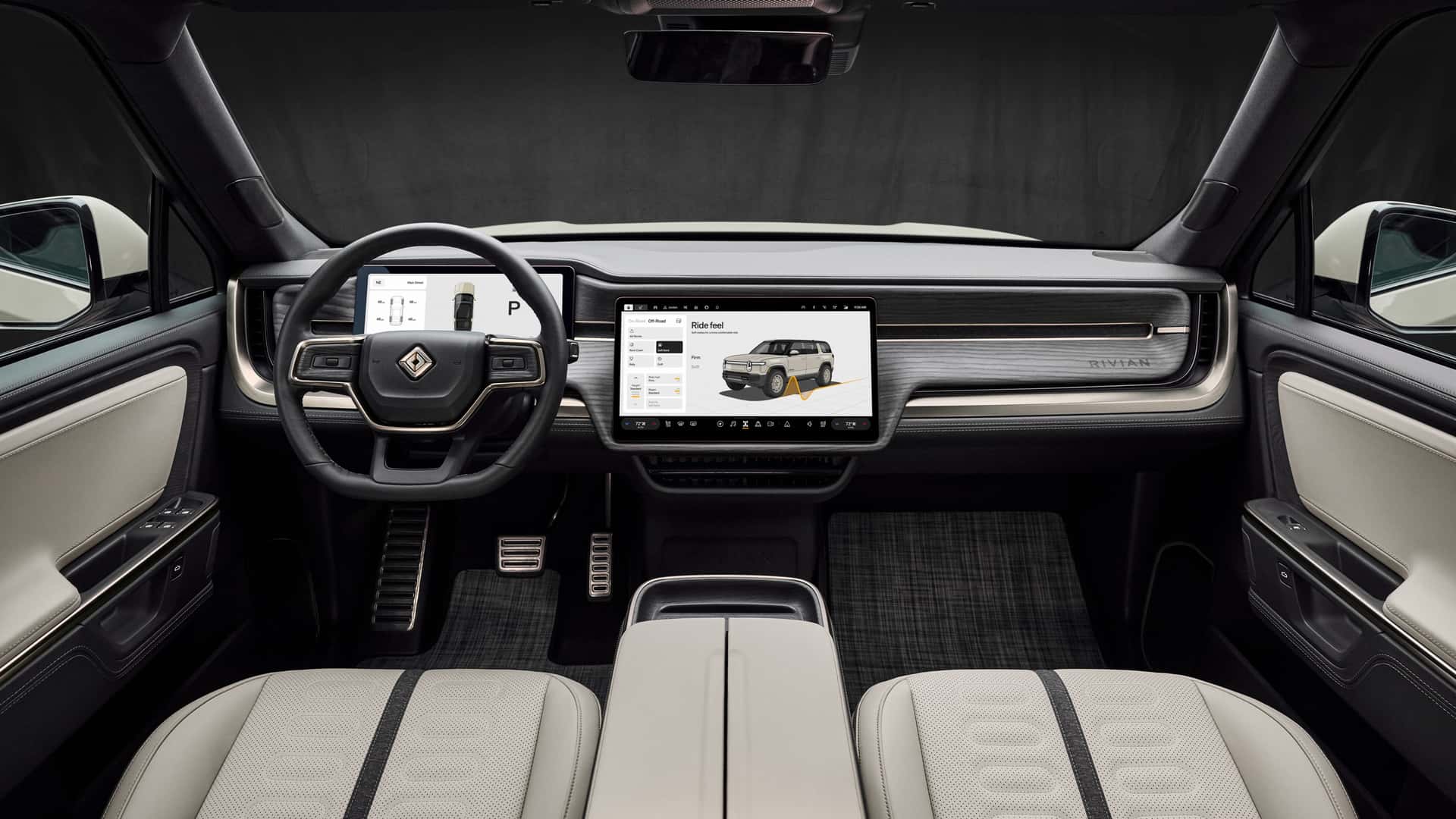
Rivian has begun rolling out software update 2026.31. It brings RivianOS 2 to both generations of the R1T and R1S and incorporates numerous features from the newer R2.
The update is being delivered over the air and may therefore reach individual vehicles at different times. The key point is that the first-generation R1 remains part of Rivian’s software strategy, even though its hardware cannot support every new visual feature without modification.
RivianOS 2 standardizes the controls and features across the model ranges without overloading older R1 vehicles with overly demanding graphics.
Local AI aims to keep response times short
Rivian says its Rivian Unified Intelligence AI provides the technical foundation. It combines local data processing in the vehicle with connected services. Frequently required computations can take place directly in the vehicle, while other tasks rely on external systems.
This hybrid approach is intended to limit latency. At the same time, Rivian adapts individual features to each vehicle’s computing power and sensors. RivianOS 2 is therefore not an entirely identical installation for every R1 model, but a platform scaled according to the hardware.
New 3D graphics, but not at any cost
In newer vehicles, Rivian uses Unreal Engine 5 to render the vehicle and its surroundings in real time on the central display. This is intended to provide a clearer spatial representation of detected objects and the vehicle’s immediate surroundings.
The first-generation R1, by contrast, continues to use Unreal Engine 4. Rivian has deliberately opted against the more demanding graphics there to avoid delays in inputs and animations. In everyday use, smooth operation is more valuable than additional visual effects.
| Area | R1 Generation 1 | R1 Generation 2 |
|---|---|---|
| Graphics engine | Unreal Engine 4 | Unreal Engine 5 |
| RivianOS 2 | Hardware-adapted version | Enhanced visuals |
| Goal | Stable and smooth operation | More detail in real-time graphics |
The user interface becomes more flexible
Rivian is also reorganizing key areas of the user interface. Frequently used elements such as the media player can be placed on the preferred side of the screen. A vertical status bar provides direct access to important vehicle functions.
Search has also been revised. Together with the customizable control layout, this should make settings easier to find. Particularly in a cockpit heavily centered on displays, reducing the need to navigate through menus can limit distraction while driving.
Navigation warns of hazard locations
The integrated navigation system can now display alerts about police checks and speed enforcement. Rivian combines data from local authorities with information from Google Maps and Waze. Which alerts are actually available depends on the country and the available data.
In the DACH region—Germany, Austria, and Switzerland—the legal situation must also be taken into account. In Germany, drivers are not permitted to use technical warning features for speed enforcement while driving. Switzerland has particularly strict rules, which means such features may be restricted or disabled depending on the market.
Connect+ adds weather and live trips
Connect+ subscribers receive a separate weather app with forecasts and air-quality information. Mobile Live Trips also allows current trip information to be sent to the Rivian app. This is useful, for example, when sharing an estimated arrival time with other people.
Also new is a customizable wake word for voice controls. In addition, there are settings to restrict location sharing and an option to transfer driver profiles between different R1 generations.
Software support becomes a selling point
The update shows how Rivian is bringing older vehicles functionally closer to newer model generations. Although Generation 1 does not receive every graphical enhancement, its controls, navigation, and connected services remain largely up to date.
For owners, this offers a noticeable everyday benefit and may help preserve vehicle values. Its direct significance in the DACH region remains limited, as the R1T and R1S are not currently sold there as regular mass-market offerings. From a technical perspective, however, Rivian demonstrates how consistent over-the-air updates can keep model generations current for longer.