Nissan Pixo Aims to Make Electric Mobility More Affordable
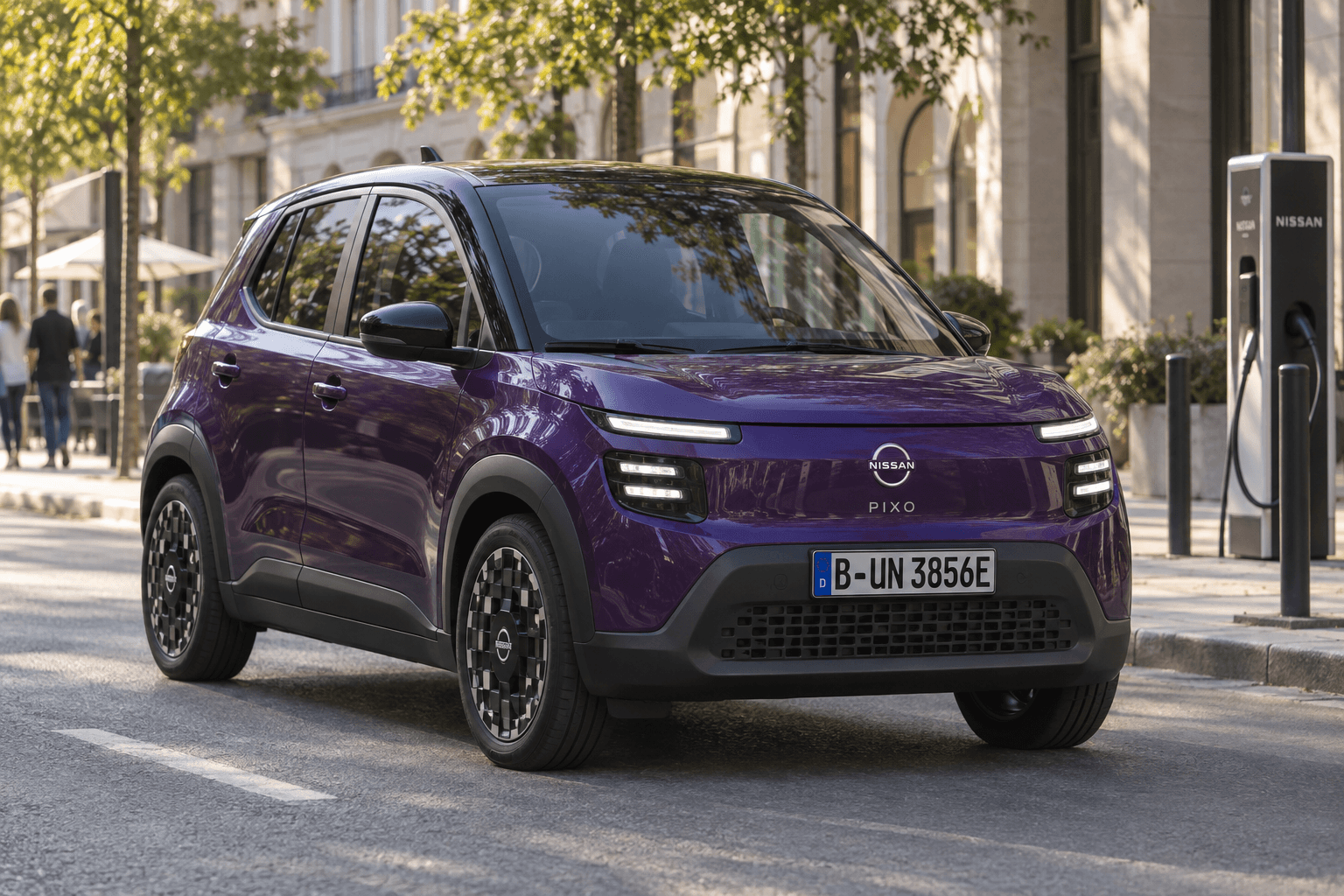
Nissan is bringing back the Pixo name, this time for a fully electric small car. The 3.80-meter-long model was developed for European cities and, with an expected starting price of just under €20,000, is intended to offer an affordable alternative to larger electric cars.
Orders are expected to open toward the end of 2026, with the first deliveries planned for early 2027. However, final pricing and specifications for Germany, Austria and Switzerland have yet to be announced and may vary by market.
Shared Technology with the Renault Twingo
Technically, the Nissan Pixo is closely related to the new electric Renault Twingo. Both models use the same platform, share key components and are produced at the Novo Mesto plant in Slovenia.
This collaboration reduces development time and costs. It allows Nissan to offer a distinctively styled small car without having to develop the powertrain, battery and vehicle architecture entirely from scratch.
A shared platform, compact battery and focused equipment package: This combination is intended to bring the Pixo below the €20,000 mark.
Nissan Pixo: Technical Specifications at a Glance
| Specification | Nissan Pixo |
|---|---|
| Drivetrain | Front-wheel drive |
| Power | 60 kW |
| Battery | 27.5 kWh, LFP |
| Range | Around 260 km on the standardized test cycle |
| DC charging power | Maximum 50 kW |
| DC charging time | Around 30 minutes from 15% to 80% |
| AC charging power | Up to 11 kW |
| Length | 3.80 meters |
| Turning circle | Just under 10 meters |
| Seats | Four |
| Luggage capacity | 356 to 1,221 liters |
LFP Battery Suits Urban Use
The 27.5-kWh battery uses lithium iron phosphate cells. This battery chemistry is comparatively inexpensive and robust, and its cathode contains neither nickel nor cobalt. Its lower energy density matters less in a compact city car than in a long-distance model.
With a standardized range of around 260 km, the Pixo should provide sufficient reserves for commuting, shopping and regional trips. As expected, real-world range will be lower on highways and in low temperatures.
A similar approach using a small LFP battery is also emerging for the more affordable Renault 5. This battery chemistry is becoming an increasingly important component of low-cost electric cars.
50 kW Charging Is Not Designed for Long-Distance Travel
The Pixo reaches a maximum of 50 kW when fast charging. Charging from 15% to 80% is expected to take just under 30 minutes. That seems slow compared with modern 800-volt vehicles, but it is less of an issue in everyday use with a battery of this size because only a small amount of energy needs to be added.
Up to 11 kW is possible with a suitable wall-mounted home charger. Actual charging power is significantly lower from a standard household outlet, but the small battery can still be charged conveniently overnight.
Four Seats and a Surprising Amount of Storage Space
Inside, the Nissan has room for four people. A 7-inch instrument display sits in front of the driver, while a 10-inch touchscreen is positioned in the center. The luggage compartment is expected to hold 356 liters, increasing to as much as 1,221 liters with the rear seats folded down.
With a turning circle of just under 10 meters, the Pixo is clearly designed for narrow streets and parking garages. A distinctive front-end design, a full-width rear light bar and pixel-style lettering visually distinguish it from the Renault Twingo.
Competition Below €25,000 Is Intensifying
The Pixo will face a growing selection of affordable electric cars. These include the upcoming Twingo-based Dacia Spring and the similarly compact BYD Dolphin Surf. The list price will therefore not be the only deciding factor: standard equipment, warranty coverage and available leasing offers will also matter.
If Nissan does indeed keep the announced price just below €20,000, the Pixo could fill an interesting gap in the market. Its strengths do not lie in high charging power or maximum range, but in low costs, compact dimensions and technology suited to everyday urban driving.