Munich to Restructure Public Charging, with New Tender in Preparation
The City of Munich is preparing a new tender for public charging stations. This does not yet constitute a finalized expansion program, but the move is significant: tenders determine who builds and operates charging infrastructure, how long concessions run, and which technical and operational requirements apply.
For anyone charging in Munich, this could provide a means of delivering noticeable day-to-day improvements, including availability, maintenance and the pace of expansion.
Why a New Tender Matters to EV Drivers
Public charging points do not simply take care of themselves. A new tender can replace or restructure old contracts, encouraging providers to invest more while allowing the city to update requirements for areas such as roaming, payment options and minimum availability levels.
In a major city, it is not only the number of charging points that matters, but also how reliably they work and how well they are distributed. In practice, broken chargers or permanently blocked locations are often more frustrating than having a few miles less range.
What New Award Criteria Could Improve
- More locations in residential neighborhoods without private parking
- Greater reliability through stricter maintenance and repair deadlines
- Better usability through clear requirements for ad hoc payment and roaming
- More modern hardware and better load management at heavily used locations
Real-World Impact: Everyday Charging, Not Just Plans on Paper
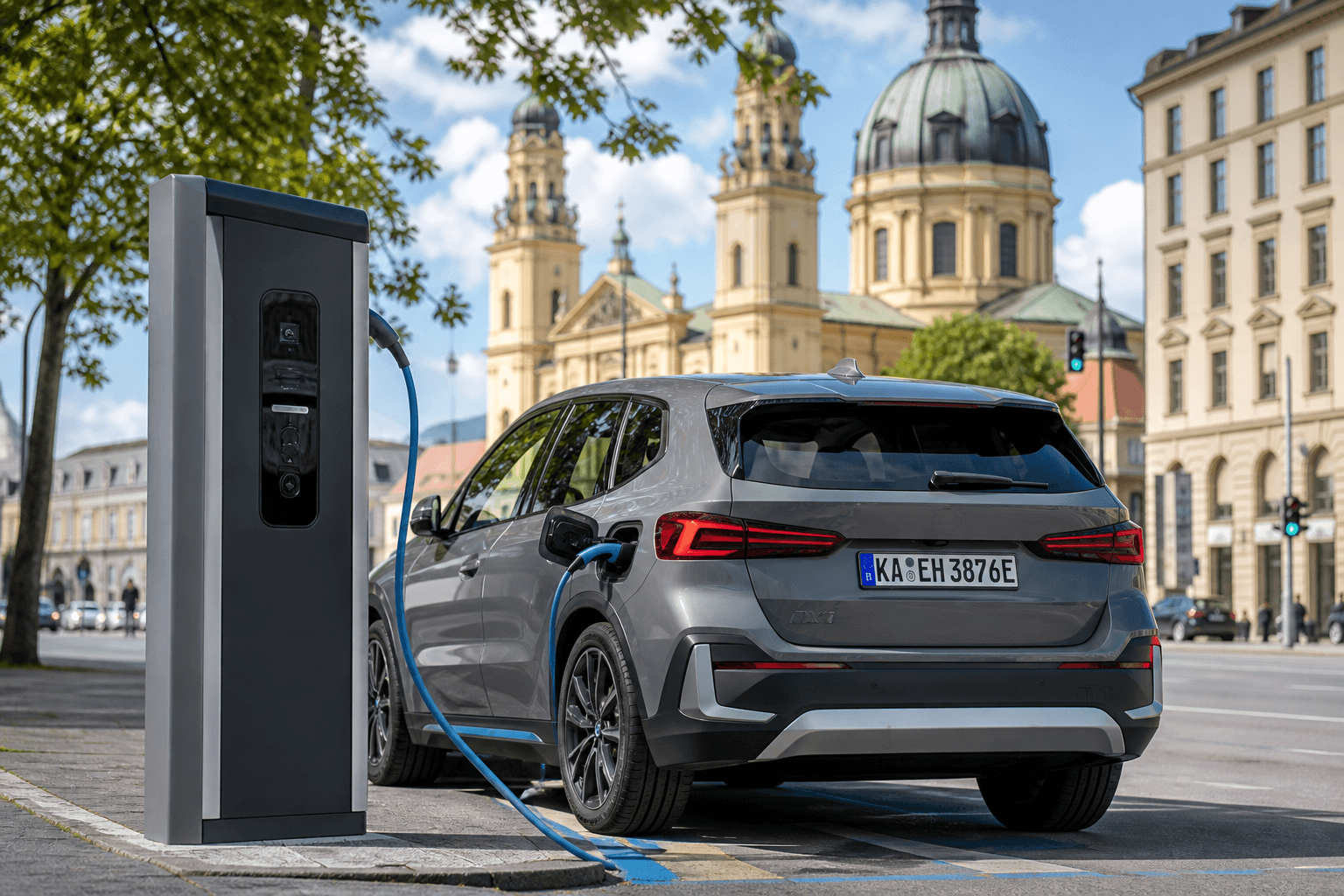
For many people in Munich, curbside AC charging remains the most important option because they do not have a private parking space with a wallbox. If the tender accelerates deployment and improves availability, charging will require considerably less planning and spontaneous charging will become more realistic again.
At the same time, fast-charging hubs along major routes and at key transport nodes are becoming increasingly important, especially for commuters, delivery services and anyone without a permanent charging option. Whether fast charging is included in the new tender, and to what extent, will be crucial.
Context for Germany, Austria and Switzerland: Competition and Standards Are Becoming More Important
Many cities across the DACH region—Germany, Austria and Switzerland—face similar challenges: operator contracts are expiring, technical standards continue to evolve and demand is rising. A new tender is therefore often an opportunity to redefine minimum standards and ensure that operations are consistently geared toward scaling up.
If this results in greater competition, it could also have a positive effect on prices and service quality. Ultimately, the decisive factor will be whether the city makes clear key performance indicators such as availability, repair times and expansion targets binding.
What Drivers Can Do Now
The preparation of a tender alone does not automatically provide specific locations or timelines. For now, what matters to you is how the network develops over the medium term and how well existing charging points actually work.