Leapmotor B10 to Be Built in Zaragoza
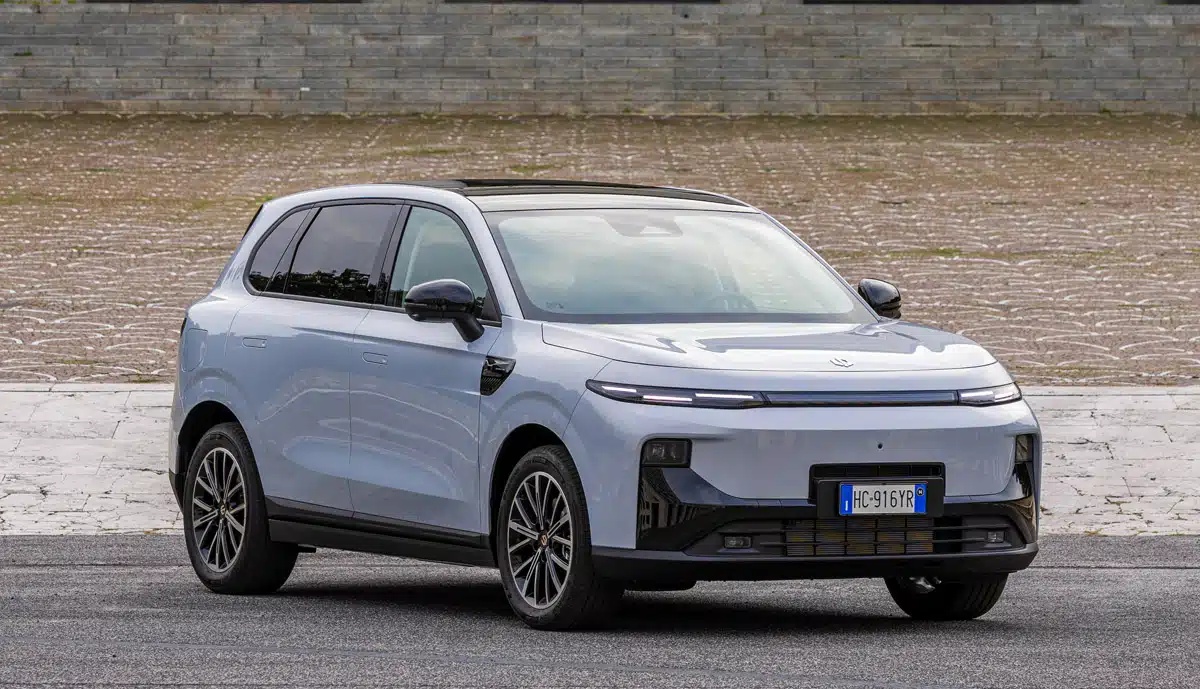
Leapmotor is significantly expanding its European presence. Pilot production of the electric B10 compact SUV has begun at Stellantis’s Zaragoza plant in Spain. Stamping, welding and painting work performed locally is intended to achieve a sufficiently high proportion of European manufacturing.
According to the company, this means the B10 can be classified as a European product. This is particularly relevant for the battery-electric version, as the EU imposes additional countervailing duties on electric cars imported from China.
Local production instead of imports from China: Leapmotor is reducing tariff risks, transportation costs and supply-chain dependencies for the B10.
Pilot Production Prepares for the Start of Series Production
Pilot production is not yet the same as regular high-volume manufacturing. During this phase, production processes, tools, quality controls and cooperation with suppliers are tested. Only then can the plant ramp up production volumes in a controlled manner.
Zaragoza already has extensive experience in this area. Stellantis currently manufactures the Lancia Ypsilon, Opel Corsa and Peugeot 208 there. Leapmotor can therefore use existing body production, paint and logistics infrastructure instead of building an entirely new factory.
Why Production in Spain Is So Important
Since 2024, the EU has imposed additional duties on battery-electric cars made in China. These measures stem from allegations that government subsidies give Chinese manufacturers an unfair cost advantage. Production that is sufficiently integrated within Europe could allow the B10 to avoid these charges.
| B10 version | Powertrain | Significance of European production |
|---|---|---|
| Battery-electric | Fully electric powertrain | Avoids the EU’s additional duties on imports from China if the vehicle qualifies as European in origin |
| Range extender | Electric powertrain with an internal-combustion engine serving as a generator | Primarily benefits from shorter supply routes and more regional production |
The range-extender version also drives its wheels electrically but uses a compact internal-combustion engine to generate electricity. For customs purposes, such vehicles are not automatically subject to the same additional duties as fully battery-electric cars. Leapmotor has yet to specify which B10 versions will be produced in Zaragoza and in what volumes.
Lower Production Costs Do Not Immediately Mean Lower Prices
It remains unclear whether Leapmotor will pass the cost advantage on to customers. Higher logistics costs weigh against a rapid price reduction. According to the company, transportation costs from China have risen by more than 50% since February due to the situation in the Middle East.
Production in Spain could offset some of this pressure. At the same time, launching European manufacturing creates new costs, including factory modifications, local supply chains and additional quality processes. Local production → lower tariff costs, but not automatically a lower list price.
Leapmotor Is Growing Rapidly in Europe
Between January and July, the brand’s European sales rose by 508% to 65,193 vehicles. Since its market launch in January, the B10 has become the portfolio’s second-best-performing model, with 16,664 units sold. Leapmotor is also visibly gaining ground in the broader European electric-car sales ranking.
The B10 is competing in a particularly crowded segment. Buyers compare it with established European and Asian models, as shown by our overview of electric compact SUVs in Germany. A reliable supply from Spain could therefore prove just as important as an aggressive starting price.
Stellantis Provides Leapmotor’s European Foundation
Production in Spain is based on the strategic partnership agreed in 2023. Stellantis invested around €1.5 billion and acquired a stake of approximately 20% in Leapmotor. The joint international company is 51% owned by Stellantis and 49% by Leapmotor.
Leapmotor contributes vehicles, platforms and rapid development, while Stellantis provides production capacity, distribution and experience with European regulations. The B10 now demonstrates how this division of responsibilities can work in practice.
What the Move Means for Germany, Austria and Switzerland
In Germany and Austria, Spanish production could remove the additional EU duties directly from the cost calculation. This creates room for competitive prices, better equipment or more attractive financing offers. However, Leapmotor has not yet announced any specific adjustments.
Switzerland is not part of the EU, so the European countervailing duties do not apply there directly. Nevertheless, shorter supply routes and a stronger European spare-parts network could offer benefits. For the entire DACH region—Germany, Austria and Switzerland—the key issue is likely to be whether pilot production is quickly followed by stable high-volume manufacturing.