Ionity reaches 200 locations in Germany
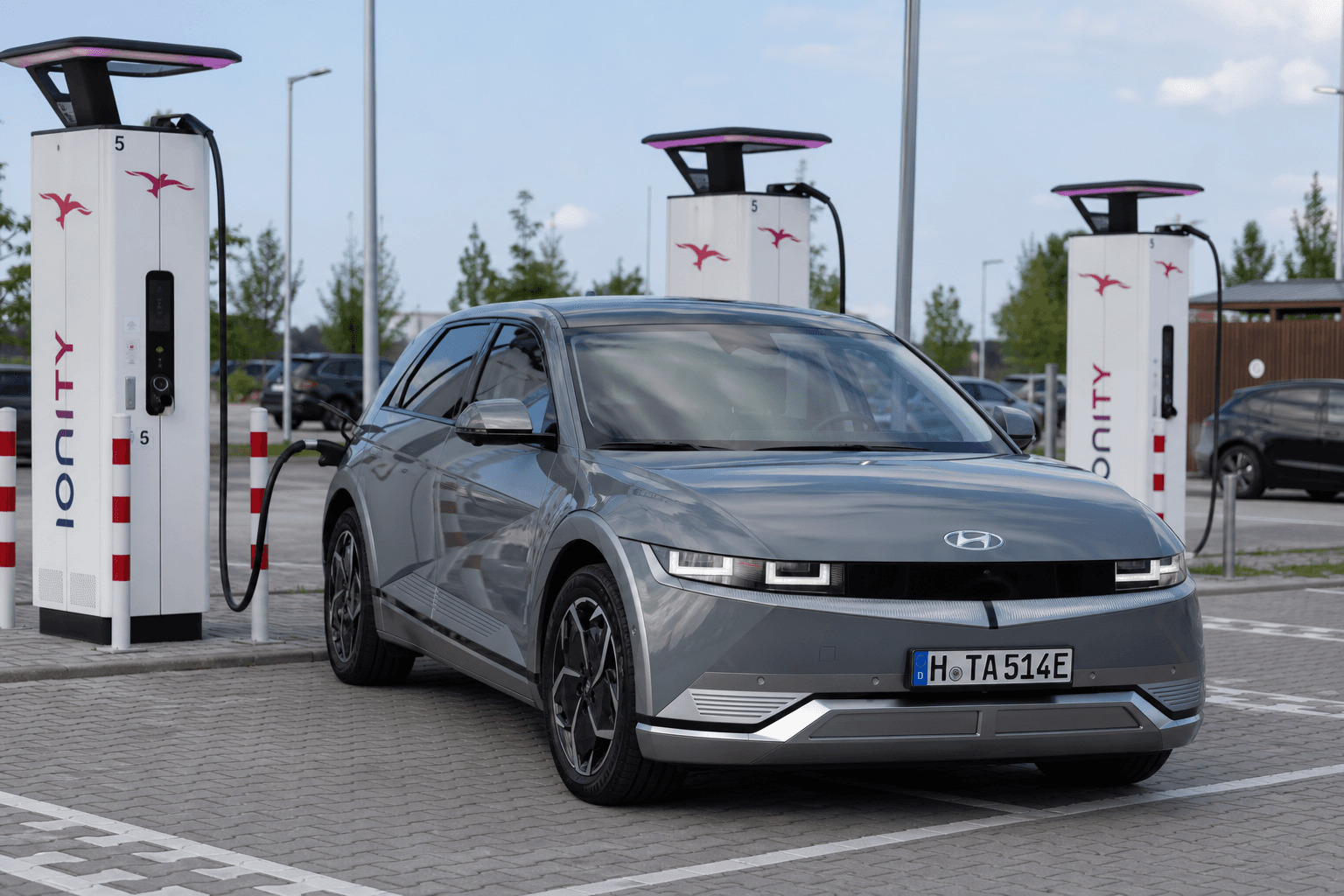
Ionity is continuing to expand its German fast-charging network. With the new charging park in Karlsruhe, the company now operates 200 locations with a total of more than 1,500 high-power charging points in Germany.
According to the operator, an average of around two new locations per month have been added since the beginning of 2023. The expansion remains focused on busy travel corridors and sites where drivers can find multiple charging points as well as amenities for a break.
The Karlsruhe location is not only a symbolic milestone but, with twelve charging points, is also larger than average.
Up to 600 kW at the new Karlsruhe charging park
The new site uses two different fast-charging systems from Alpitronic. A total of twelve electric cars can be connected there.
| Metric | Details |
|---|---|
| Charging points | 12 |
| Alpitronic HYC1000 | 8 charging points delivering up to 600 kW per vehicle |
| Alpitronic HYC400 | 4 charging points delivering up to 400 kW |
| Address | Zimmerstrasse 24, 76137 Karlsruhe |
| Road connections | Near the A5 and the Karlsruhe motorway interchange, with access to the A8 |
These power figures refer to the maximum output technically possible in each case. How much power actually reaches the vehicle depends on factors including its charging system, battery temperature, state of charge and charging curve. Even modern 800-volt electric cars currently tend to remain well below 600 kW, but they still benefit from the high-performance infrastructure and the capacity available for future generations of vehicles.
Our comparison of 800-volt and 400-volt systems explains the advantages of higher voltage for fast charging. The key factor is not the brief peak alone, but maintaining high charging power for as much of the charging session as possible.
Well located for travel through southwestern Germany
The charging park is close to the A5 and not far from the Karlsruhe motorway interchange. This makes it convenient both for journeys between Frankfurt and Basel and for routes along the A8 toward Stuttgart. Restaurants and other amenities are located nearby.
Travelers from Austria and Switzerland can also benefit from the location if their route takes them through southwestern Germany. The twelve connectors also reduce the risk of longer waits during typical peak travel periods, although an available charger cannot, of course, be guaranteed.
A denser network of large charging parks makes long-distance journeys easier to plan, helping to address a key concern about electric cars. Our guide to EV range anxiety explains why charging plans and infrastructure are often more important in everyday use than the maximum range advertised in brochures.
Ionity continues to expand across Europe
Ionity was founded in 2017 by BMW, the then Daimler AG, Ford and the Volkswagen Group. The Hyundai Motor Group and investment firm BlackRock were among the partners that joined later.
According to the reported figures, the European network comprises 892 locations with 6,475 charging points across 24 countries. A further 73 locations are under construction. The clear focus therefore remains on a cross-border fast-charging network for long-distance travel in Europe.
For drivers, the overall number on paper ultimately matters less than availability along their own route. Large sites such as the one in Karlsruhe are therefore particularly relevant: more charging points per location → a better chance of finding an available connector and more capacity for the growing number of electric cars.