Shell Recharge Is Modernizing 150 Fast-Charging Points in Germany
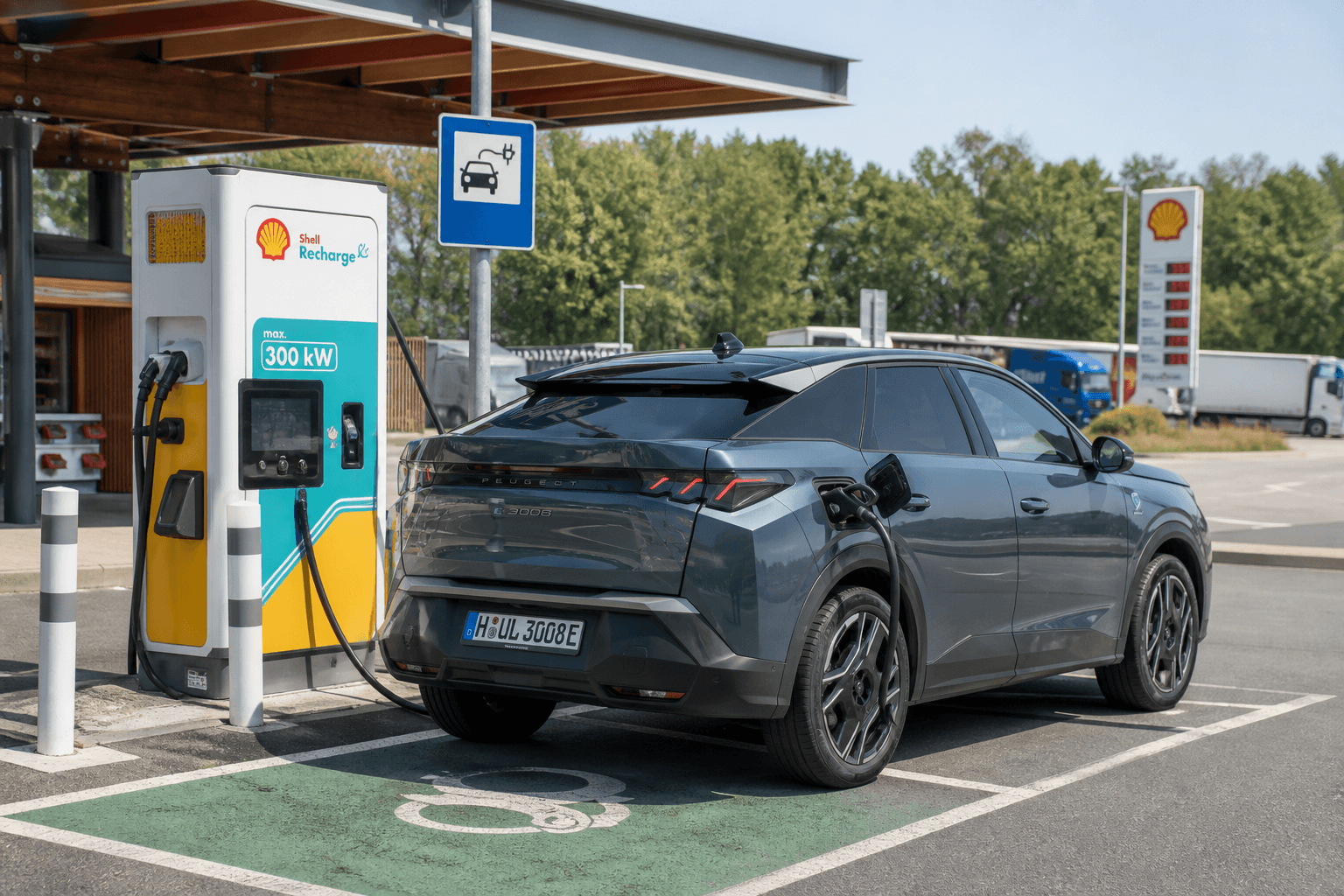
Shell Recharge plans to modernize 150 fast-charging points in Germany. That may initially sound like a small number compared with major network expansion announcements, but in practice, this is often precisely the kind of update that makes the biggest difference for drivers: fewer outages, more consistent charging power, and stations that can be relied on in everyday use.
Importantly, “modernization” does not usually mean more locations, but rather better technology at existing sites. At heavily used transport hubs in particular, this can significantly improve the perceived quality of the network without requiring new sites to be developed.
What “Modernization” Typically Involves for Fast Charging
The exact hardware being replaced depends on the location and its current equipment. At fast-charging hubs, programs like this generally focus on components that directly affect reliability and ease of use.
- Power electronics and cooling: more consistent charging power and less throttling in hot weather or during continuous operation.
- Cables, connectors, and displays: fewer interrupted sessions due to connection problems, along with better readability and usability.
- Backend systems and communication: more reliable authorization and billing, as well as faster recovery after faults.
- Site optimization: clearer signage and, where appropriate, better lighting or markings to prevent charging bays from being blocked “accidentally.”
For drivers, what ultimately matters is the real-world impact: the charging session starts immediately, remains stable, and ends without an error message. These are precisely the areas where fast chargers cause the most friction in everyday use.
Why This Also Matters to Tesla Drivers
Tesla drivers may frequently charge at Superchargers, but additional reliable high-power charging (HPC) locations are extremely valuable on routes involving multiple networks or in regions with limited Supercharger coverage. More dependable fast-charging points operated by third-party networks reduce stress, provide better alternatives, and help at peak times when individual locations are full.
Even if you almost always charge within the Tesla ecosystem, a more robust public network benefits everyone by reducing overall waiting times and traffic diverted to alternative charging sites.
Context: Modernization Is Not a “Nice to Have,” but a Core Operational Requirement
Technical availability is crucial for fast charging. A location with a high nominal power rating in kW is of little use if it regularly goes offline because of thermal issues, faulty peripheral equipment, or backend problems. Modernization is therefore often the quickest way to improve everyday usability, especially at locations that already see heavy traffic.
If you are interested in the expansion of charging infrastructure overall, it is also worth looking at the development of ultra-high-power fast-charging networks and the status of roaming platforms offering access to large numbers of charging points. And if you frequently charge at home, charging losses are an underestimated cost factor that can be optimized relatively easily.
More charging points are important, but reliable charging points are often even more important in everyday use.
What Drivers Could Notice Now
If one of your regular stops is among the modernized locations, the effects will usually be immediately noticeable: fewer failed starts, fewer interrupted sessions, and fewer “surprises” involving charging power. Overall, this makes fast charging more predictable—and that is exactly what drivers need on longer journeys.