Geely Builds an SUV with Its Own Water Propulsion System
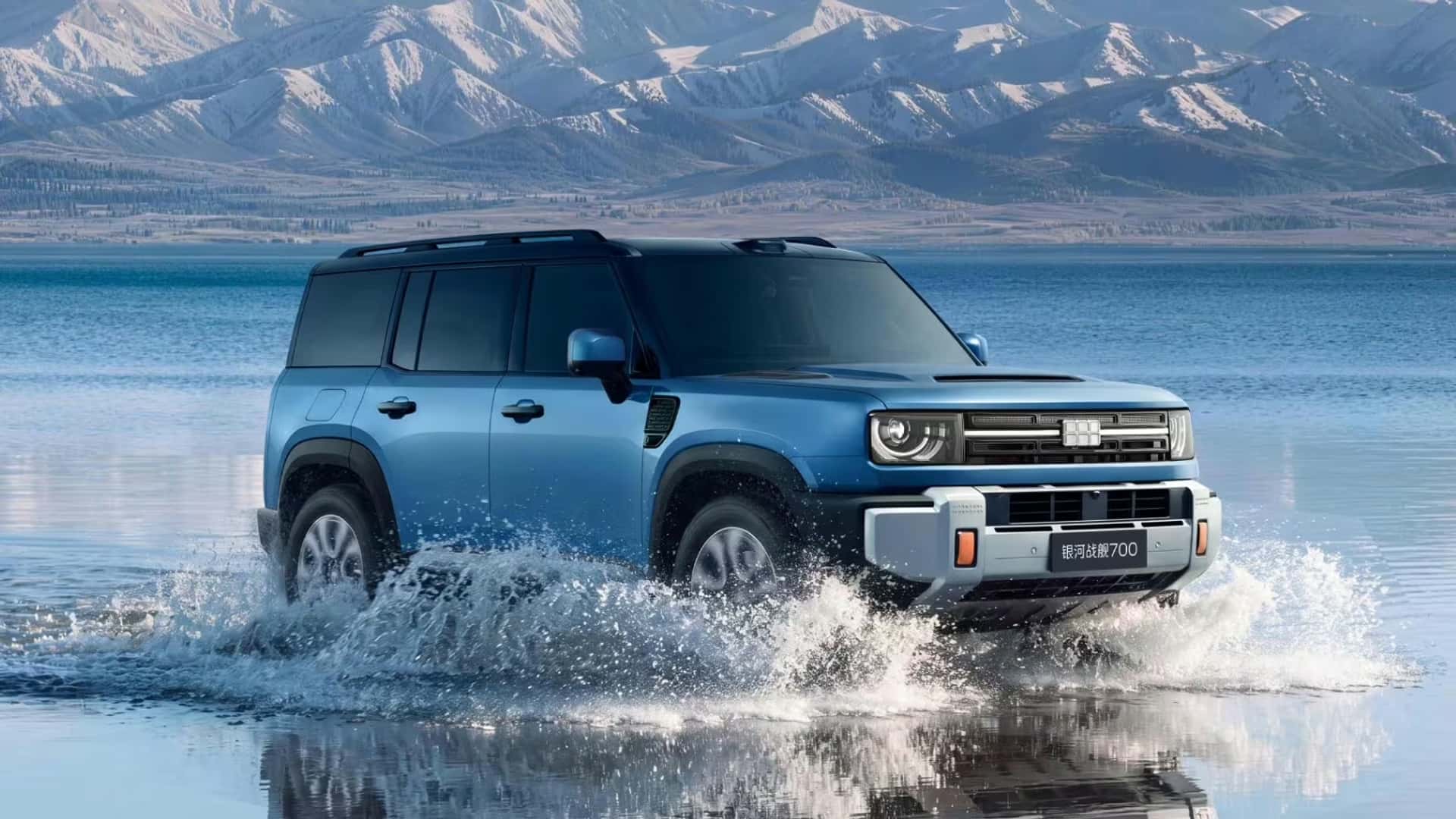
The Geely Battleship 700 adds an unusual feature to the technology race among Chinese automakers. The large plug-in hybrid can not only float but also propel itself through the water using two propellers.
Geely explicitly describes the system as an emergency and escape mode. It is intended to help occupants if the vehicle unexpectedly enters deep water. The SUV is not designed to serve as a recreational boat or for regular water crossings.
Two Propellers Provide Controlled Propulsion
Two propellers are mounted at the rear and resemble large exhaust tips. Each unit delivers around 8.5 kW. They allow the Battleship 700 to reach approximately 6.5 km/h in the water.
That is only a slow walking pace, but it could prove crucial in an emergency. A sonar system is also intended to detect obstacles in the water and assist the driver with maneuvering.
The Battleship 700 does not become a boat, but it does gain a controllable water propulsion system for exceptional emergencies.
According to the manufacturer, the vehicle can move actively through the water for up to 40 minutes. Without continuous propulsion, it is said to remain afloat for up to two hours. As with all such systems, water depth, currents, waves and possible vehicle damage are likely to have a significant impact on actual safety.
Geely Battleship 700 Specifications
| Specification | Figure |
|---|---|
| Powertrain | 2.0-liter turbocharged gasoline engine and three electric motors |
| Total system output | around 819 kW |
| Battery capacity | 47.14 kWh |
| Propellers | Two units delivering around 8.5 kW each |
| Speed in water | around 6.5 km/h |
| Active operation in water | up to 40 minutes |
| Flotation time | up to two hours |
| Total range | around 1,770 km under CLTC |
On the road, a 2.0-liter turbocharged engine works together with three electric motors. Two electric motors are mounted on the rear axle, while another drives the front axle. The high total system output clearly positions the Battleship 700 as a powerful luxury off-roader.
The stated total range of around 1,770 km is based on China’s CLTC test cycle. It typically produces more optimistic results than Europe’s WLTP cycle and therefore cannot be applied directly to everyday driving in Germany, Austria or Switzerland.
More Than a Floating Plug-in Hybrid
The equipment package also includes an oxygen supply system. It is intended for use at high altitudes, either through a mask or directly through the cabin. This is primarily designed for remote mountain regions, but it is of course no substitute for medical equipment.
The Battleship 700 demonstrates how strongly Chinese manufacturers are pursuing distinctive technical features. While models such as the BYD Ti 9 with its long electric range stand out through charging performance and battery technology, Geely is also focusing on features for extreme operating conditions.
Yangwang U8 Takes a Different Approach
Floating SUVs are not entirely new in China. BYD’s Yangwang U8 also features an emergency mode for deep water. However, its rotating wheels provide propulsion, while the front wheels perform part of the steering function.
Geely is taking a more purpose-built technical approach with separate propellers. Propulsion systems developed specifically for water can operate more efficiently than road tires, whose tread is not designed to move a vehicle through water.
European Launch Remains Uncertain
The Battleship 700 is already available in China. Converted prices range roughly from under €26,000 to around €49,000, although exchange rates, taxes and local equipment specifications significantly distort the comparison.
Exports to additional markets, including Australia, are planned. A European launch has not yet been confirmed. However, the planned European launch of the compact Geely E2 also demonstrates Geely’s intention to expand its international presence.
It therefore remains uncertain whether the Battleship 700 will ever be offered in Germany, Austria or Switzerland. Nevertheless, its propellers are more than just a gimmick: they demonstrate how Chinese manufacturers are treating even rare hazardous situations as an area for developing new vehicle technology.