An electric car can tow a trailer without any problems, provided it has an approved towing capacity. On longer journeys, however, energy consumption, range, and charging plans change significantly. Caravans in particular create considerable aerodynamic drag. In addition, many fast-charging bays are not designed for vehicles towing trailers.
For a relaxed journey, it is not the official range that matters, but the energy consumption of the complete car-and-trailer combination under realistic conditions.
Why a Trailer Reduces Range
When towing, the powertrain must accelerate additional weight and overcome greater rolling resistance. At higher speeds, the frontal area becomes especially important. A tall, wide caravan disrupts the airflow far more than a low cargo trailer.
Depending on the type of trailer, speed, route, and weather, range can fall by roughly 20% to 50% compared with driving without a trailer. A light, low trailer is more likely to be at the lower end of this range. A large caravan in a headwind can increase energy consumption even more. A general range estimate should therefore only be used as an initial guide.
| Factor | Effect | Practical Response |
|---|---|---|
| Tall body | Greater aerodynamic drag | Reduce speed and plan shorter legs |
| High weight | More energy needed when accelerating and driving uphill | Check the load and avoid unnecessary luggage |
| Headwind or cold weather | Energy consumption rises further | Allow for a larger charging reserve |
| Wet road | Rolling resistance increases | Keep monitoring the range forecast |
Determine a Realistic Range
The best basis is a test drive with the exact trailer that will later be used for the journey. The load, tyre pressure, and speed should match the planned holiday trip as closely as possible.
- Prepare the car and trailer: Check the permitted towing capacity, nose weight, gross weight, and tyre pressure.
- Drive a test route: Choose a longer circuit that includes both motorways and rural roads.
- Check energy consumption: Only assess the average consumption after driving a representative distance.
- Account for usable energy: Do not base calculations on the battery’s full capacity; allow reserves for diversions, weather, and occupied charging points.
An example without using figures for a specific vehicle: If energy consumption rises by one-third when towing, the distance that can realistically be covered falls significantly. Higher speed → disproportionately greater aerodynamic drag. Even a moderately lower cruising speed can therefore provide noticeably more range.
Plan Charging Stops with a Trailer
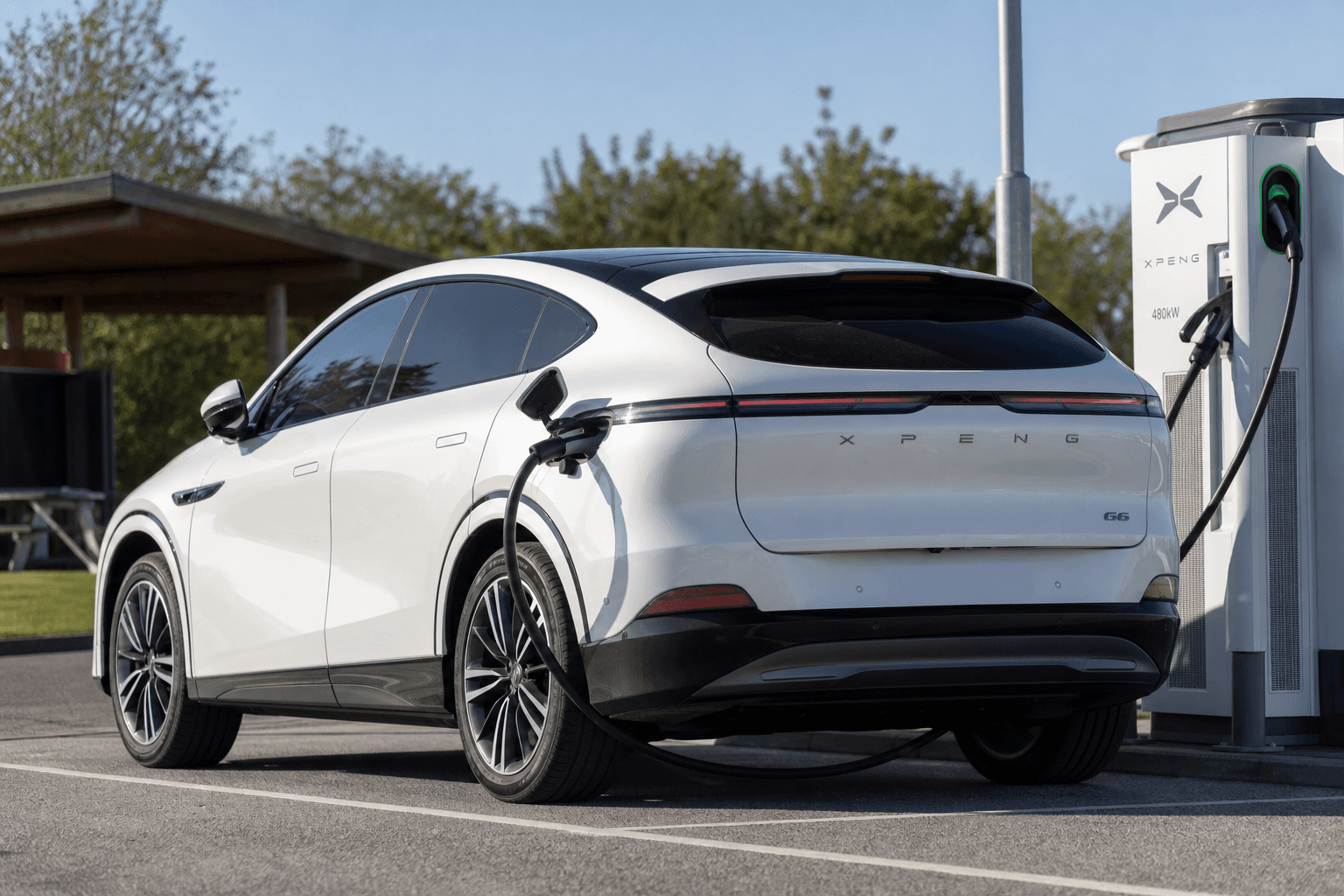
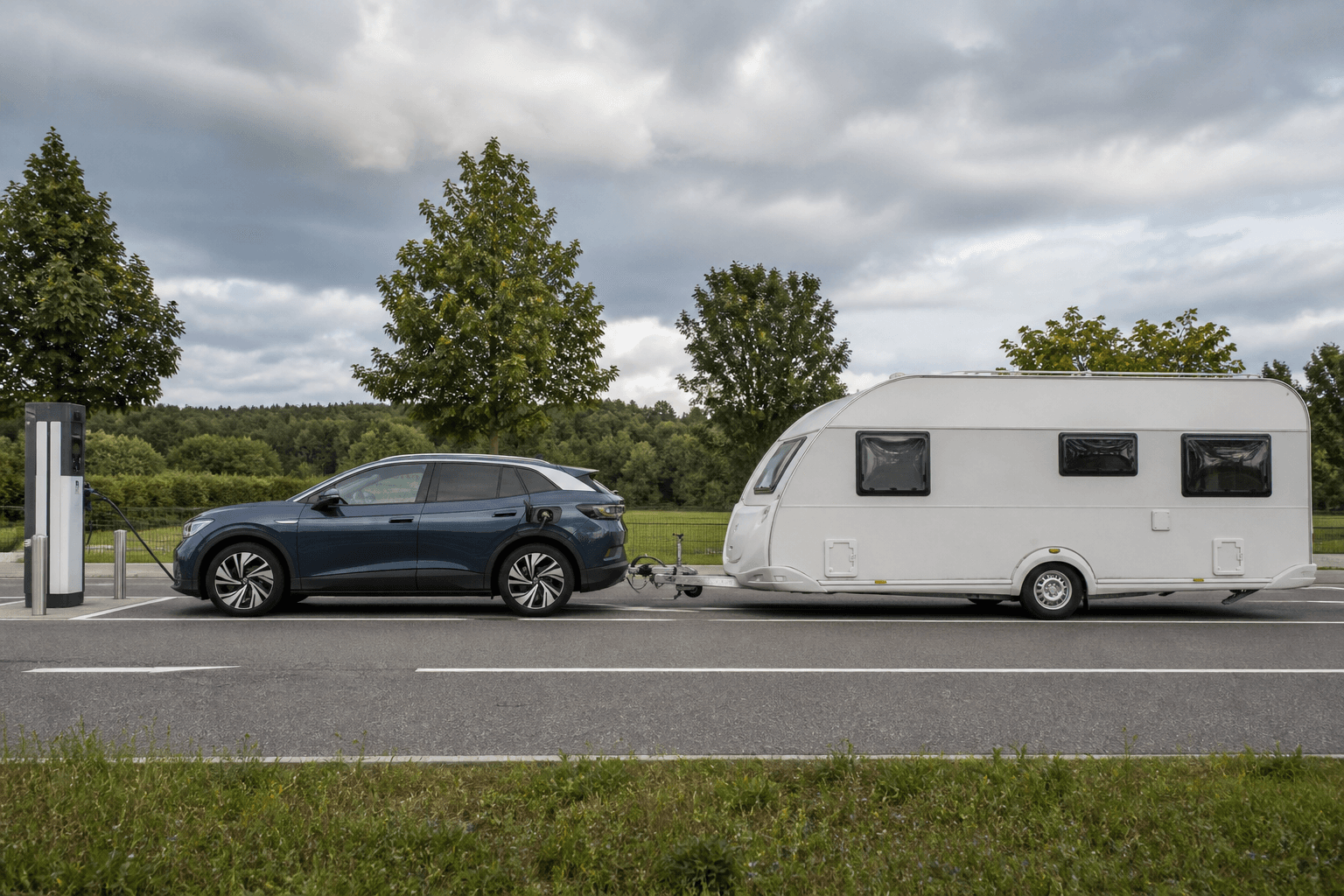
The biggest challenge is often not battery capacity, but the layout of the charging park. Many older charging bays are arranged perpendicular to the access lane or have short parking spaces. A car-and-trailer combination may block traffic lanes or adjacent chargers there. In the worst case, the trailer must be unhitched before every charging session.
How to Identify Suitable Charging Bays
- Drive-through bays or chargers arranged parallel to the access lane
- Large charging parks with enough room to manoeuvre
- Recent photos and user reports in charging apps
- Alternatives close to the preferred station
The location of the car’s charging port and the length of the charger cable are also important. Even a long parking bay is of little use if the cable cannot reach the port. For unfamiliar sites, it is therefore worth checking satellite images or recent location photos.
When Unhitching Is Unavoidable
Find a permitted, level parking area, secure the trailer against rolling away, and keep access routes clear. For a caravan, keep the hitch lock, jockey wheel, and wheel chocks readily available. This saves time and prevents rushed manoeuvring. A trailer must not be left unattended in just any location; local signs and regulations still apply.
The Right Charging Strategy on the Road
When towing a trailer, several predictable stops are often more practical than driving a leg until the battery is almost empty. Fast charging is generally quicker at low to medium states of charge. At the same time, the reserve should be larger than on a familiar everyday route.
In addition to your preferred charging park, plan at least one alternative. Navigation systems do not always account for a trailer correctly. While driving, therefore, check whether the predicted state of charge on arrival remains stable. If it keeps falling, reducing speed or making an earlier charging stop can help.
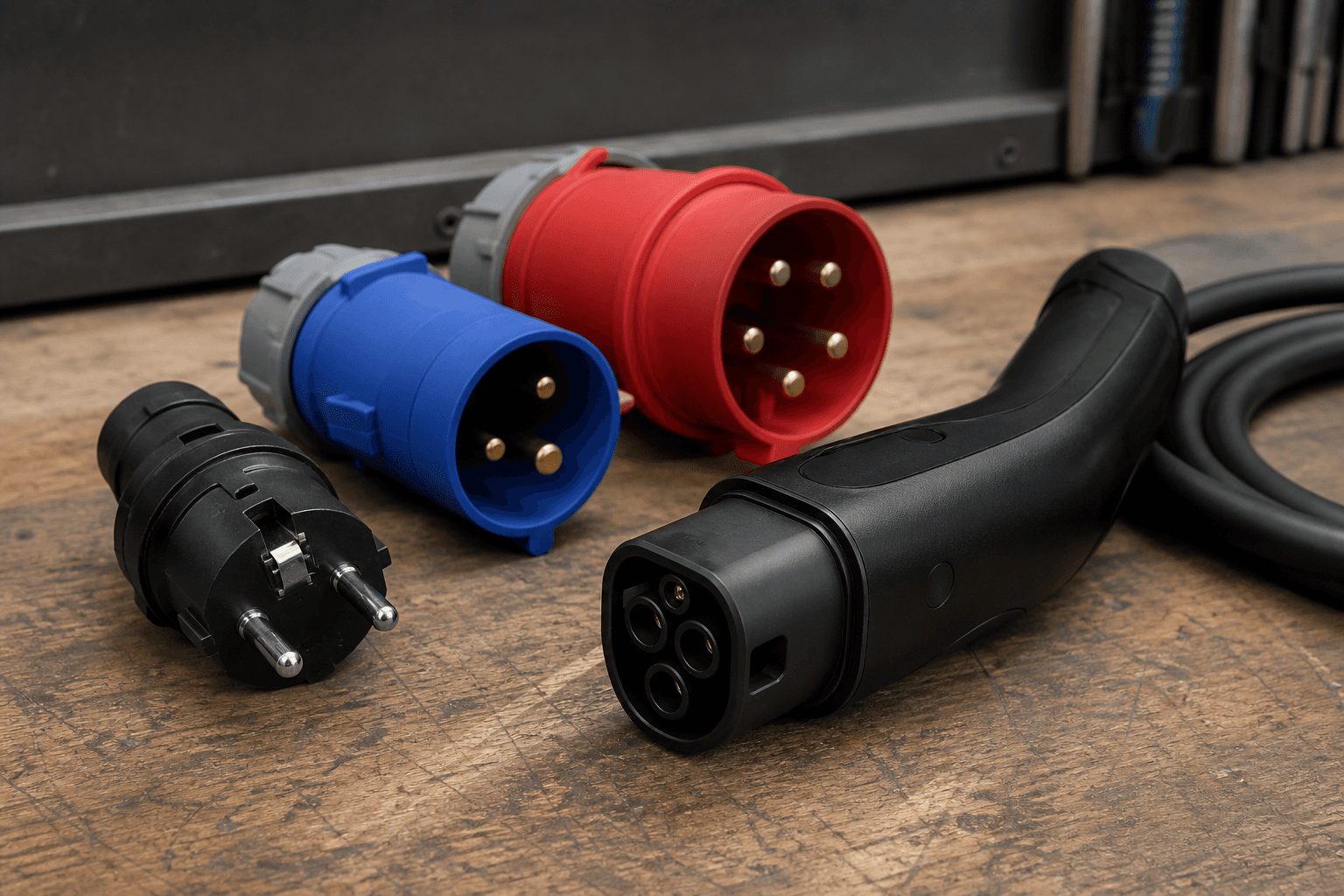
At your holiday destination, slow AC charging overnight can be especially convenient. However, campsites and accommodation providers only allow charging from designated connections. A standard campsite socket is not automatically approved for sustained high-power charging. Ask in advance about permission, billing, and available power.
Checks Before Departure
In addition to planning charging stops, make sure the towing capacity, driving licence category, nose weight, and permitted gross weights are all correct. The actual speed limit also depends on the country and the specific car-and-trailer combination. Anyone travelling abroad should check the latest local regulations.
A test drive, conservatively planned legs, and suitable charging parks make the journey predictable. After the first few charging stops, you will know the real energy consumption of your car and trailer and can adjust the rest of the route more accurately.