Ceer Exobot Launches as Sedan and SUV
Saudi Arabia does not want to remain merely an energy exporter; it also aims to establish itself as a production hub for electric cars. Ceer, a joint venture founded in 2022 by Saudi Arabia’s sovereign wealth fund, the Public Investment Fund (PIF), and Taiwanese contract manufacturer Foxconn, is playing a central role in this effort.
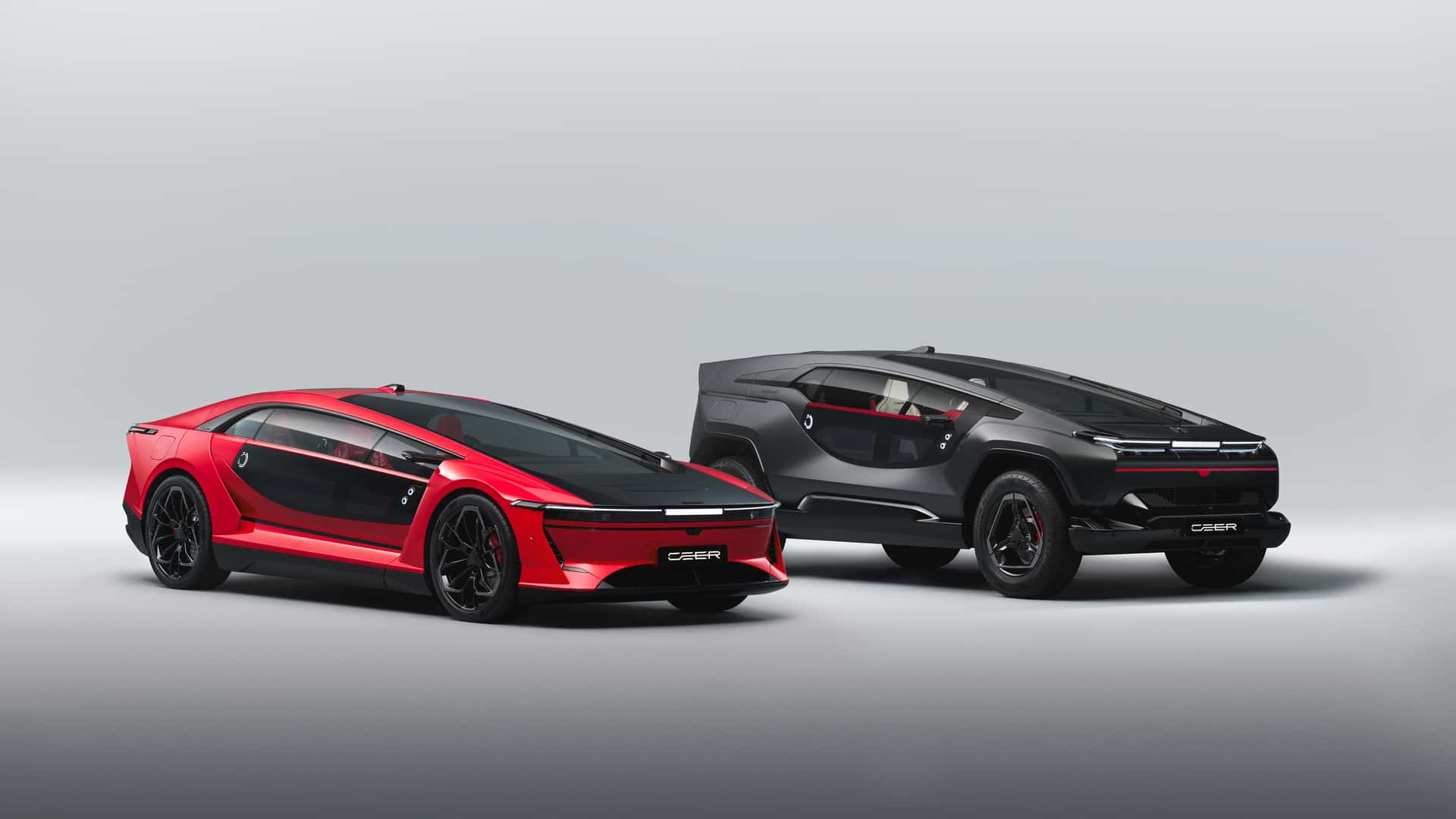
With the Exobot, the young brand is now presenting its first two vehicles. A low-slung sedan and a taller SUV use the same technical platform, but their styling leans much more heavily toward science fiction than conventional automotive design.
The Ceer Exobot is not intended to blend in, but to make Saudi Arabia’s new automotive industry instantly visible.
Wedge Shape, Gullwing Doors and Striking Lighting
Both Exobot models feature an extremely low front end, sharply rising beltlines and wide light bars. They also have large glass surfaces, sharply sculpted body panels and gullwing doors that, for now, are more reminiscent of a concept car than a production-ready vehicle.
The design is the work of Rob Melville, whose previous employers include McLaren. The 32 elements in each lighting signature are intended to reference the unification of Saudi Arabia in 1932 and add a national dimension to the unusual appearance.
The sedan looks particularly radical. Small additional windows below the beltline are intended to improve visibility beside the front occupants, while the SUV applies the same design language to a taller and more practical body.
8K Display and Yoke Define the Interior
In the cockpit, a large 8K display stretches almost across the entire width of the vehicle. An additional vertical touchscreen sits ahead of the center console, while an open-top yoke replaces a conventional steering wheel.
It remains unclear whether the yoke will make it into production. This type of control can take some getting used to, especially when maneuvering, unless a variable steering ratio or steer-by-wire technology is used. Ceer has not yet released any specific details on this.
800 Volts and Three Electric Motors
Beneath the striking bodywork is an 800-volt architecture with three electric motors. Total system output is expected to be around 634 kW, with energy supplied by a battery with a capacity of 112 kWh. The electric drive systems are expected to be supplied by Rimac.
| Specification | Exobot Sedan | Exobot SUV |
|---|---|---|
| Powertrain | Three electric motors | Three electric motors |
| System output | around 634 kW | around 634 kW |
| Battery | 112 kWh | 112 kWh |
| 0 to 100 km/h | 2.6 seconds | 2.9 seconds |
| NEDC range | around 669 km | around 560 km |
| Maximum DC charging power | 250 kW | 250 kW |
| Charging time from 10% to 80% | 30 minutes | 30 minutes |
The range figures should be treated with caution. Ceer quotes values based on the outdated and comparatively optimistic New European Driving Cycle (NEDC). Reliable European WLTP figures or realistic highway ranges cannot yet be inferred from them.
Charging Performance Falls Short of the Platform’s Potential
A peak of 250 kW sounds respectable, but it does not fully exploit the potential of an 800-volt architecture. Ceer also quotes 30 minutes to charge the large 112-kWh battery from 10% to 80%. That is practical for everyday use, but not on the level of today’s fastest-charging electric cars.
The charging curve will be crucial. A briefly sustained high peak offers little benefit on long journeys if power drops sharply soon afterward. Only independent testing will show how consistently the Exobot can actually maintain its charging performance.
Saudi Arabia Is Building Its Own Automotive Industry
Ceer is part of a broader strategy through which Saudi Arabia aims to diversify its economy. The country is already investing in the local assembly of electric cars. Lucid produces vehicles there, with the Lucid Air also demonstrating the level of technology that can be achieved in the luxury segment.
For Ceer, however, the goal is more than a small premium production run. Five additional models are expected to follow within five years, expanding the lineup to seven vehicles in total. This could turn the spectacular Exobot into an industrially significant project.
A European Launch Is Not Planned for Now
The vehicles are initially being developed for Saudi Arabia and selected neighboring countries. There are currently no concrete plans for Germany, Austria or Switzerland, nor are there any prices, dimensions or confirmed delivery dates.
For the European market, homologation, WLTP range figures, a reliable service network and suitable charging plans would also be essential. With its 800-volt system, three motors and high output, Ceer offers an interesting technical foundation. Whether it becomes more than a spectacular showcase will ultimately depend on its production readiness.