CATL Brings Battery Technology to Egypt
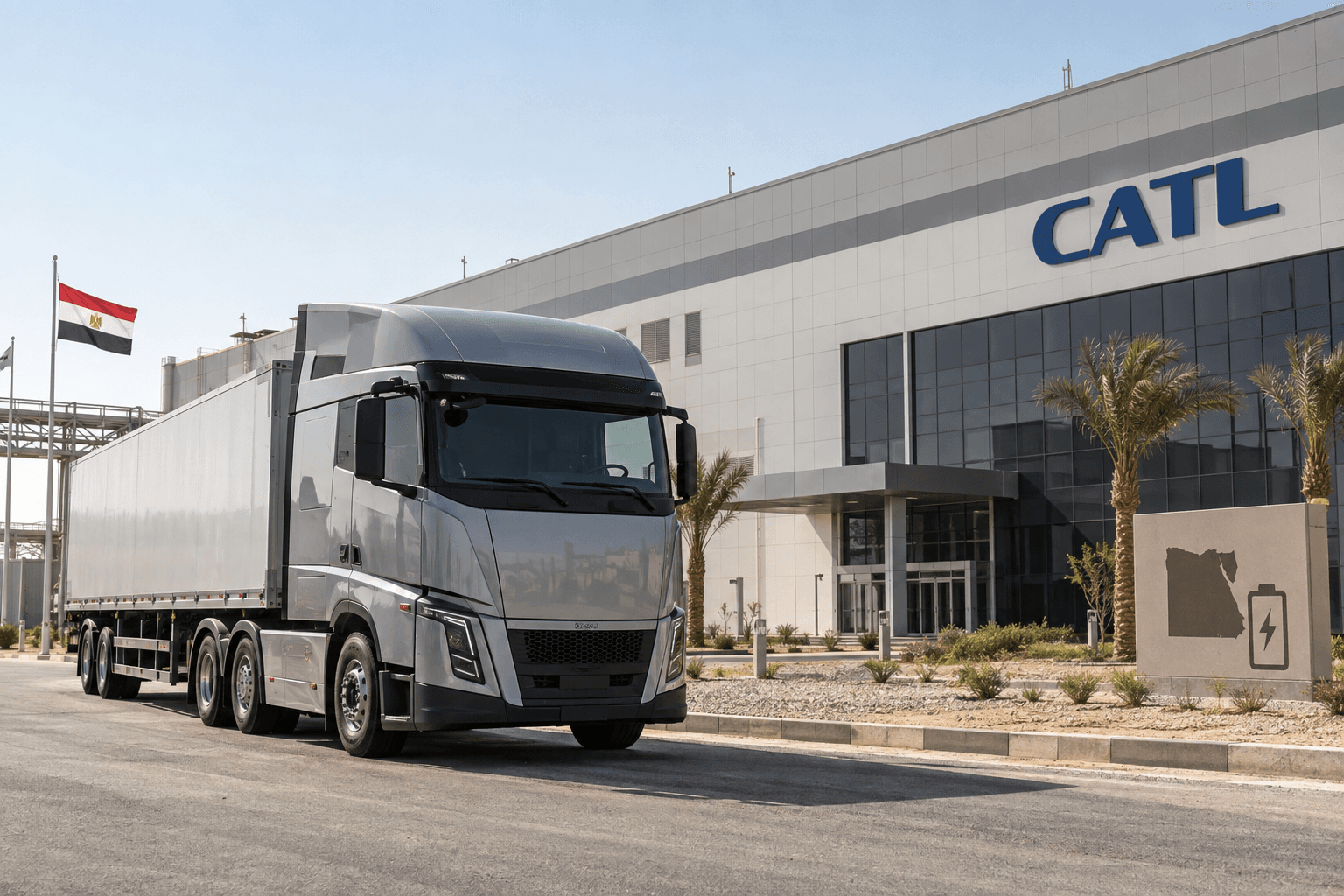
Egypt is set to gain a new battery production site. Local battery manufacturer BME and CATL have signed an agreement to initially manufacture battery systems for heavy commercial vehicles in the country.
CATL will primarily act as the technology partner. The Chinese battery group will provide battery technology, production equipment and technical support, while BME will contribute its local manufacturing and development capabilities.
The project will begin with batteries for electric trucks, with the long-term aim of developing the site into a more broadly diversified production hub for mobility and energy storage.
Two Expansion Stages With Up to 5 GWh
The planned factory is to be built in two phases. However, no binding schedule has yet been announced for the start of production or the subsequent expansion.
| Expansion stage | Annual capacity | Planned products |
|---|---|---|
| Phase 1 | 1 GWh | Battery systems for heavy commercial vehicles |
| Phase 2 | 5 GWh in total | Batteries for commercial vehicles and passenger cars, as well as stationary storage systems |
Investments of more than two billion Egyptian pounds are planned for the first stage. Based on the exchange rate at the time, this was equivalent to approximately €33 million. No details have yet been provided on the additional investment required to expand capacity to 5 GWh.
A capacity of 1 GWh is still far below that of the world’s largest cell factories, but it is significant as a regional entry point into commercial vehicle production. Batteries for heavy electric trucks are considerably larger than those used in passenger cars, meaning that even the first stage will operate on an industrial rather than experimental scale.
Target of 40% Local Value Creation
BME was founded by Egyptian commercial vehicle manufacturer MCV and industrial company Auto D. The new production operation is targeting a local value-added share of 40%. This will involve gradually developing regional supplier networks, engineering expertise and manufacturing know-how.
The locally produced battery systems are intended to supply Egyptian vehicle manufacturers while also being offered in international markets. Shorter transport routes could reduce import costs, logistics requirements and dependence on fully imported battery systems. The specific export markets being considered remain unclear.
The cell chemistry to be manufactured in Egypt has also not been disclosed. However, the international market is moving strongly toward LFP for cost-sensitive applications, as developments in the Chinese battery market also demonstrate.
CATL Again Relies on Technology Transfer
The model reflects a strategy that CATL already uses in other international projects. Instead of owning and operating every plant itself, the group can license its technology, supply production equipment and provide technical support to the local partner.
One well-known example is a Ford battery plant in the US state of Michigan. Ford owns and operates the factory, while the LFP technology used there comes from CATL. Under the Egyptian project, BME is likewise expected to provide the local industrial base.
The focus on heavy commercial vehicles is understandable, as buses, trucks and other commercial vehicles benefit particularly from robust battery systems that are available locally. The use of the Blade Battery in locomotives also shows how battery technology has long since expanded beyond conventional electric cars.
Stationary Storage Could Become Strategically Important
The second expansion stage is intended to take production beyond the vehicle sector. Plans include stationary battery storage systems for solar and wind power. Such systems can absorb peaks in generation and feed the energy back into the grid at a later time.
For Egypt, the project therefore offers two opportunities: a regional supply chain for electrified vehicles and additional storage technology for the energy sector. It will not create a new direct source of supply for the European market in the short term, but over the long term the project illustrates how rapidly battery production is diversifying internationally.
The Timeline and Supply Chain Will Be Crucial
The goals are ambitious, but key details are still missing. In addition to the production start date, neither the planned cell formats and chemistries nor specific customers or export markets are known. The development of a local supply chain is also likely to determine whether the targeted local value-added share can actually be achieved.
Nevertheless, CATL’s involvement gives the project an important advantage: proven battery technology and experience in ramping up large production facilities. If successfully implemented, Egypt could become a significant regional battery hub for commercial vehicles and energy storage systems.