CATL produces its first battery cells in Debrecen
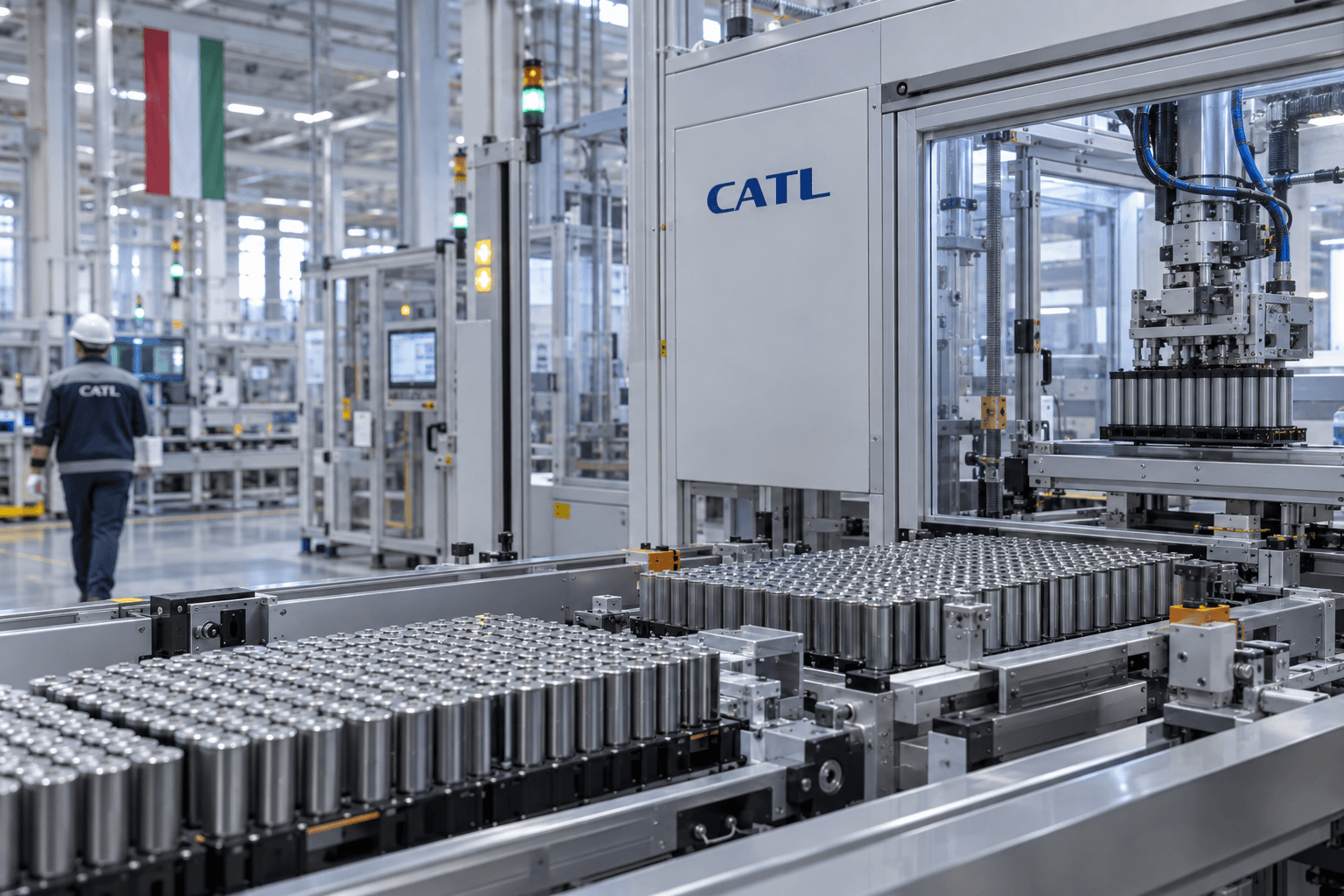
CATL began trial production at its new battery cell plant in Debrecen, Hungary, on September 22, 2026. The first two production lines are initially being used to commission, optimize and validate the equipment.
This does not yet constitute regular mass production. No specific date has been announced for the production ramp-up. Nevertheless, trial operations are a crucial step toward significantly expanding the local supply of batteries for European automakers.
Once fully expanded, Debrecen is expected to become CATL’s largest production site outside China, with up to 100 GWh of annual capacity.
Key facts about the CATL plant
| Metric | Status |
|---|---|
| Location | Debrecen, Hungary |
| Planned annual capacity | 100 GWh |
| Current phase | Trial production on two lines |
| Construction of the first cell production building began | Summer 2023 |
| Installation of production equipment | Completed by spring 2026 |
| Battery modules produced to date | 537,000 units since fall 2024 |
CATL has already been producing battery modules in Debrecen since fall 2024. The start of cell production now brings a far more complex and value-intensive part of battery manufacturing to the European site.
Trial operations test more than just the machinery
During the trial phase, production equipment is calibrated, processes are optimized and the quality of the cells produced is tested. Mass production can only be ramped up once the lines are operating reliably and meet all required parameters.
According to CATL, it uses flexible production lines to meet different customer requirements. The company has not yet specified which cell chemistries and formats will be the first to enter large-scale production in Debrecen.
Cell chemistry and vehicle architecture must be considered separately. Whether an electric car operates at 400 or 800 volts is determined by the overall battery system and the vehicle, as shown by our comparison of 800-volt and 400-volt architectures.
Permits granted following inspections
The operating permit for the building was granted in August 2026. The remaining approvals followed, including the requirements for the integrated environmental permit.
Several inspections by the responsible authorities took place before operations began. These also addressed issues that had caused concern among local residents. According to the authorities, the deficiencies previously identified during the approval process were corrected.
During trial operations, CATL plans to continuously monitor workplace safety, health and environmental metrics and report them to the authorities. Particularly for a plant of this scale, transparent oversight remains crucial to local acceptance.
European supply chains are getting shorter
Debrecen is CATL’s second European battery plant after its site in Germany. Its location in Hungary puts the manufacturer closer to numerous vehicle plants in Central and Eastern Europe. Shorter transport distances and local production can make supply chains more resilient and reduce logistics requirements.
The expansion is also relevant to Germany, Austria and Switzerland. Many suppliers and automakers in the DACH region—Germany, Austria and Switzerland—are closely integrated with production networks in Hungary. Additional European cell capacity could therefore indirectly help stabilize supplies to plants and development sites in these countries.
CATL extends its global lead
CATL remains the world’s largest manufacturer of electric vehicle batteries. From January through July 2026, the company’s batteries installed in vehicles worldwide had a combined capacity of 289.6 GWh. This represents growth of 26.6% compared with the same period of the previous year.
Its global market share rose from 38.0% to 39.9% over the same period. The growing importance of lower-cost cell chemistries in particular is reshaping the market, as also demonstrated by the development of LFP batteries in the Chinese battery market.
Operations in Debrecen are starting later than originally planned. Earlier schedules had called for production to begin in late 2025 or early 2026. The key question now is how quickly CATL can stabilize the two trial lines and subsequently ramp up mass production.