BYD significantly expands workforce at its largest plant
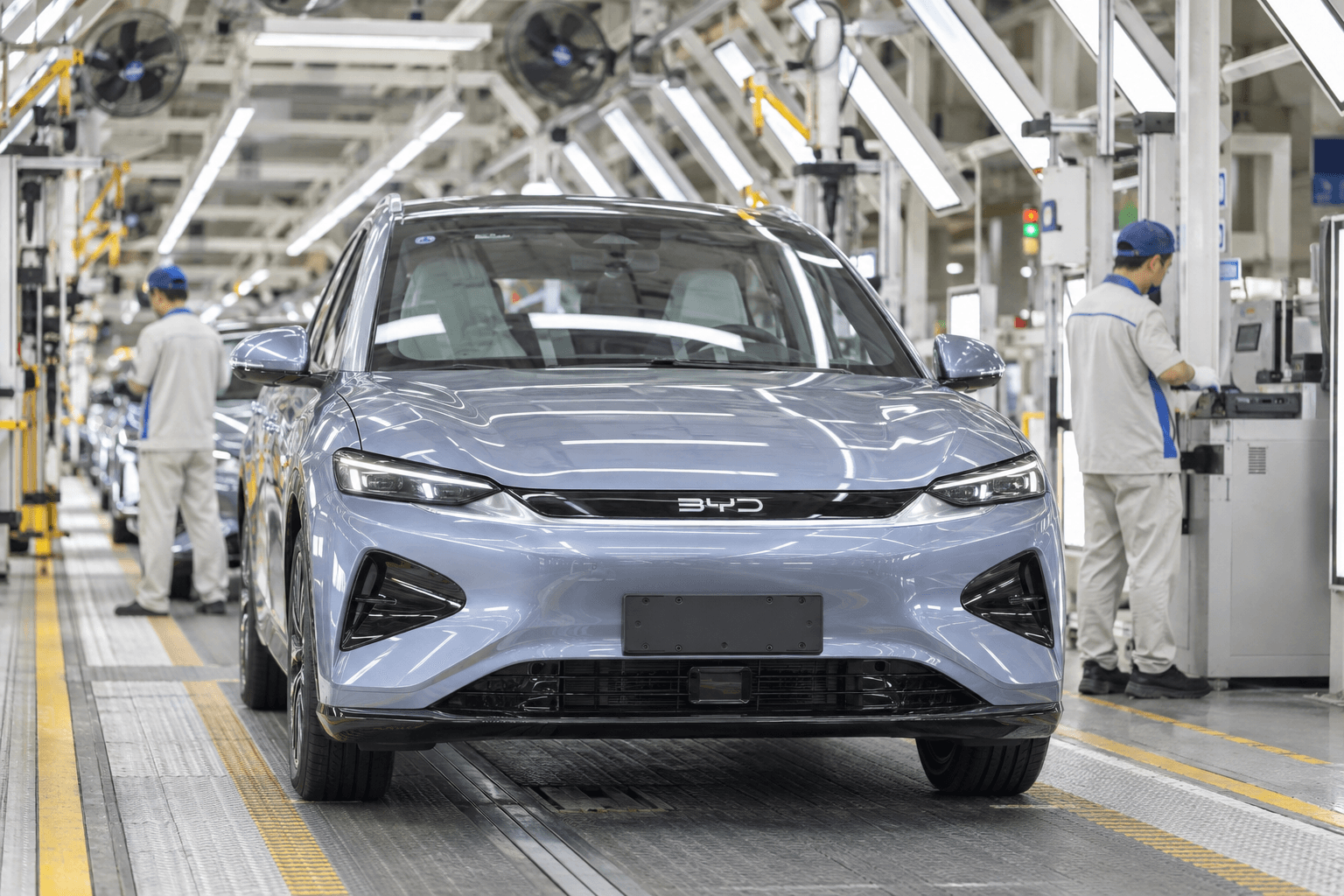
BYD is seeking more than 8,000 new employees at its production site in Xi’an. Several plants and business units are advertising vacancies simultaneously, including numerous skilled positions in welding, painting and final assembly.
The scale suggests that BYD is significantly ramping up production again following extensive upgrades. With a potential annual capacity of up to 1.5 million vehicles, Xi’an is the company’s largest production site.
The new hires are primarily a sign that modernized production lines are returning to full utilization and that exports are absorbing additional capacity.
Key figures from Xi’an
| Metric | Value | Context |
|---|---|---|
| New positions | more than 8,000 | Several plants and production units are recruiting staff simultaneously |
| Maximum annual capacity | 1.5 million vehicles | Largest BYD site by production volume |
| Production in 2024 | more than 1 million vehicles | Shows the scale the site has already achieved |
| BYD sales in August 2026 | 440,293 NEVs | Highest monthly figure of the year, up 17.8% year over year |
| Overseas sales in August 2026 | 189,466 vehicles | Record figure and an increase of 134.5% year over year |
In Chinese statistics, the term New Energy Vehicle includes both all-electric cars and plug-in hybrids. BYD offers both powertrain types but has already stopped producing conventional internal-combustion vehicles without an electrified powertrain.
Transition to the new Blade Battery initially slowed production
Production of several model lines was restricted in the first half of 2026. The reasons are believed to include the transition to the second generation of the Blade Battery and technical modifications to the production lines.
Such a transition affects more than just the battery itself. New cell formats, production procedures and testing processes must be integrated into existing lines, which can temporarily reduce available capacity. The charging performance expected from the new generation is demonstrated, among other examples, by the announced Blade Battery with Flash Charging in the BYD Seal 06.
During the conversion phase, BYD temporarily reduced its workforce in Xi’an or transferred employees to expanding sites. All four sections of the plant have now resumed regular production. Modernized lines plus full export order books → staffing needs are rising sharply in the short term.
Regional production is rising again
Figures from Shaanxi province also show the recovery. After vehicle production fell by almost 50% year over year in the first seven months of 2026, 138,900 vehicles were built in August.
That represented an increase of 55.4% compared with July and 17.9% compared with August 2025. The trend suggests that the production ramp-up has already begun and is not merely being prepared through the new recruitment drive.
Exports drive growth, while China remains challenging
The strongest momentum is currently coming from overseas. BYD’s international sales rose by 134.5% in August, while sales in its Chinese domestic market fell by 14.3%. Overall demand is therefore shifting increasingly toward exports.
This is an important shift for BYD. The Chinese market is characterized by intense price competition and a large number of new models, while the growing European EV market offers additional opportunities.
BYD already offers several electric cars in the DACH region—Germany, Austria and Switzerland—including the BYD Atto 3. Higher production in China could improve international availability, although transportation, homologation, tariffs and the expansion of regional sales networks remain crucial factors.
A return to record production is not yet certain
The Xi’an site could once again approach its previous peak figures. Export lines operating at full capacity and the large number of new positions point to a significant recovery.
However, permanently utilizing all capacity in full is not guaranteed. Models for the Chinese market remain under considerable competitive pressure. The hiring drive is therefore a strong signal of growth, but not yet proof that BYD will actually make full use of its maximum annual capacity of 1.5 million vehicles.