BYD turns the Seagull into a significantly larger EV
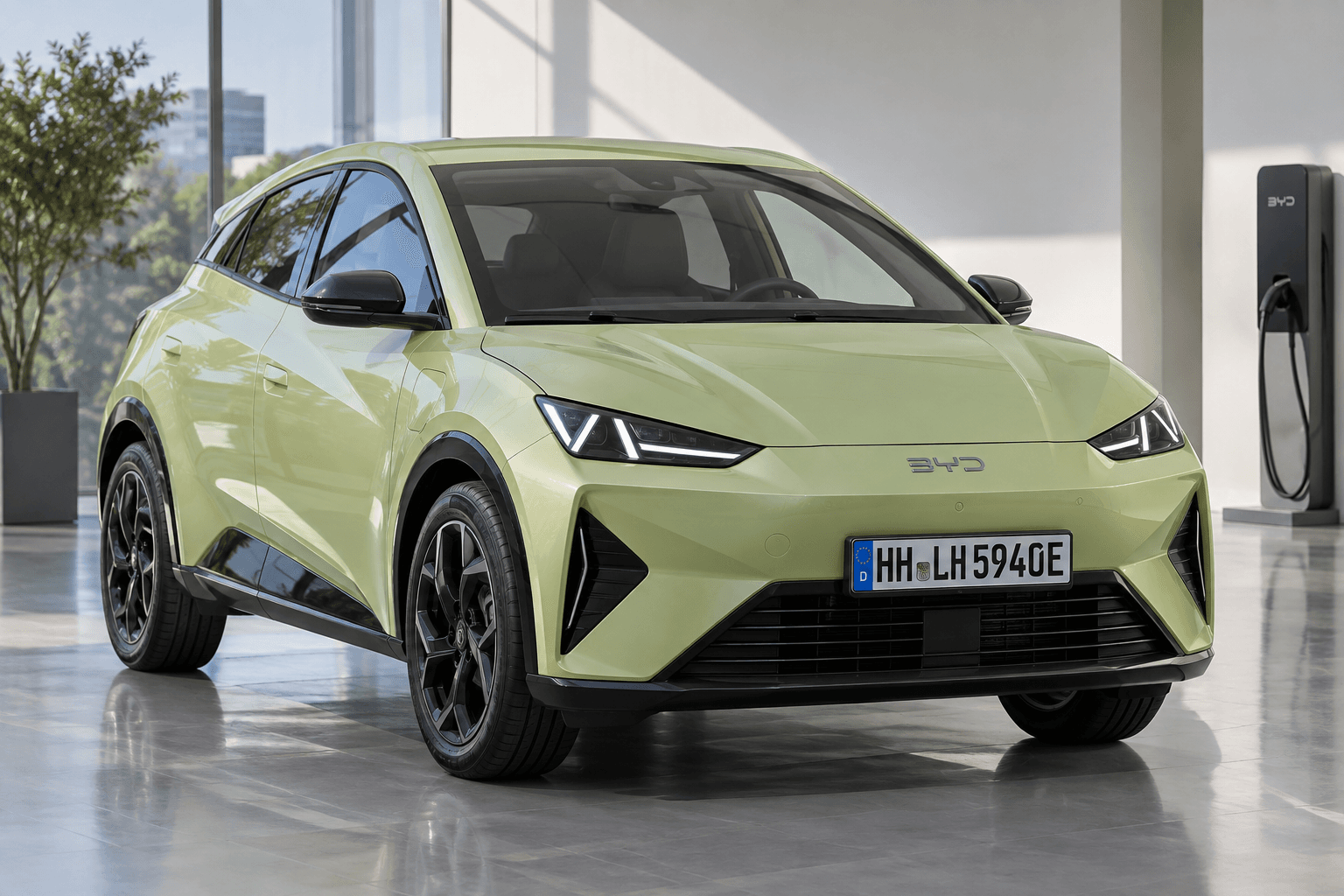
BYD has released the first official design sketches of the second-generation Seagull. Outside China, the affordable electric car is sold as the Dolphin Mini or Dolphin Surf, depending on the market.
The most important change is not so much the name as the dimensions. At 4.21 metres long, the model grows by around 43 centimetres, taking it beyond the traditional city-car class. In Europe, it could become a roomier successor to the current Dolphin Surf.
The new Seagull is not simply being updated: its dimensions and performance move it up an entire vehicle class.
Dimensions and performance compared
The key technical specifications come from documents filed with the Chinese vehicle approval authority. According to these, the new model measures 4,205 mm long, 1,810 mm wide and 1,570 mm high. Its wheelbase is 2,650 mm.
| Specification | Current Seagull | New generation |
|---|---|---|
| Length | 3,780 mm | 4,205 mm |
| Wheelbase | No new comparison figure | 2,650 mm |
| Motor output | 55 kW | 95 kW |
At 95 kW, the powertrain is around 73% more powerful than that of the current entry-level Chinese model. This should not only improve acceleration but also provide considerably more performance in reserve on motorways and when fully loaded.
However, the growth comes at a cost: a car measuring 4.21 metres long will no longer fit into tight urban parking spaces quite as effortlessly as the previous Seagull. At the same time, the larger dimensions create better conditions for more legroom, a bigger boot and a more practical rear seat. BYD has not yet provided specific interior dimensions.
New lighting design and streamlined cockpit
The sketches show an evolved shape with newly sculpted surfaces and three-pronged lights at the front and rear. The basic character of a compact hatchback remains, but the car looks longer and more mature.
Inside, BYD has fitted a new two-spoke steering wheel and what appears to be a larger central touchscreen. A row of physical buttons remains beneath the centre air vents. A wireless smartphone charging pad and two cupholders are also retained.
No separate driver display is visible in the published images. However, it is not yet possible to conclude with certainty that BYD will omit one entirely. Equipment and the appearance of individual variants may still differ by the time the production model is unveiled.
Flash Charging and LiDAR have yet to be confirmed
BYD has not yet disclosed the battery capacity or range. A new generation of the Blade Battery and the rapid Flash Charging technology that BYD is already using in other upcoming models are reportedly under consideration. The charging power the smaller vehicle will actually achieve remains unclear.
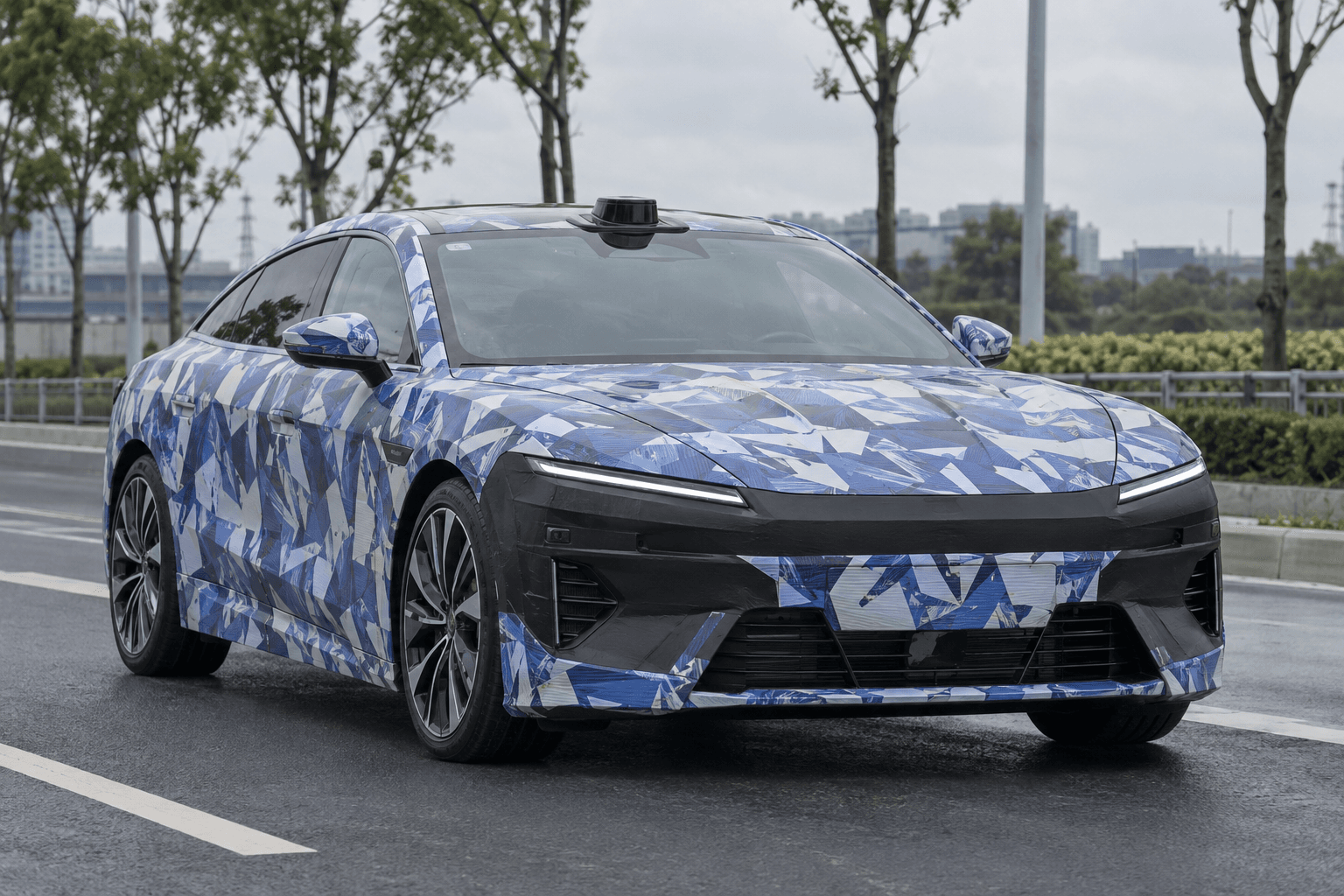
A roof-mounted LiDAR sensor has also previously been spotted on undisguised vehicles. This could indicate a more capable version of BYD’s driver-assistance system. Neither the sensor nor the specific range of functions has been officially confirmed, meaning autonomous driving features remain pure speculation for now.
The announced BYD Seal 06 with Flash Charging is one example of how widely BYD may be able to deploy its new charging technology. For the more affordable Seagull, the technology included as standard in the entry-level versions is likely to be just as important as the maximum charging power.
Chinese launch due in 2026, Europe still uncertain
The model is expected to launch in China under the Great Seagull name before the end of 2026. The current Seagull starts at 69,900 yuan there, making it one of the manufacturer’s most affordable electric cars.
In Europe, the current Dolphin Surf starts at around €22,900. An international launch of the new generation seems likely but has not yet been confirmed. Given its larger dimensions and more powerful motor, a potential European successor would probably be more expensive, although it could remain positioned below the larger BYD Dolphin.
The current Dolphin Surf has recently been upgraded with a more powerful motor and modernised interior. We summarised the known changes to the existing model in our article on the Dolphin Surf upgrade with 95 kW.
A supermini with a new role
With the second generation, BYD appears to be broadening the range of uses for its most affordable electric car. More space and 95 kW of power make the Seagull more appealing to commuters and small families who do not use their vehicle exclusively in the city.
For the DACH region—Germany, Austria and Switzerland—the price, battery capacity and DC fast-charging power will be particularly important. Only when BYD confirms a European version will it be possible to assess whether the larger Dolphin Surf is still intended as an affordable entry-level model or is moving towards the conventional electric supermini class.