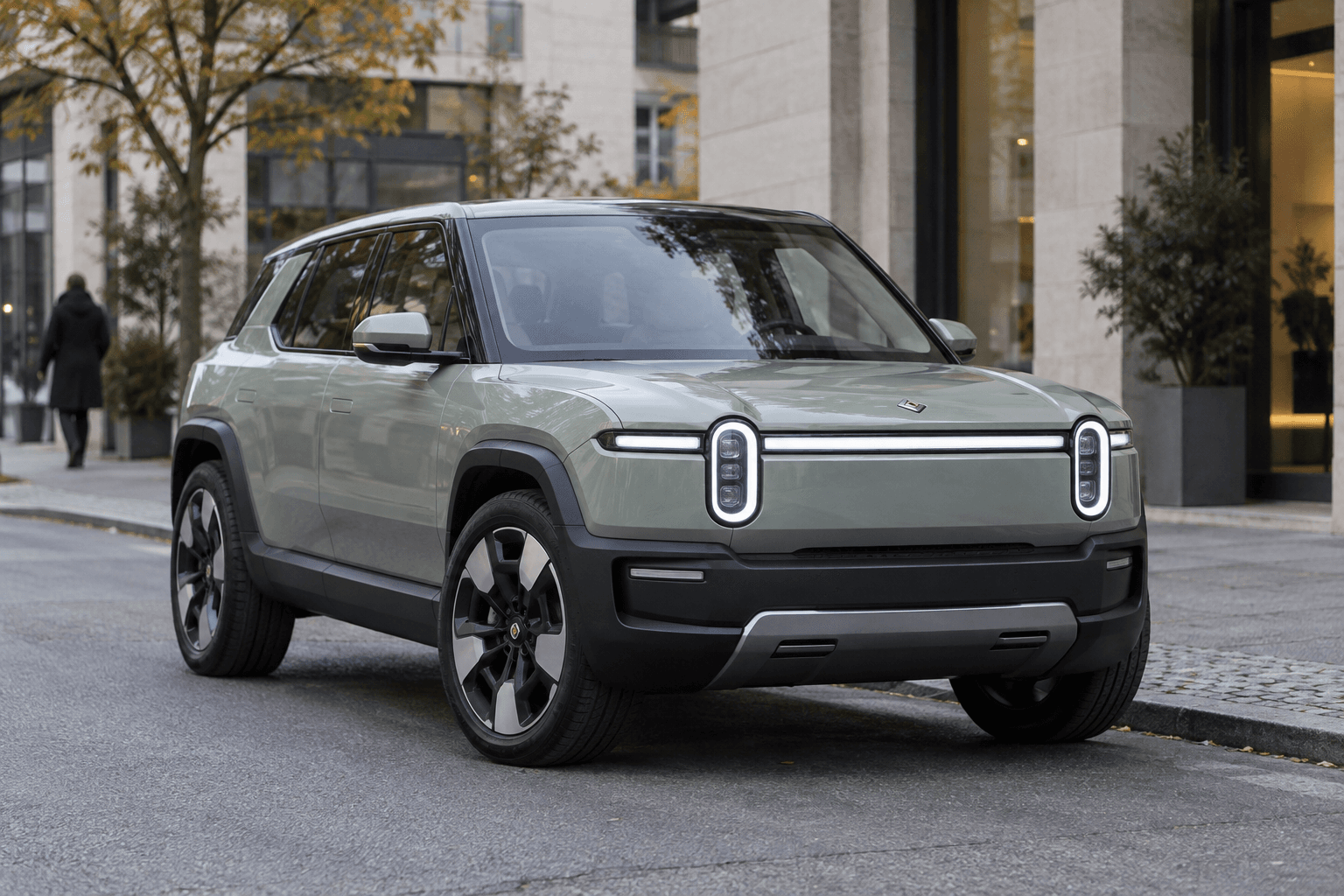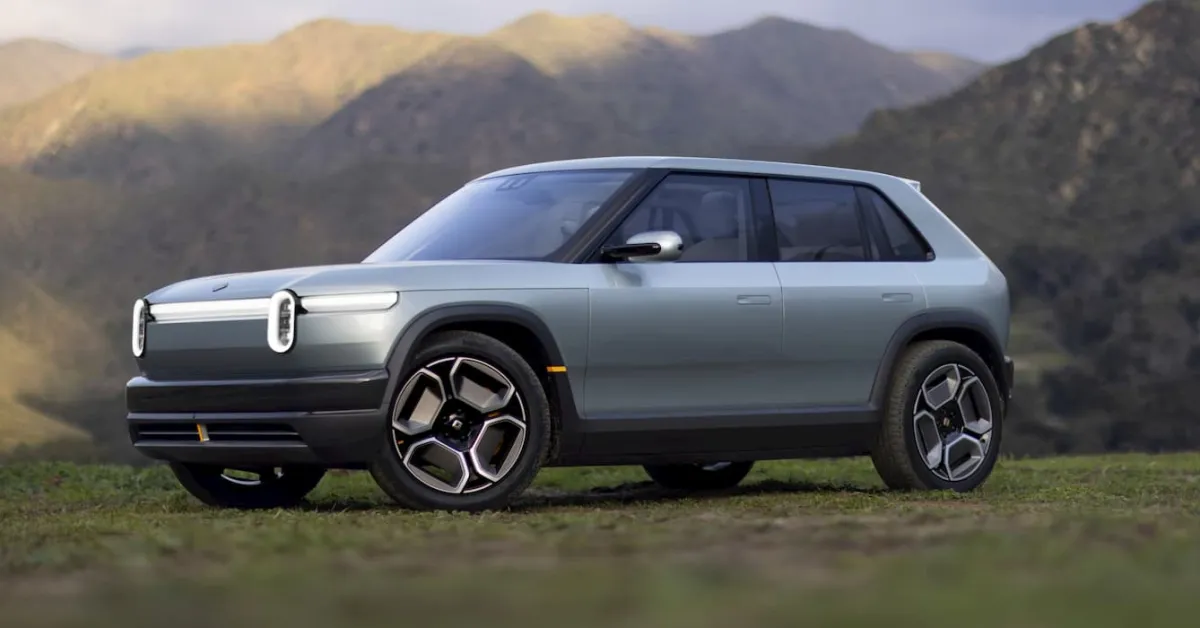
Rivian is expanding its model range downmarket
Following the R2, Rivian plans to launch more affordable electric cars. CEO RJ Scaringe confirmed that the more compact Rivian R3 will be priced significantly below the R2. A later R4 is intended to lower the barrier to entry even further.
Scaringe did not provide specific prices. In earlier statements, however, he had placed the R3 in the mid-to-high $30,000 range. This would take Rivian into a much broader market segment for the first time.
The R3 is intended to mark Rivian’s transition from a relatively expensive premium manufacturer to a higher-volume electric car brand.
Which R2 serves as the price comparison?
The claim that the R3 will be cheaper requires context, because the Rivian R2 will not be available in just one version. The frequently cited $45,000 base model is not scheduled to arrive until late 2027. Significantly more expensive versions will launch first.
| R2 version | US price | Planned launch |
|---|---|---|
| Performance Launch Edition | $57,990 | 2026 |
| Premium | $53,990 | Late 2026 |
| Standard Long Range | $48,490 | Early 2027 |
| Standard with rear-wheel drive | $45,000 | Late 2027 |
The announced base version of the R2 is the most useful benchmark. An R3 priced at around $35,000 to $39,000 would indeed be significantly cheaper. However, US prices cannot be applied directly to Germany, Austria or Switzerland, as taxes, equipment, transportation and potential import costs differ.
R3 production is planned for 2028
There is still a long wait before the R3 reaches the market. Rivian plans to build the electric car at its new plant in the US state of Georgia, where production is scheduled to begin in 2028. Once completed in two expansion phases, the site is expected to reach an annual capacity of up to 400,000 vehicles.
The R4 is even further away. Rivian previously described the R4 and R5 as sister models based on a new platform, while also stating that no development teams are actively working on them yet. The R4 is therefore currently primarily an indication of the company’s long-term pricing strategy rather than a production model with a firm launch date.
Why Rivian could not start with affordable models
Rivian began with the large and expensive R1 models because a young company has little bargaining power with suppliers. According to Scaringe, Rivian initially had to budget for component markups of 40% to 50%. Higher production volumes and established supplier relationships are now expected to reduce these disadvantages.
The approach is reminiscent of Tesla’s progression from the high-priced Tesla Model S to the much more broadly positioned Tesla Model 3. Expensive vehicles finance the development of technology and production capacity, after which economies of scale make more affordable model lines possible. For Rivian, the corresponding sequence is R1, R2 and finally R3.
The R2 must stabilize Rivian’s foundation
Following the start of R2 deliveries in June, Rivian raised its 2026 forecast to 65,000 to 70,000 vehicles. The company delivered around 42,000 units in the previous year. This shows progress in production volume but does not yet resolve the central issue of profitability.
The company still expects an adjusted EBITDA loss of $1.8 billion to $2 billion in 2026. Ramp up the R2 → reduce the cost per vehicle: This step is crucial before an affordable R3 can be produced profitably.
What this means for Europe
There is currently no reliable information on the R3’s launch date, price or sales arrangements in the DACH region—Germany, Austria and Switzerland. A compact Rivian positioned below the R2 would generally be more appealing for Europe than the large R1 models, but the brand would need a suitable sales, service and charging network.
The direction is nevertheless clear: Rivian does not intend to remain permanently confined to a high-priced niche. The R3 is the most tangible high-volume model in this strategy so far, while the R4 could later open up an even more affordable entry-level segment.