Zeekr upgrades the 7X: 85 kWh LFP instead of 75 kWh
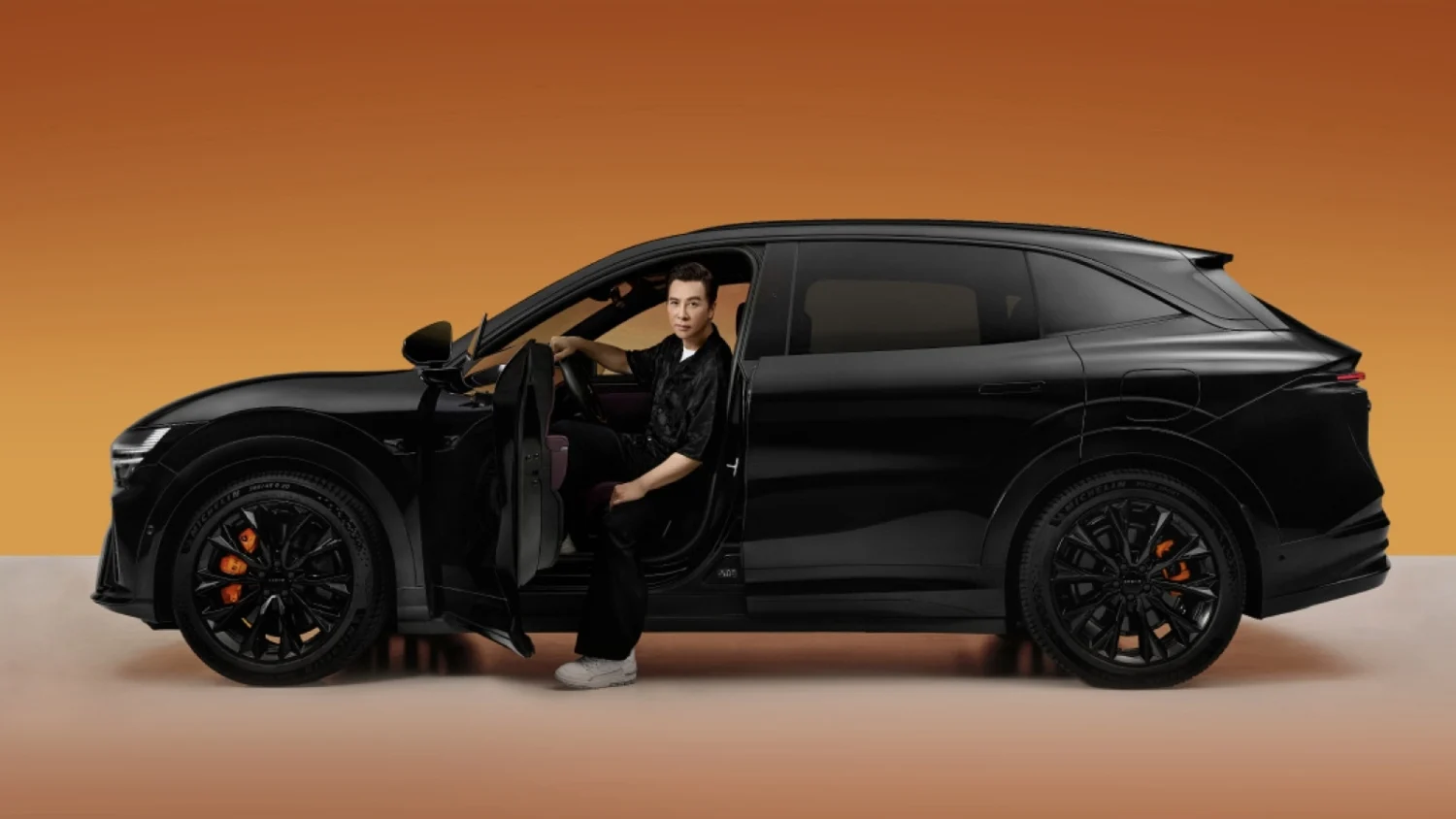
Zeekr is planning an update for the Zeekr 7X in China for the 2027 model year: The entry-level version is set to receive an 85 kWh LFP battery. Its launch in the domestic market has been announced for Q4 2026.
The move is strategically significant because it should narrow the gap between the base and Long Range models. Until now, the 7X has started in China with a 75 kWh LFP battery, while a substantially larger Long Range battery with NMC chemistry sits above it.
What kind of battery is it? “Aegis Golden Brick” with short “blade” cells
The new 85 kWh battery is described as an LFP pack and is called the Aegis Golden Brick. It is said to use short, blade-like cells and to have been developed within the Geely Group, which owns Zeekr.
According to the manufacturer, it is designed for a service life of up to 1,000,000 km and 3,500 charging cycles, with a focus on protection against thermal runaway. Figures like these are typically laboratory or fleet targets and, in practice, depend heavily on temperature ranges, charging patterns, and usable capacity. Nevertheless, the direction is clear: LFP is being positioned as a robust, practical option for everyday use.
Current Zeekr 7X specifications in China and why 85 kWh is a logical intermediate step
In China, the base Zeekr 7X currently comes with a 75 kWh LFP battery and rear-wheel drive. Alongside it is a Long Range version with a 103 kWh NMC battery, representing a very large jump in both capacity and range.
An 85 kWh LFP pack would reduce this gap without directly cannibalizing the Long Range positioning of the NMC version. For buyers, the main benefits would be more range in reserve for long-distance driving and less of a choice between “small or huge” when configuring the vehicle.
Chinese version: Battery and drivetrain options at a glance
| Variant (China) | Battery | Drivetrain | Range (CLTC) |
|---|---|---|---|
| Base (current) | 75 kWh (LFP) | RWD | up to 620 km |
| Long Range (current) | 103 kWh (NMC) | depending on version | up to 802 km |
| Base (updated) | 85 kWh (LFP) | not yet finally confirmed | not yet announced |
Charging: The most intriguing question remains unanswered
There are still no official details on how quickly the new 85 kWh battery will charge. For the current 75 kWh LFP pack, Zeekr advertises very short charging times from 10% to 80% and a high-voltage electrical system, both of which are generally conducive to high charging rates.
Whether the new pack retains these characteristics will determine its real-world impact. Greater capacity only provides a genuine advantage on long journeys if the charging window, preconditioning, and peak charging rate continue to work well together. Otherwise, the battery gets larger without necessarily making charging stops shorter.
European perspective: Not everything from China carries over directly
The Zeekr 7X has already launched in Europe, albeit with different specifications for power output, batteries, and range testing, using WLTP rather than CLTC. The China update is therefore a strong indication of an upcoming model revision, but no guarantee that this exact 85 kWh variant will also appear in the EU in the same form.
An 85 kWh LFP version of the 7X would nevertheless be appealing for the European market because it addresses precisely the gap many buyers see in mid-size SUVs: a practical LFP battery with more range in reserve, without immediately moving up to the most expensive battery class. In China, it is explicitly aimed at the Tesla Model Y segment, where efficiency, charging plans, and value for money often matter more to European buyers than range figures on paper alone.
You can find more context on Zeekr’s technological advantage, the positioning of the 7X, and previous equipment and platform news in our article on the Zeekr 7X and its 900-volt approach to range and charging.
Dimensions and format: A mid-size SUV clearly aimed at the Model Y
In China, the Zeekr 7X is a five-seat mid-size SUV. The local version measures around 4.83 m long and has a wheelbase of just under 2.93 m. The global version is slightly more compact, which is not unusual when adapting a platform and obtaining regulatory approval.
Anyone wanting to understand how important 800-volt systems and similar technologies really are in everyday use can refer to our comparison of 800-volt vs. 400-volt EV architectures.
What does this mean for buyers considering the 7X?
If Zeekr introduces the 85 kWh battery as the new base option as expected, it could lead to a more balanced model range in the medium term: an entry-level version with more range in reserve, followed by a Long Range model for maximum driving range. Charging performance remains the key issue, because a large battery that charges slowly is less suitable for long-distance driving than a smaller one that charges very quickly.
When comparing established options in this segment, it is worth considering range, charging performance, and efficiency together. The Tesla Model Y remains an important benchmark in the mainstream SUV market, particularly because its real-world figures often align closely with a predictable long-distance driving profile.