Li Auto invests in Sunwoda EVB to gain more influence over batteries
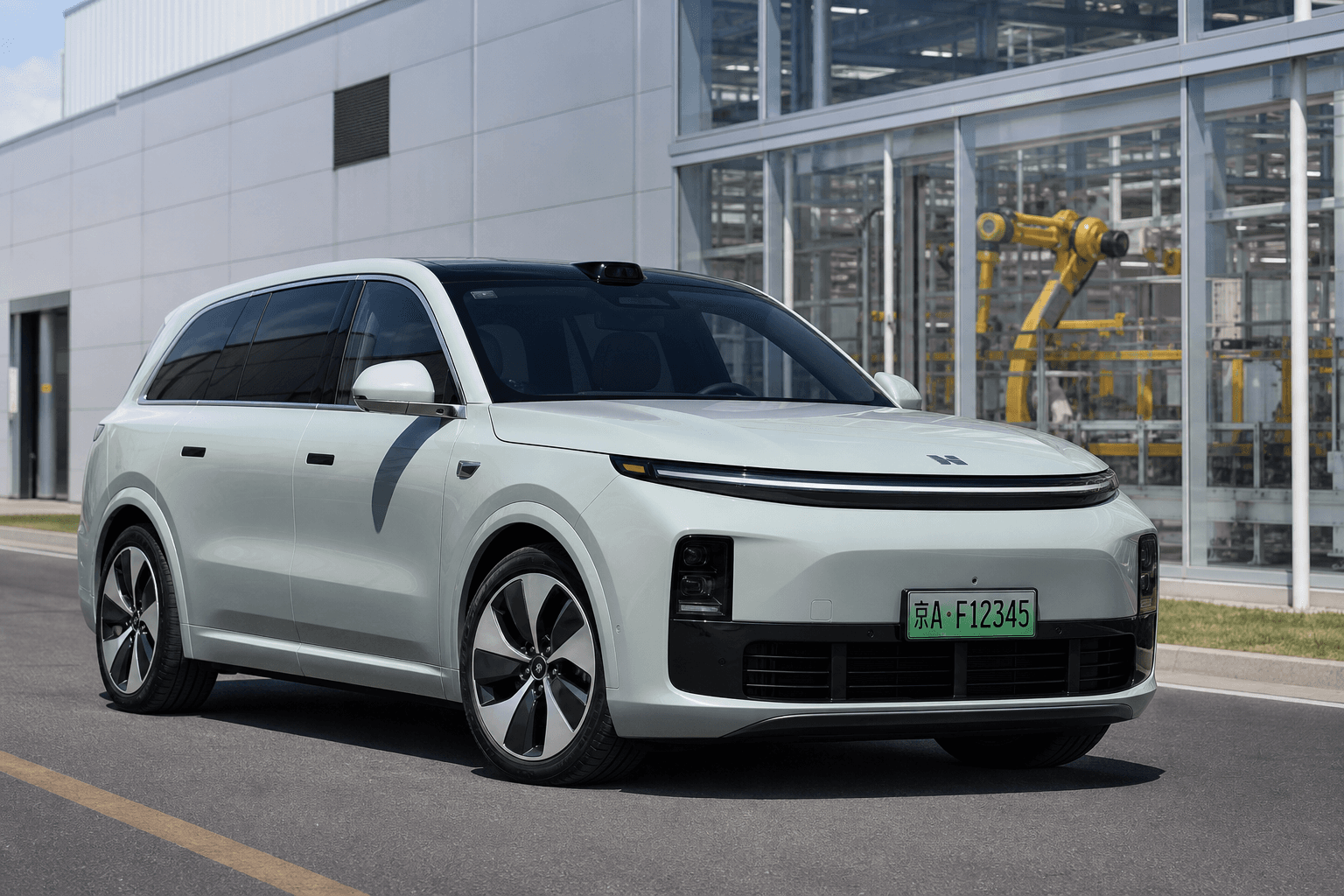
Chinese automaker Li Auto wants to forge closer strategic ties with a key supplier for its battery supply and is investing 2.65 billion yuan (approximately US$390 million) in Sunwoda’s battery division, Sunwoda Electric Vehicle Battery (Sunwoda EVB). The investment will be made by subscribing to newly issued shares and, once the transaction is completed, will make Li Auto the battery manufacturer’s second-largest shareholder.
Li Auto is set to hold a direct stake of 8.79% in Sunwoda EVB. Including participating entities affiliated with Li Auto, the combined stake amounts to 11.17%, according to the published ownership structure. For Sunwoda itself, the capital increase will result in dilution, although Sunwoda is expected to retain control of the subsidiary for now.
Why this is more than a financial deal
In comments to Chinese media, the move has been described as a long-term partnership rather than a purely financial investment. The rationale is clear: in an electric vehicle, the battery is the most expensive individual component and also the biggest factor affecting range, charging performance, safety, and cost.
Li Auto is expected to continue setting the direction, including product definitions, targets, quality standards, and core technology development. Sunwoda EVB will contribute its engineering, manufacturing, and supply-chain expertise to bring new cell and pack technologies into reliable mass production. In practice, this could mean shorter industrialization cycles, more consistent quality across high production volumes, and less risk when ramping up new models.
Valuation, ownership structure, and Sunwoda’s risk warning
The Series C++ round uses the same pricing approach as the subsidiary’s previous financing rounds. Sunwoda EVB was valued at 27.49 billion yuan before the transaction and approximately 30.14 billion yuan after the investment.
Following the dilution, Sunwoda is expected to retain a 24.06% stake through a subsidiary, down from 26.38%. The company emphasizes that Sunwoda EVB will continue to be consolidated in its financial statements, meaning it will remain under its control for accounting purposes. At the same time, it has also identified a risk: the broader ownership structure could weaken Sunwoda’s control in the future if it is unable to retain decision-making majorities at shareholder or board level.
Li Auto and batteries: in-house development plus multiple sourcing
For years, Li Auto has been working to become more than just a battery “customer.” The company cites in-house expertise in cell systems, pack structures, thermal management, and battery management system (BMS) algorithms. This is relevant because software and thermal design now play a major role in determining how quickly a battery charges, how much power it can deliver, and how well it ages.
According to management statements, the use of Li Auto’s own battery technology in more models is scheduled to begin in the second half of 2026. Nevertheless, Li Auto is sticking to its established approach of working with several suppliers in parallel. It also has a multi-year strategic partnership with CATL covering areas such as battery safety and ultra-fast charging. This is generally good news for buyers because multiple sourcing improves supply stability and keeps technological options open.
What Sunwoda EVB gains: capital, a stronger balance sheet, and growth
Sunwoda also presents the funding round as a balance-sheet measure: the additional capital is intended to strengthen its financial position and improve its debt ratios. Its operating figures show that growth and profitability do not automatically go hand in hand. In the first half of 2026, Sunwoda EVB generated revenue of 15.53 billion yuan while reporting a net loss of 324 million yuan.
Sunwoda EVB is one of China’s larger battery manufacturers. Its installed capacity in July was reported at 2.66 GWh, placing it seventh with a market share of 3.59%. A separate initial public offering has also been under consideration since 2023, although there has recently been no major publicly visible progress.
What it means for the DACH market: a typical Chinese move that also affects Europe
Although Li Auto is not currently an established mass-market brand in the DACH region—Germany, Austria, and Switzerland—the signal is relevant. In China, automakers are increasingly using equity investments, joint ventures, or co-development projects to become more deeply involved in the battery value chain. This often accelerates innovation and scaling, but it can also shift dependencies.
This matters for Europe because battery expertise and supply chains increasingly determine competitiveness. Manufacturers that have industrialization and quality under control can launch new models faster and manage prices more effectively. Similar dynamics can be seen at other automakers that are aggressively advancing charging and battery architectures, including in relation to a comparison of 800-volt architectures.
What buyers could ultimately gain
- more consistent battery quality across high production volumes because development and manufacturing are more closely integrated
- faster implementation of new cell and pack designs in mass production
- potentially better availability because supply-chain relationships are secured contractually and financially