VW confirms 50,000 job cuts, but internal plans suggest more
Volkswagen's Supervisory Board has unanimously approved the Future Plan 2030. Officially, 50,000 jobs are to be eliminated worldwide, with just over half of them in Germany. However, an internal decision paper suggests that the actual workforce reduction could be considerably larger.
It lists fixed targets totaling 47,200 jobs for the individual brand groups, as well as a further 13,000 jobs linked to overhead cost targets that have yet to be finalized. If these positions are added to the official figure, the total could theoretically reach up to 110,000 jobs by 2030.
The figure of 110,000 jobs is not a conclusively confirmed reduction target, but results from adding together various internal planning blocks.
The key questions are whether some of the figures overlap and how Volkswagen will implement the outstanding cost targets. A calculated reduction in headcount does not automatically mean an equal number of compulsory redundancies. Employee turnover, partial retirement, expiring contracts and positions left unfilled could absorb some of the cuts.
| Metric | Scale by 2030 | Context |
|---|---|---|
| Officially announced job cuts | 50,000 jobs | Worldwide, with just over half in Germany |
| Fixed targets for the brand groups | 47,200 jobs | Spread across several divisions of the Group |
| Outstanding overhead cost targets | 13,000 jobs | Calculated additional staffing requirement |
| Potential total | Up to 110,000 jobs | Not yet confirmed as a final target |
Core and Audi expected to make particularly deep savings
The greatest burden will fall on the Core brand group centered on VW Passenger Cars. This group also includes Volkswagen Commercial Vehicles, Škoda, Seat and Cupra. According to the plan, just over 22,000 jobs are at risk there.
Around 10,000 jobs are earmarked for the Audi-led Progressive group. Approximately 5,000 management positions could also be eliminated across the Group. In total, Volkswagen aims to reduce its overhead costs by €11 billion.
The scale of the plans explains why the conflict between the works council—the employee representative body under German labor law—and Group management has recently intensified significantly. Although employee representatives approved the overall plan, they continue to reject certain structural changes.
Volkswagen targets a 9% operating margin
The job cuts are driven by ambitious financial targets. The Group's operating return on sales is to rise to 9% by 2030. In the first half of 2026, it stood at just 3.8%.
According to the planning calculations, Volkswagen must improve its earnings by a total of €31 billion by 2030 to avoid slipping into the red if conditions remain unchanged. The core VW brand is expected to contribute €7 billion, the Audi group €6 billion, Porsche €3.8 billion and commercial vehicle group Traton €3 billion.
Porsche and Traton are independently listed companies. The targets specified for them are therefore recommendations only.
Four German plants remain under review
The long-term future of the Emden, Hanover, Zwickau and Neckarsulm sites remains unresolved. Depending on the plant, current production is secured until at least 2030, but not all sites have binding commitments for follow-on production involving new models.
| Plant | Currently secured until | Status afterward |
|---|---|---|
| Emden | End of 2030 | New use or follow-on model under consideration |
| Zwickau | End of 2030 | New use or follow-on model under consideration |
| Hanover | 2031 | Further production allocation still undecided |
| Neckarsulm | 2033 | Long-term outlook still uncertain |
A €1.5 billion annual improvement in the combined cost position is expected to be a prerequisite for assigning new models to the plants. Notably, this figure is roughly equivalent to the calculated savings from closing a plant. Volkswagen intends to establish a viable production structure for its European sites by June 2027.
The cost-cutting drive does not mean abandoning EVs
The Future Plan should not be interpreted as a retreat from electric mobility. Volkswagen continues to announce investments totaling hundreds of billions of euros. At the same time, the Group must organize development, production and administration more cost-effectively to remain profitable in international competition.
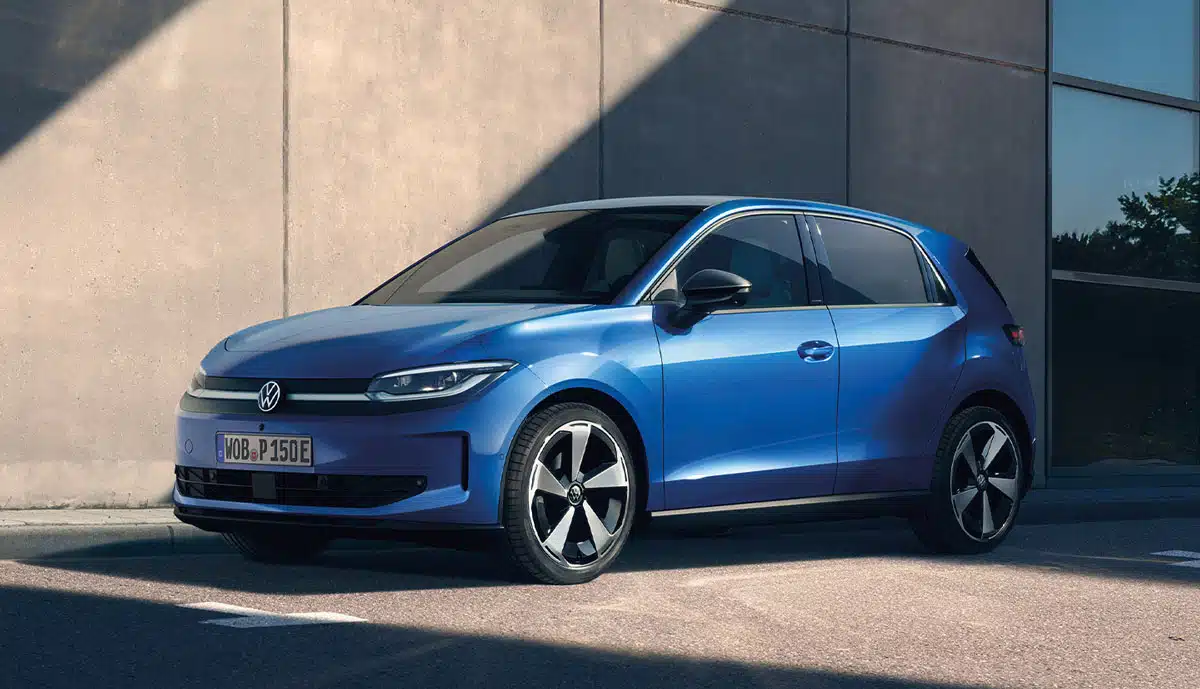
Evidence that its electric model strategy is fundamentally attracting demand includes more than 70,000 orders for new entry-level EVs from VW, Škoda and Cupra. Product demand and severe job cuts can therefore occur simultaneously when platform costs, plant utilization and administrative structures are incompatible with profitability targets.
The restructuring is particularly significant for Germany, where more than half of the officially announced job cuts are expected to take place. In Austria and Switzerland, the potential consequences are likely to affect suppliers, dealerships and service providers with close ties to the Group. No specific figures are available for these markets yet.
The Group's corporate structure could also change
In addition to the workforce reduction, the Management Board is considering a far-reaching reorganization. The VW Passenger Cars brand and the components business could be transferred into independent companies, each with its own supervisory board. A decision by the Supervisory Board and the Annual General Meeting would be possible no earlier than 2027.
Other possibilities include the sale of motorcycle brand Ducati, a review of Volkswagen's stake in Chinese battery manufacturer Gotion and a new evaluation system for executives. In the future, the Supervisory Board may also only be required to approve larger measures.
The unanimous resolution therefore initially establishes a framework but does not yet provide certainty for all employees and plants. The Supervisory Board is scheduled to meet again on September 25. The restructuring of the North American business will then be a particular focus.