V2L turns an EV battery into a mobile power source
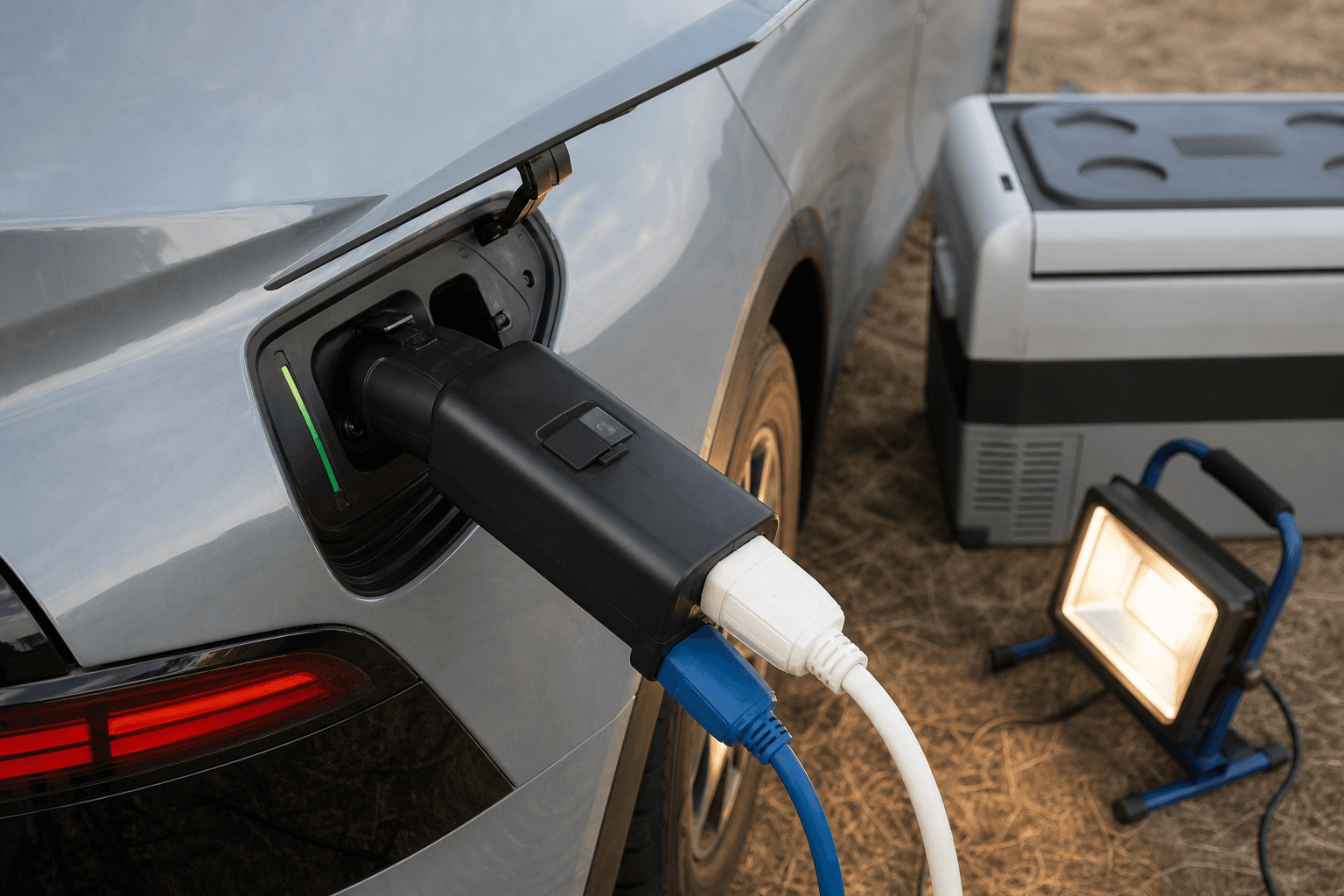
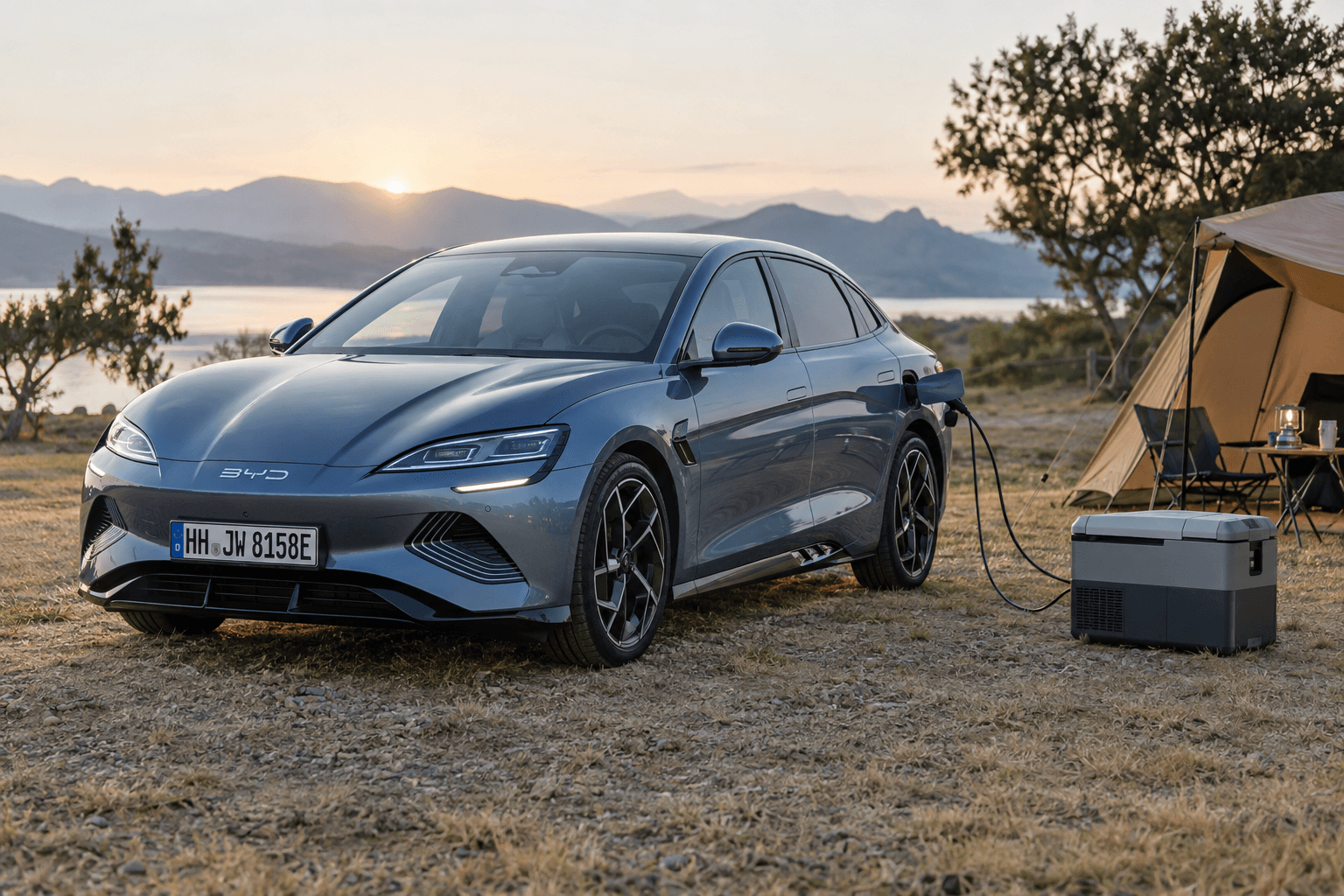
Vehicle-to-Load, or V2L, allows electric cars to power external devices directly from their high-voltage batteries. This is useful when camping, gardening, or charging e-bikes, but it requires reliable protection mechanisms and intuitive operation.
The BMW iX3, BYD Seal, Kia EV5, MG4, Renault 5, and XPeng G9 were tested. The test focused on short circuits, overloads, activation, and restarting after a protective shutdown. Third-party accessory adapters were not included in the test.
The key finding: All six electric cars shut down correctly in the event of a short circuit or overload and remained fully drivable afterward.
Operation and adapters vary considerably
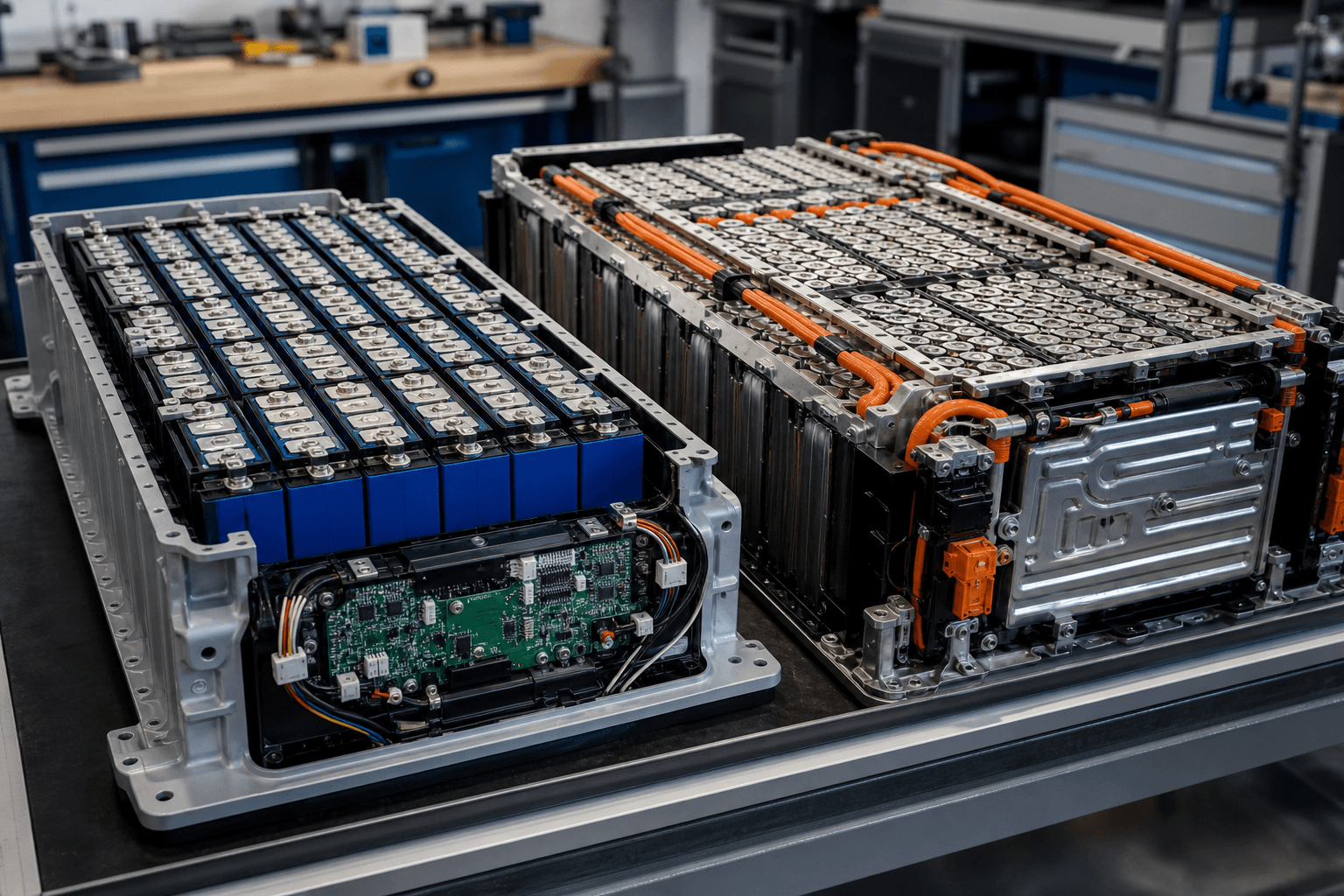
A standard outlet on the vehicle is not enough for V2L. The car needs an onboard charger capable of bidirectional operation, along with a suitable adapter that supplies electrical power to external devices.
| Model | Activation | Special feature |
|---|---|---|
| BMW iX3 | Plug in the adapter | 4 to 5 kW available briefly |
| BYD Seal | Plug in the adapter and press the button | Cable adapter with multiple outlets |
| Kia EV5 | Plug in the adapter and press the button | Adapter with rain protection |
| MG4 | Activation via the vehicle display | Cable adapter with multiple outlets |
| Renault 5 | Press and hold the button on the adapter | Relatively cumbersome restart after a short circuit |
| XPeng G9 | Plug in the adapter | No additional authorization required |
Automatic activation is convenient for occasional use. An additional button can prevent accidental activation, but it should be clearly labeled and easy to reach. The better solution therefore also depends on the intended use.
Short circuits and overloads cause no damage
All the vehicles disconnected the power supply when short circuits were deliberately triggered. No visible damage was subsequently found on either the OEM adapters or the cars. The tests also had no impact on the vehicles’ ability to drive.
Peak output remained below 3.7 kW in five vehicles. The BMW iX3 supplied 4 to 5 kW for approximately ten minutes before shutting down. High-powered appliances such as grills, electric kettles, or tools can therefore quickly reach the limit, especially if several devices are connected at the same time.
Overload → protective shutdown. That is the correct response in everyday use, but the vehicle should then clearly indicate which device needs to be removed or how much the load needs to be reduced.
Renault 5 needs a break after a fault
In almost all the vehicles tested, V2L could be used again immediately after a shutdown by unplugging and reconnecting the adapter. The Renault 5, by contrast, had to enter a complete sleep state.
Among other things, this required the vehicle key to remain outside wireless range for several minutes. The problem is not so much the technical reset itself, but the fact that this procedure was not described in the owner’s manual. Without this information, users may mistake a properly functioning protective shutdown for a defect.
Up to 500 watts of power consumption makes a difference
Five of the six electric cars consumed 390 to 500 watts themselves during V2L operation. Only the BMW showed no comparable figure. Some of this energy is needed to keep the high-voltage system, power electronics, and control units active.
Over eight hours, this adds up to around 3.1 to 4 kWh on top of the energy used by the connected device. With an electric cooler or another low-power appliance, the car may therefore consume considerably more energy than the device itself.
Anyone using V2L overnight should therefore consider more than just the appliance’s power consumption. The battery level, desired remaining range, and a configurable discharge limit in the vehicle are also relevant.
Using V2L in wet conditions remains off-limits
Although the Kia adapter has rain protection, all six manufacturers prohibit using V2L in wet conditions. The protective cover therefore does not constitute approval for use in rain, on damp ground, or with exposed outdoor electrical connections.
In everyday use, this means that the adapter and connected devices must be kept in a dry, sheltered location. When camping in particular, the plug connection should not be left on the ground. Extension cords and power strips must also be suitable for the intended load and location.
Error messages need to be more specific
There is room for improvement in the messages shown inside the vehicle. In the event of an overload, the Kia displayed a message indicating that power consumption was too high, but it used the same message for a short circuit. Other vehicles displayed general notices about a charging error or a supposedly incompatible device.
A clear distinction between an overload, short circuit, adapter fault, and low battery level would be more helpful. This should be accompanied by direct instructions, such as disconnecting the appliance or reconnecting the adapter.
V2L is also only one form of bidirectional charging. More advanced systems could eventually incorporate buildings or the power grid as well, as shown by Hyundai and Kia’s plans for bidirectional charging.
Conclusion: Protection technology impresses, but the details do not
The electric cars tested mastered the most important safety requirement. Short circuits and overloads reliably triggered a shutdown without visibly damaging the vehicle or OEM adapter.
Operation, restarting, weather protection, and power consumption are less consistent. V2L is already a useful feature, but better error messages and more transparent consumption figures would significantly improve its practical value. The results apply to the specific vehicles tested with their OEM adapters and the software configurations used during testing.