Toyota plans to begin EREV production in April 2027
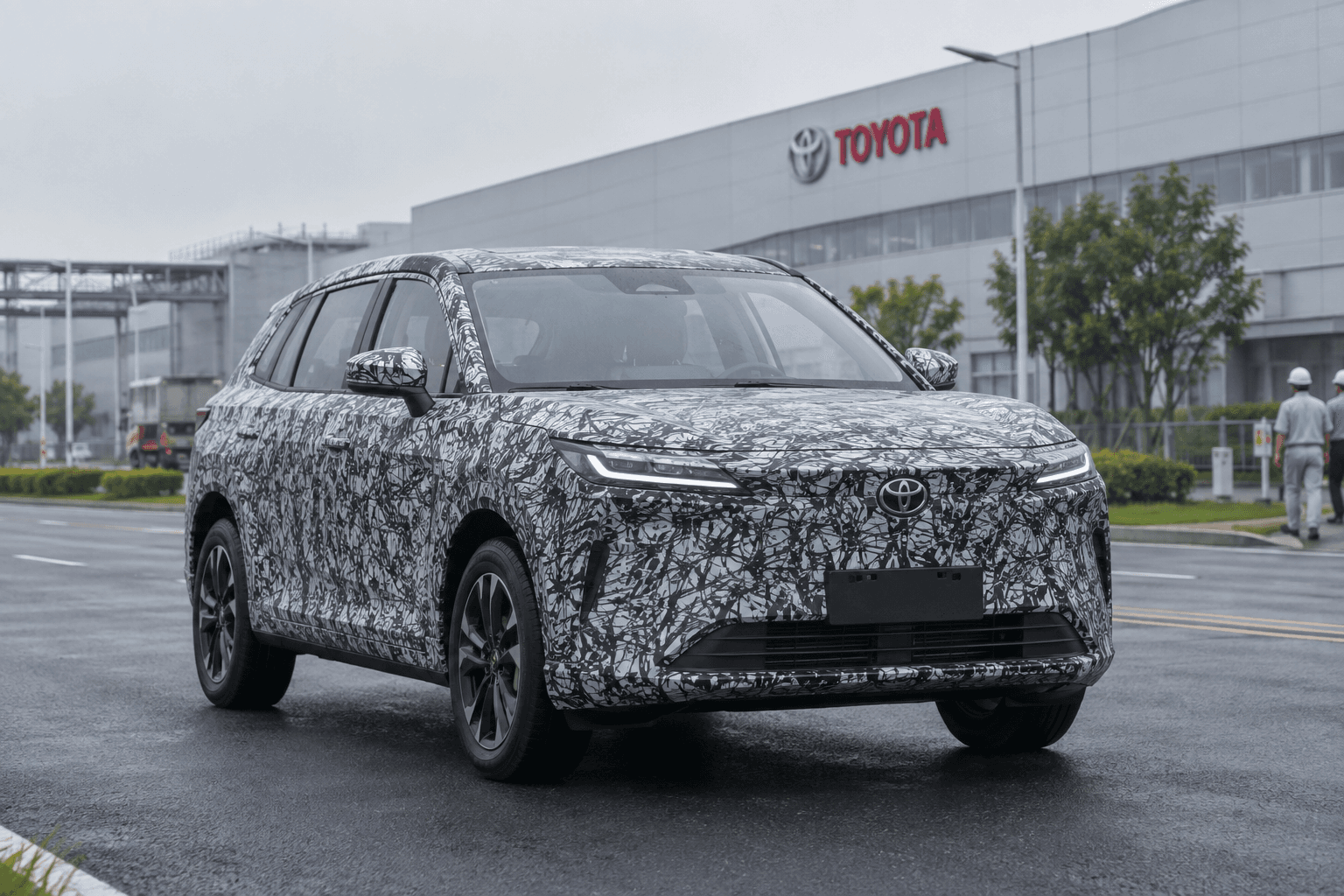
Toyota is apparently preparing a major entry into the Chinese market for range-extended electric vehicles (EREVs). According to an industry report that has not yet been officially confirmed, production is set to begin in April 2027 with just a few hundred vehicles per month initially.
The subsequent ramp-up is exceptionally ambitious. The report suggests around 200,000 vehicles for the whole of 2027, with production expected to rise to about 400,000 units in 2028.
At 400,000 EREVs per year, Toyota would make range extenders a mainstay of its China business within a short period.
The production targets require an extremely rapid ramp-up
The figures only add up if Toyota expands production very quickly after the launch. With production beginning in April, an average of more than 22,000 units per month would be required to build 200,000 vehicles by the end of the year.
This points to multiple models, additional production lines or an exceptionally steep ramp-up curve. It is not yet known which vehicles and plants are planned. Toyota itself has also not officially confirmed the schedule.
The scale is nevertheless remarkable. Toyota sold around 200,000 battery-electric vehicles and roughly 180,000 plug-in hybrids worldwide in 2025. The planned EREV volume in China could exceed both of those totals combined.
How an EREV differs from a conventional hybrid
In a conventional EREV, electric motors drive the wheels. An internal combustion engine operates as a generator and produces electricity when the battery reaches a low state of charge. Drivers can charge the battery externally or refuel for longer journeys.
The concept therefore combines electric driving in everyday use with considerable flexibility on long trips. Battery empty → the generator supplies the electricity, without an immediate need for a charging station.
Not every series-hybrid system is automatically an EREV. The Nissan Qashqai e-Power also uses a gasoline engine to generate electricity, but its battery cannot be charged externally. On Chinese EREV models, a charging port is normally part of the concept.
China’s EREV market is currently losing momentum
Toyota is not entering a market experiencing unchecked growth. New EREV registrations in China declined during the first eight months of 2026 compared with the same period of the previous year, while battery-electric vehicles remained at a high level.
| Metric | Figure | Context |
|---|---|---|
| EREV sales from January through August 2026 | 616,000 vehicles | 15.85% lower than the previous year |
| EREV sales in August 2026 | 81,000 vehicles | 8.06% of the NEV market |
| BEV sales in August 2026 | 698,000 vehicles | 0.8% higher than the previous year |
| NEV share of the overall market | 65.2% | New record high in August |
The decline does not mean that EREVs are becoming irrelevant in China. The segment remains large, but competition from new brands and models is intensifying. Toyota must therefore compete not only with established range-extender manufacturers but also with particularly affordable battery-electric vehicles.
Toyota aims to avoid direct BEV price competition
China’s battery-electric vehicle market is characterized by short model cycles and aggressive pricing. EREVs allow Toyota to draw on its experience with hybrid powertrains while appealing to customers who want to drive electrically but do not want to depend entirely on charging infrastructure for long journeys.
However, this field is no longer protected territory either. Nissan now also offers a range-extender model in China. Xiaomi has expanded its previously all-electric lineup with the SkyNomad EREV SUV.
At the same time, Toyota is likely to continue developing battery-electric vehicles. These include the planned next generation of the Toyota Corolla EV. Toyota’s China strategy therefore appears to be moving toward a broad mix of powertrains rather than relying exclusively on one technology.
For now, the move has no direct implications for Europe
So far, the plan applies exclusively to China. Toyota has not announced a launch of the planned EREVs in Germany, Austria or Switzerland.
In Europe, officially type-approved emissions would be crucial alongside price and technology. EREVs are generally classified as plug-in hybrids for regulatory purposes, making their real-world electric range, fuel consumption with a depleted battery and future taxation important factors.
Nevertheless, Toyota could gain valuable experience in China with large batteries, electric powertrains and intelligent energy management. Whether this will eventually lead to European models remains to be seen. One thing is clear: Toyota is apparently responding to the Chinese market not with a single niche model, but with a potentially very large production program.