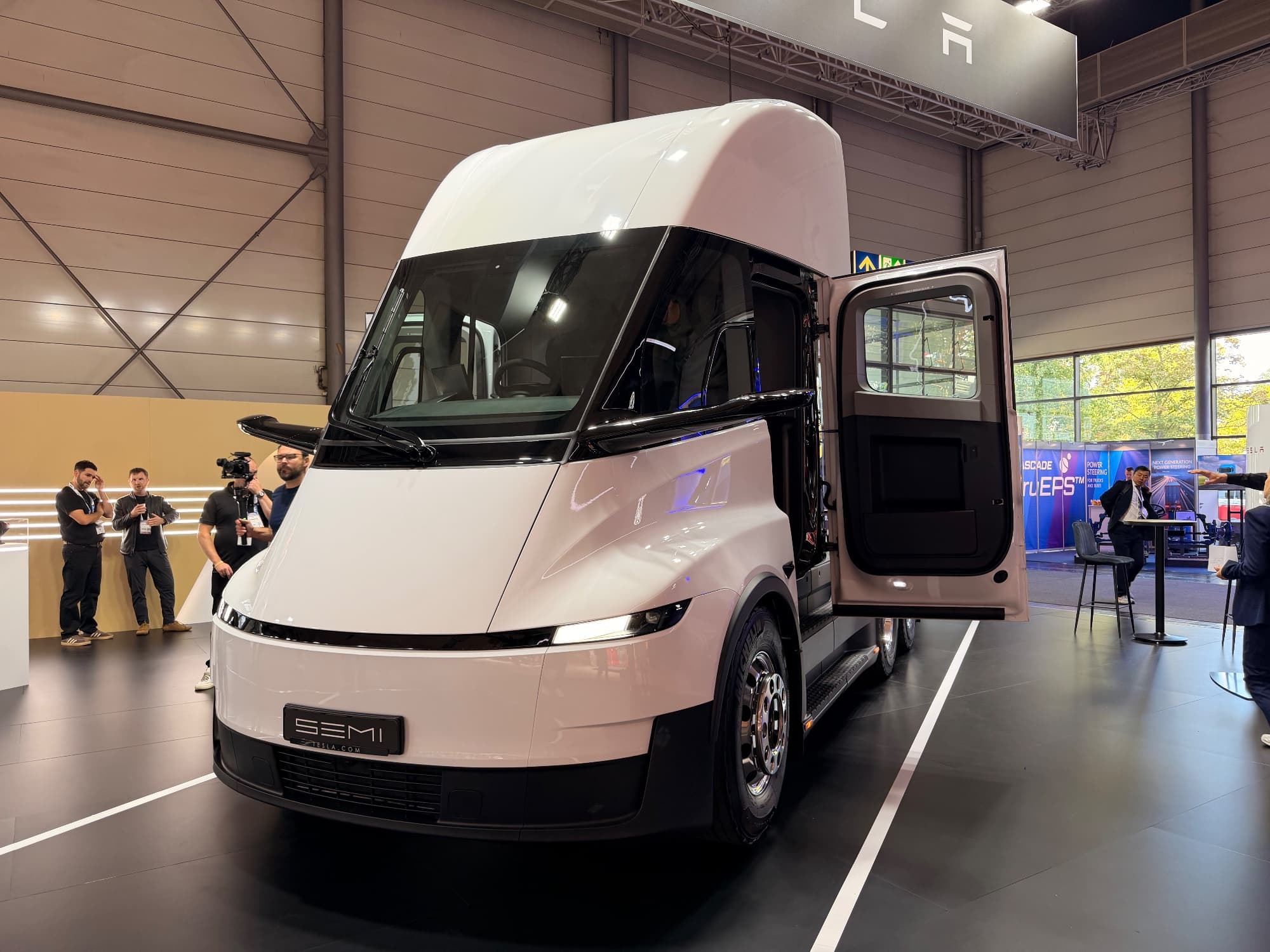
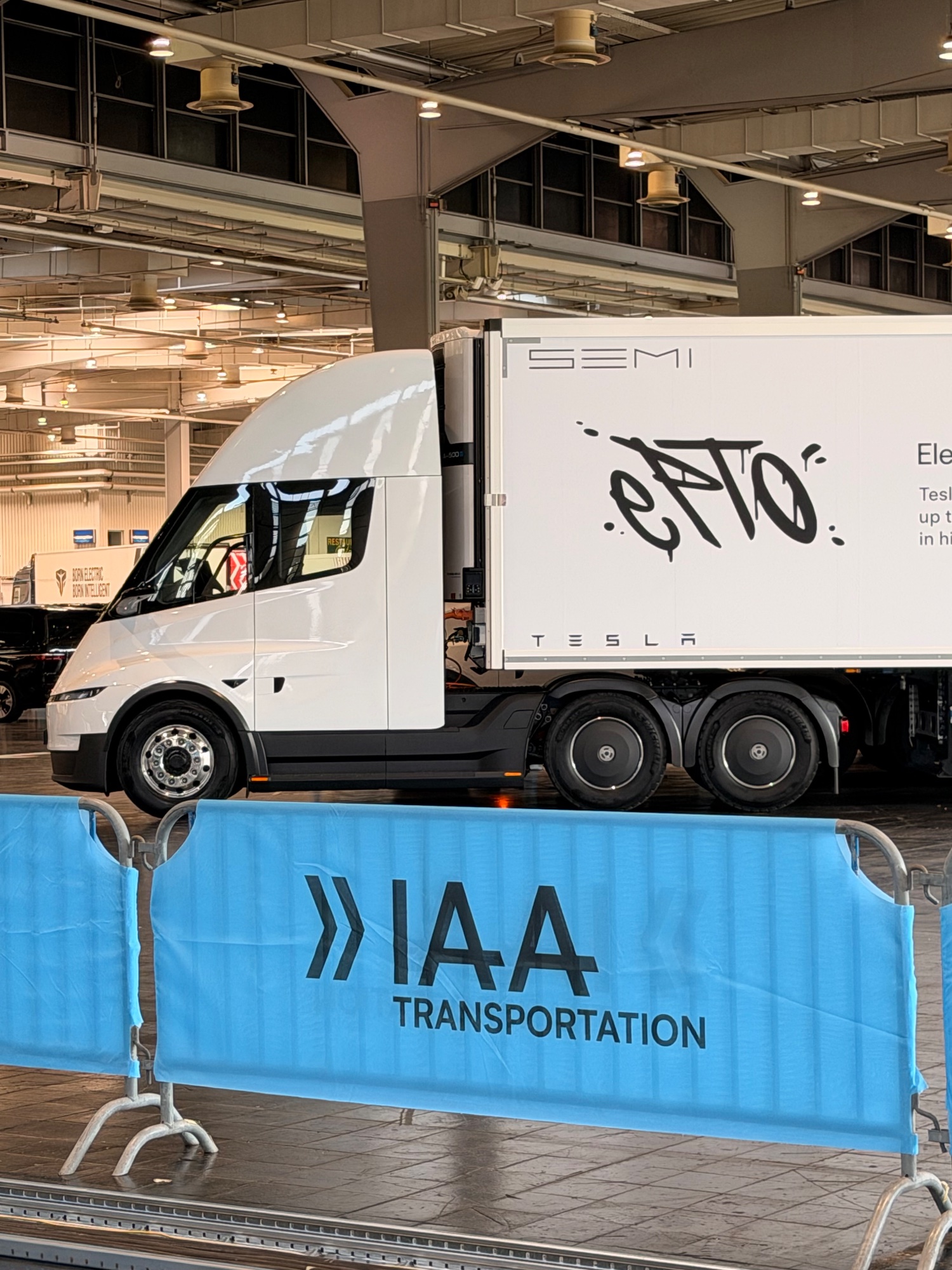
The ElektroQuatsch team is at IAA Transportation 2026, a commercial-vehicle trade show in Hanover, where we had an opportunity to experience the European version of the Tesla Semi up close. We inspected the electric tractor unit from the outside, tried out nearly all the functions in the cab and then completed a test drive lasting almost 15 minutes. This went well beyond the usual walk around a trade-show stand.
Exterior: European Semi with a distinctive cab
The white Tesla Semi has an unusually smooth appearance thanks to its cab, which extends far forward, and its narrow light bar. We were struck by the high overall build quality. The doors, trim and controls on the vehicle displayed at the show all made a solid impression. The connections and fifth wheel behind the cab are readily accessible, with a three-axle 6×4 chassis underneath.
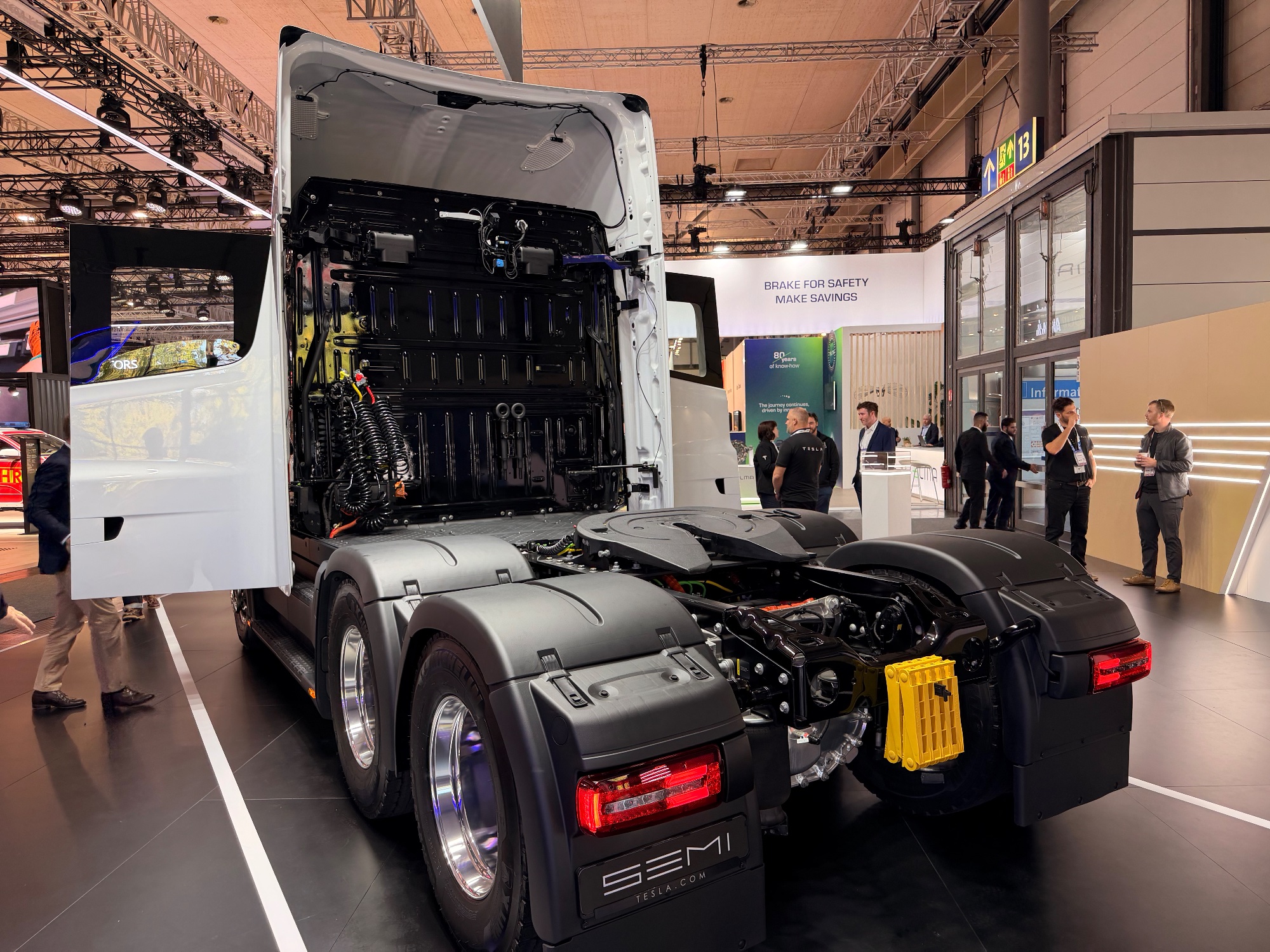
The standard-range version is initially planned for Europe. Tesla specifies three independent electric motors powering the two driven rear axles and output of up to 800 kW. According to the manufacturer, deliveries of the first customer vehicles in Europe are scheduled to begin in 2027.
Interior: the Tesla experience in an electric truck
From the centrally positioned driver’s seat, we quickly experienced the familiar Tesla feel. Despite the vehicle’s size, it did not take us long to find the controls. Two large touchscreens display navigation, vehicle status, settings and camera images to the left and right of the steering wheel.
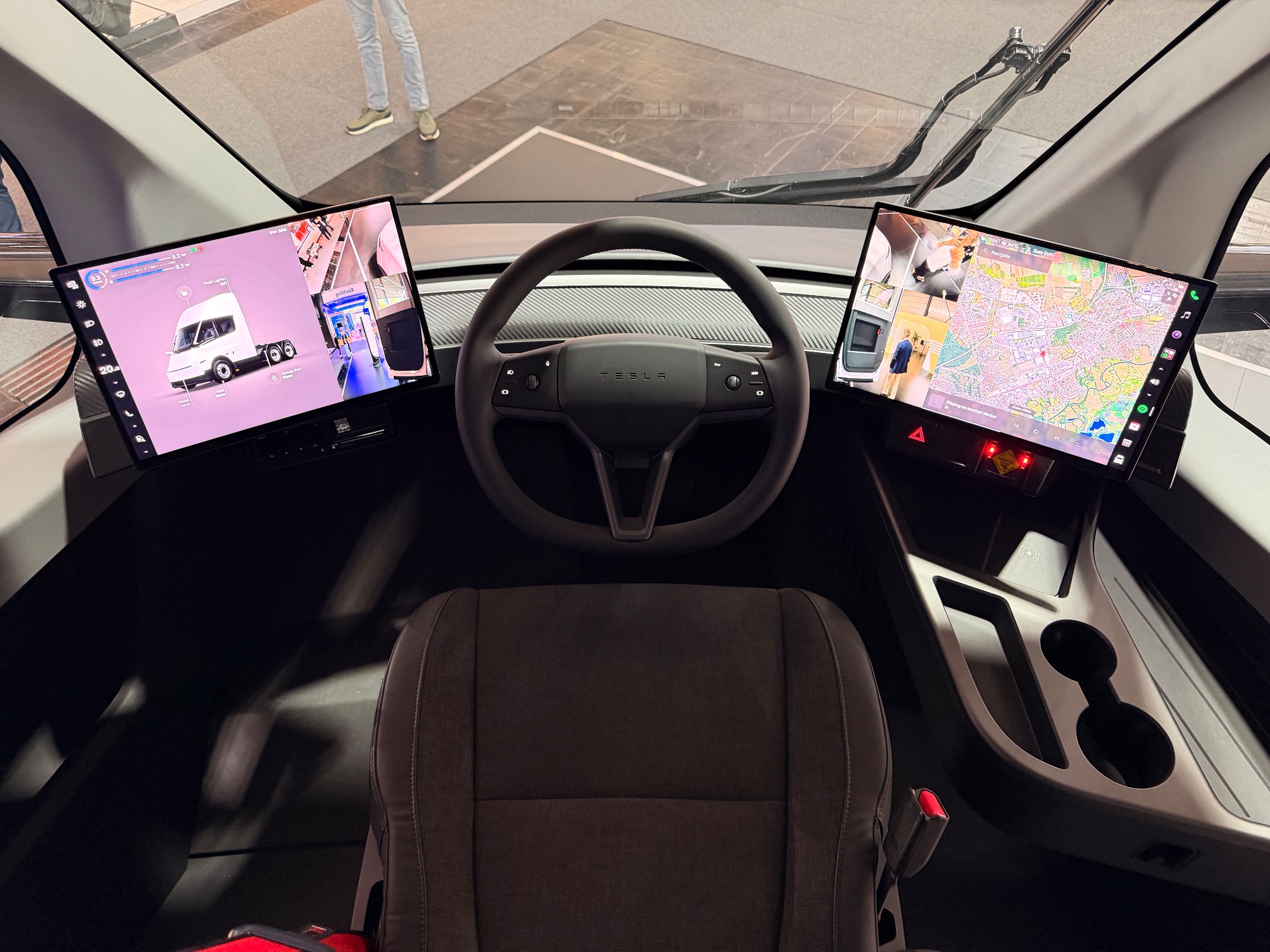
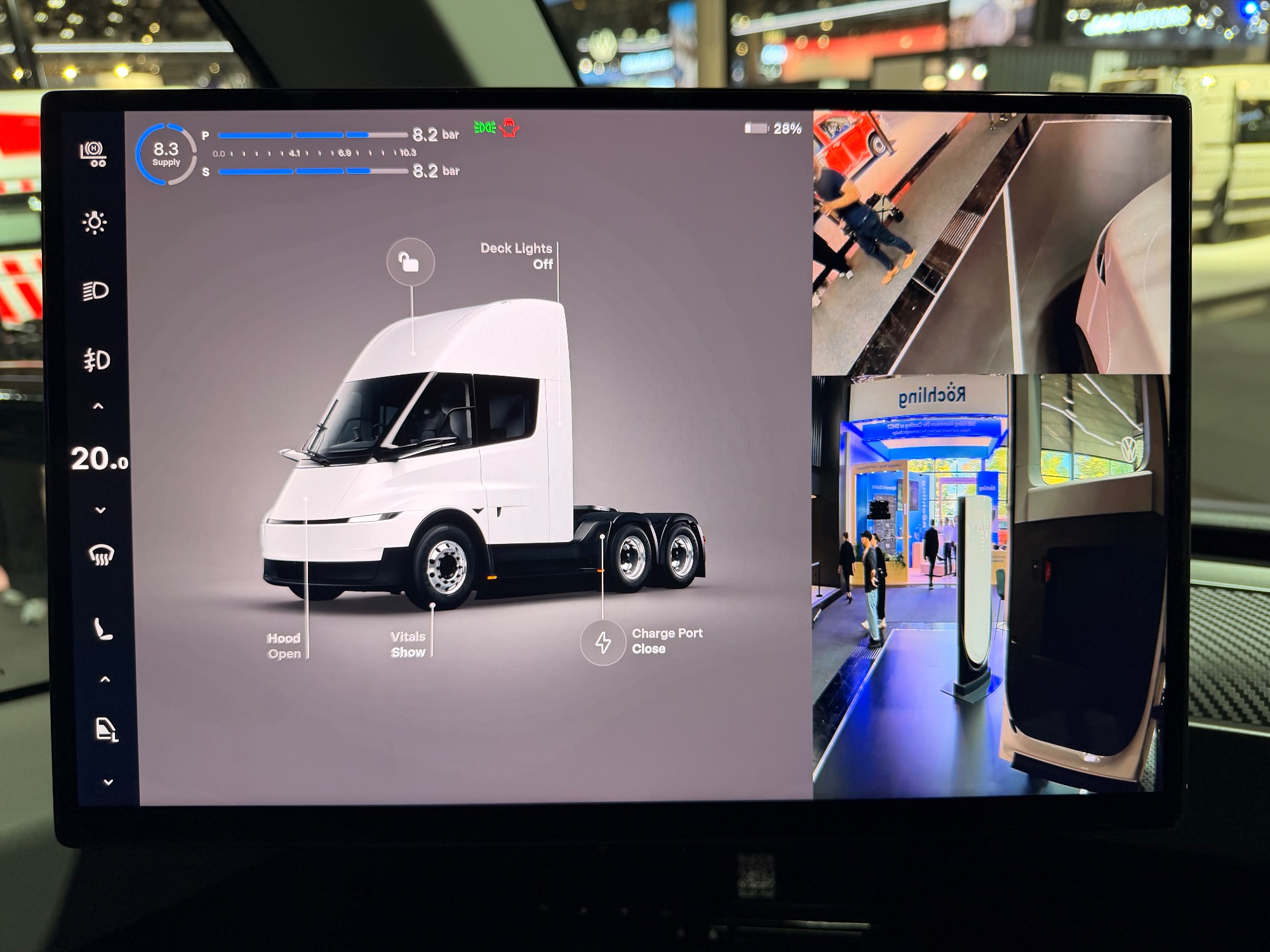
Among other things, the left-hand screen showed pressures of 8.2 bar in each of the two compressed-air circuits, a 28% state of charge and notifications concerning the hood, charging port and lights. The display was clearly laid out and the information was directly accessible.
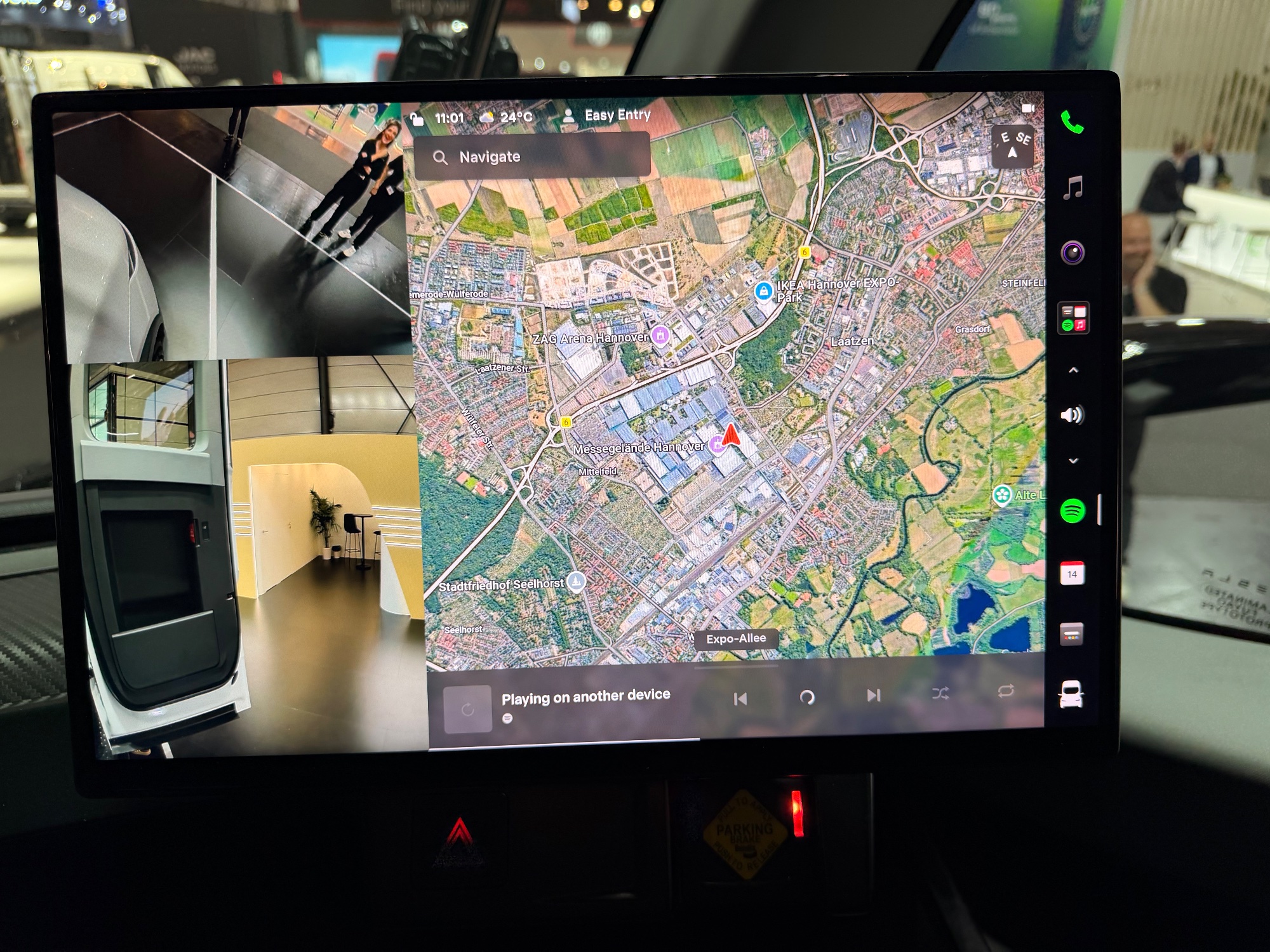
The right-hand screen displayed navigation around the Hanover exhibition grounds and additional side-camera views. These views can supplement the mirrors, particularly when turning and maneuvering. At the same time, the central seating position gave us a very direct view of the road ahead.
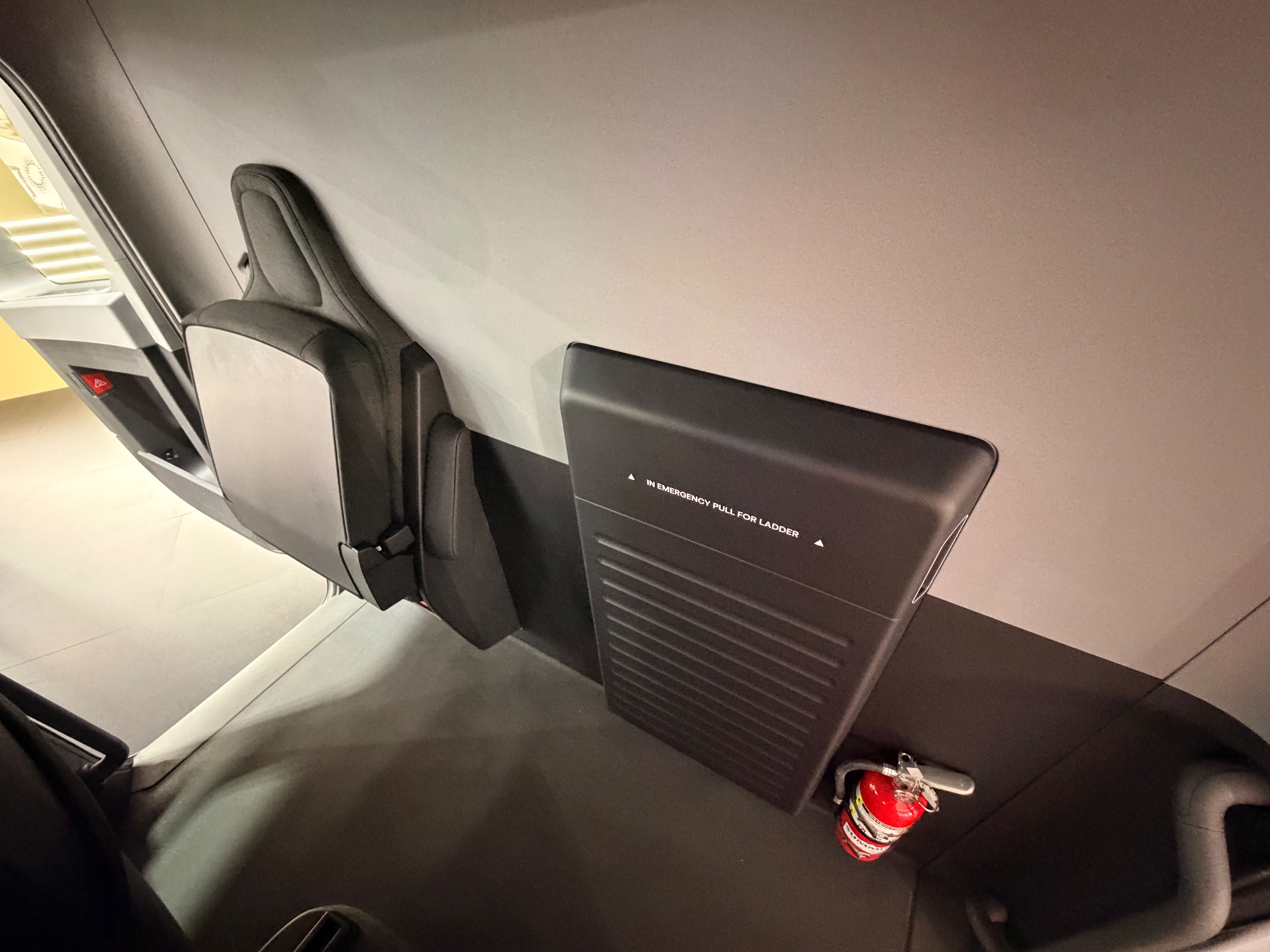
There is room to move behind the driver. In our vehicle, we found a folding passenger seat, an emergency compartment containing a ladder and an easily accessible fire extinguisher. Tesla also lists a heated and ventilated driver’s seat, acoustic glass and sound-insulating materials.
Test drive: surprisingly nimble
During the nearly 15-minute drive, the Semi felt much easier to control than its size would suggest. The immediate acceleration was particularly striking. The electric powertrain delivers its output without pauses for gear changes, allowing the loaded truck and trailer to get moving quickly and smoothly. At the same time, the controls remained familiar and relatively unintimidating.
According to the manufacturer, the European version will have a range of around 550 kilometers and consume approximately 1.1 kWh per kilometer. Tesla says these figures reflect real-world truck use but has not yet provided a final figure for usable battery capacity.
European version compared with the US models
| Version | Range | Power | Charging |
|---|---|---|---|
| Europe Standard Range | around 550 km | up to 800 kW | up to 800 kW DC |
| US Standard Range | around 523 km | three motors | Megawatt Charging System (MCS), to 60% in 30 minutes |
| US Long Range | around 800 km | up to around 800 kW | up to 1.2 MW |
All versions share three motors, a central driving position and the touchscreen-based control concept. Technically, the European version is based on the US standard-range model. It has not yet been confirmed whether the long-range version will also come to Europe at a later date.
Megacharger network for electric long-haul routes
Tesla is planning its own European truck-charging network featuring high-powered Megachargers and MCS connectors. Specific locations and prices have not yet been fully announced. The European version is expected to charge at up to 800 kW and, according to the manufacturer, reach a 60% state of charge within 30 minutes. The crucial factor will be whether such charging points are reliably available along major corridors and at fleet depots.
Cost calculation over one million kilometers
For a comparable model calculation, we assume consumption of 1.1 kWh/km, an electricity price of €0.25/kWh, diesel consumption of 30 liters per 100 km and a diesel price of €1.70/liter. In the absence of official European prices, we estimate a purchase price of €219,000 for the Semi and €140,000 for a typical diesel truck. The maintenance and toll figures are assumptions for Germany in 2026.
| Costs over 1 million km | Tesla Semi | Diesel truck |
|---|---|---|
| Purchase | €219,000 | €140,000 |
| Electricity or diesel | €275,000 | €510,000 |
| Tolls | €86,000 | €348,000 |
| Repairs and maintenance | €100,000 | €180,000 |
| Total | €680,000 | €1,178,000 |
In this scenario, the Semi would cost around €498,000 less. The calculation does not include drivers, tires, insurance, financing, residual value or dedicated charging infrastructure. Electricity rates, the actual toll category and vehicle utilization could have a particularly significant effect on the result.
Conclusion
Our first in-depth encounter with the European Tesla Semi was convincing. Its straightforward controls, good visibility and powerful electric drivetrain make the large vehicle feel far less intimidating than it does at first. Price, the service network and the expansion of the Megacharger network must now demonstrate whether this positive impression from the show and test drive will carry over into everyday European fleet operations.