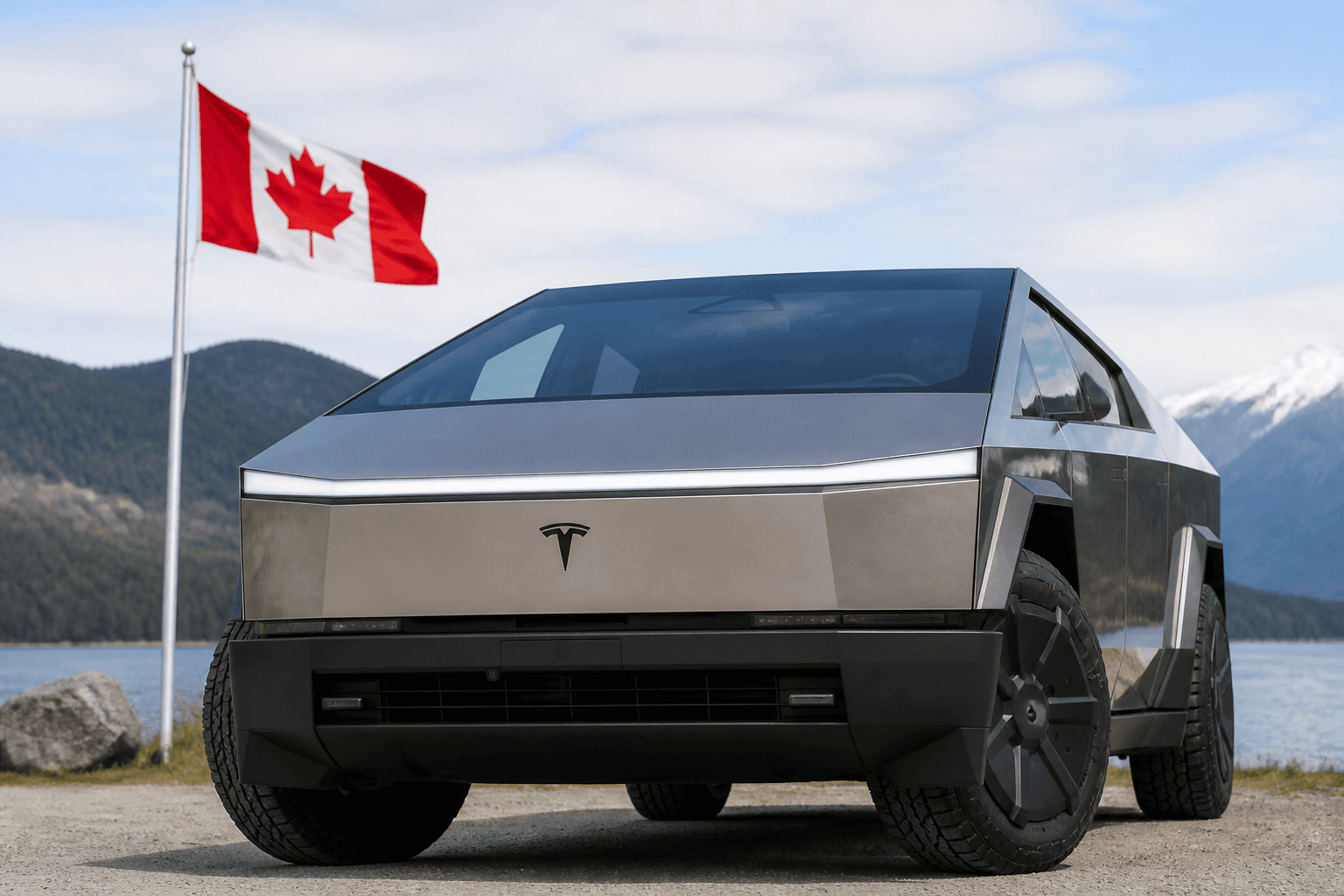
Cybertruck trade-ins in Canada: Tesla apparently will not take them back
Anyone driving a Tesla Cybertruck in Canada who wants to switch to a newer vehicle may currently face an unexpected hurdle: Several owners report that Tesla is not currently accepting the Cybertruck as a trade-in. This is notable because trade-ins are usually a key part of Tesla’s streamlined vehicle replacement process.
The reports come from Cybertruck drivers who contacted Tesla Canada directly about a trade-in and were turned down. Tesla has not yet officially confirmed or provided a detailed explanation for this practice.
The trigger: Warranty expiring with no extension available
One specific case involves a Canadian Cybertruck owner with around 72,000 km on the odometer. The owner wanted to keep the truck but was approaching the end of the standard warranty at 80,000 km. The initial plan was therefore to extend the warranty.
That leads to another issue: According to the reports, no extended warranty is offered for the Cybertruck in either Canada or the US. For many owners seeking greater certainty over future costs, that effectively leaves only two options: switch to a newer vehicle or continue driving without additional coverage.
More than an isolated case: High-mileage vehicles also affected
The case does not appear to be an anomaly. Another driver also reports being turned down, with their Cybertruck already having covered 120,000 km. This suggests that Tesla Canada may exclude the model from its trade-in program altogether, or at least impose significant restrictions.
Importantly, without an official statement, it is impossible to say with certainty whether this is a temporary measure, a regional policy issue, or the result of specific circumstances that Tesla’s current system cannot process.
Why might Tesla Canada exclude the Cybertruck?
Tesla did not cite any specific reasons in the reported cases. One plausible explanation, however, is that valuing and reselling the Cybertruck is currently particularly difficult in Canada. Two factors are especially relevant: tariffs on vehicles built in the US and the resulting sharp fluctuations in new-vehicle prices, which make the used market less predictable.
When new-vehicle prices rise sharply, calculating residual values becomes more complicated. Tesla would need to make trade-in offers that are attractive to customers while avoiding losses when reselling the vehicles. Combined with low sales volumes and the model’s limited market history, this could prompt a manufacturer to suspend trade-ins temporarily until more reliable data is available.
Context for the DACH region: What does this mean for Germany, Austria and Switzerland?
For the DACH region—Germany, Austria and Switzerland—this is currently primarily an observation from Canada. The Cybertruck is still not officially available in these markets, and even if it launches there at a later date, regional rules and programs may differ significantly. In Europe, trade-in offers, warranty terms and used-car strategies are often structured very differently from those in North America.
The issue is nevertheless noteworthy because it shows that, even at Tesla, certain models may temporarily be difficult to integrate into standardized processes such as trade-ins or warranty products, depending on the market.
What Cybertruck drivers can do now
Owners affected in Canada essentially have three options: sell privately, use a third-party dealer or vehicle-buying platform, or continue driving the vehicle. Whether or when Tesla Canada will begin accepting Cybertrucks as trade-ins again remains unclear.