Rome invests €116.7 million in zero-emission buses
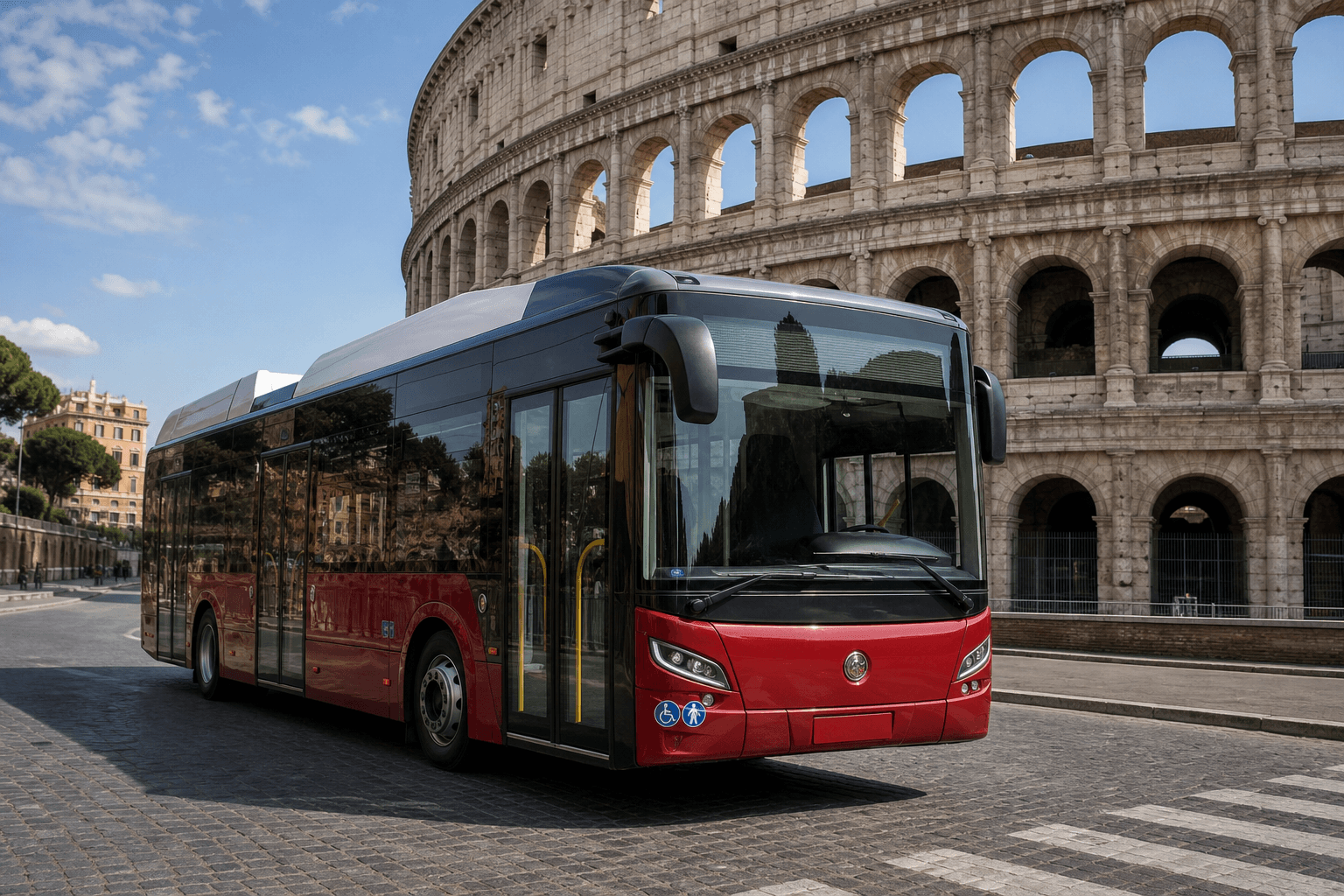
Rome is stepping up its public transport efforts with an investment package of around €116.7 million for new zero-emission buses and the associated infrastructure. The funding comes from the Italian Ministry of Infrastructure and Transport and will be passed on by the city to public transport operator ATAC. An agreement between the city and the operator is now intended to get implementation under way.
The objective is clear: to decarbonize the bus fleet more quickly without operations being held back by a lack of charging or refueling infrastructure. The package therefore covers not only vehicles but also upgraded operating facilities.
How the budget is divided between hydrogen and battery-electric buses
Hydrogen accounts for the larger share of the package. A significant amount has also been allocated to battery-electric buses, although details of vehicle numbers and manufacturers have yet to be announced.
| Item | Budget | What is known so far |
|---|---|---|
| Hydrogen buses (fuel cell) | €83.6 million | Procurement announced; number and models not yet specified |
| Battery-electric buses | €27.1 million | Procurement announced; number and charging setup not yet specified |
| Acilia hydrogen hub (EU funding) | around €6 million | Local production of green hydrogen through electrolysis and refueling for the buses |
Comfort and operations: What the “new-generation” buses will offer
Planned equipment includes accessible design as well as features that make a noticeable difference in everyday use: air conditioning, USB ports, video surveillance and passenger-counting systems. The latter in particular help operators plan routes more effectively and deploy capacity more precisely instead of simply calling for “more vehicles.”
Acilia: Locally produced green hydrogen instead of deliveries
Alongside the vehicle procurement program, Rome is building a hydrogen hub at ATAC’s Acilia site in the south of the city. Green hydrogen will be produced locally through electrolysis to refuel the fuel-cell buses. This makes strategic sense because it shortens supply chains and makes the availability of sufficient fuel for daily operations more predictable.
The city is directly linking the procurement of zero-emission buses with the construction of the necessary infrastructure, ensuring that new vehicles do not sit idle at the depot because charging or refueling facilities are unavailable.
In the longer term, the city is even considering expanding the facility with a hydrogen filling station for private users. Whether and when this will happen remains unclear, however, and will depend heavily on demand, regulation and economic viability.
Cleaner public transport, stricter city-center rules: Two sides of the same strategy
The bus investments are only one part of Rome’s transport transition. At the same time, the city intends to impose tighter restrictions on car traffic in the historic center. Since July 2026, electric cars have also been required to pay for access to the limited traffic zone (ZTL), rather than entering free of charge.
The main reason is congestion: According to the city, around 50,000 cars enter the zone every day, even though it is designed for only about 20,000 vehicles. The bottom line is that public transport services and quality are intended to improve while overall traffic volumes in the city center decline.
What this means for the DACH region
For the DACH region—Germany, Austria and Switzerland—Rome’s package is noteworthy because it reflects a trend that is also becoming increasingly common there: Cities are combining fleet replacement with infrastructure development instead of treating them separately. The clear division of the budget between battery-electric and hydrogen vehicles also underlines that municipalities continue to pursue both technologies, depending on operating profiles, depot conditions and energy availability.