Germany’s public charging network continues to grow
As of August 1, 2026, Germany had 212,064 publicly accessible charging points on record. This was an increase of 28,663 connectors compared with the same date a year earlier, representing growth of 15.6%.
Available power increased even more significantly. Installed rated power rose within one year from 7.35 to around 9.22 GW, an increase of 25.5%. The charging network is therefore not only expanding geographically but also becoming more powerful.
Charging capacity is growing significantly faster than the number of connectors. For drivers, that matters more than simply setting a new charging-point record.
Key figures at a glance
| Metric | As of August 1, 2026 | Change year over year |
|---|---|---|
| Public charging points | 212,064 | +15.6% |
| Charging facilities | 118,062 | +15.6% |
| Standard charging points up to 22 kW | 156,399 | +11.9% |
| Fast-charging points above 22 kW | 55,665 | +27.5% |
| Installed rated power | 9.22 GW | +25.5% |
Compared with July 1, the total increased by a calculated 1,453 charging points. However, this monthly figure is only a snapshot, as operators sometimes report new or modified locations after a delay.
Earlier totals are therefore regularly revised upward. For long-term comparisons, the trend over 12 months is considerably more meaningful than looking at a single month.
HPC chargers are driving expansion
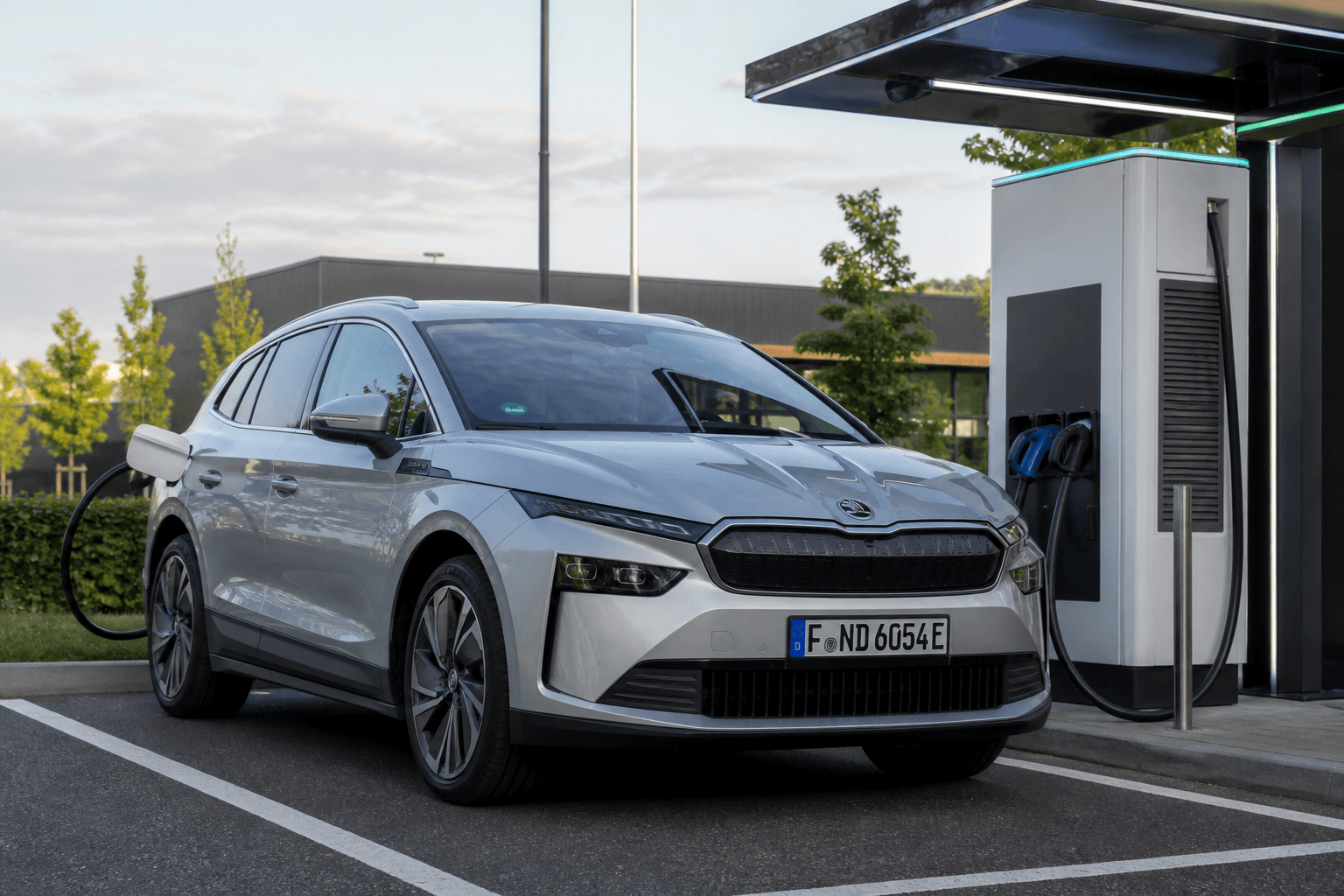
The strongest growth is occurring among particularly powerful DC connectors. The number of charging points offering more than 299 kW rose by 36.4% to 19,566. A further 21,277 connectors offer more than 149 kW and up to 299 kW.
| Power category | Charging points | Annual growth |
|---|---|---|
| More than 299 kW | 19,566 | 36.4% |
| More than 149 kW to 299 kW | 21,277 | 25.1% |
| More than 59 kW to 149 kW | 4,469 | 28.9% |
| More than 49 kW to 59 kW | 8,583 | 19.6% |
| More than 22 kW to 49 kW | 1,770 | 6.2% |
This means that almost three-quarters of all registered fast-charging points have a rated output of more than 149 kW. On longer journeys, this can noticeably reduce charging stops, provided the vehicle, battery temperature and state of charge allow high power levels. Our comparison of 800-volt and 400-volt architectures shows the role played by the vehicle platform.
However, a charging point’s rated power does not guarantee that speed throughout the entire charging session. Power sharing at the location, the car’s charging curve and a battery that is already relatively full can limit the actual rate.
AC charging remains the backbone of everyday use
With 156,399 connectors, standard charging points continue to make up the largest part of the public network. The category offering more than 15 kW and up to 22 kW is particularly widespread, accounting for 114,589 charging points.
AC charging remains practical in parking garages, city centers, workplaces and overnight locations because vehicles are parked there for longer periods anyway. Anyone able to charge at home should also consider potential EV charging losses, as charging power and efficiency together affect the actual electricity costs.
North Rhine-Westphalia has the most charging points
Among Germany’s federal states, North Rhine-Westphalia leads with 41,646 public charging points. Bavaria follows with 40,421 connectors, while Baden-Württemberg has 35,791 and Lower Saxony 21,075.
The order at the top is reversed for installed power. Bavaria leads with around 1.80 GW, ahead of North Rhine-Westphalia with 1.71 GW and Baden-Württemberg with 1.22 GW. This difference shows why the number of connectors alone describes only part of the quality of charging provision.
In percentage terms, Hamburg recorded particularly strong growth, rising by 38.6% to 5,939 charging points. Mecklenburg-Western Pomerania posted an increase of 26.3% and now has 3,285 connectors.
EnBW leads, while Tesla stands out for power
A total of 12,914 operators of publicly accessible charging facilities were recorded. The market therefore remains highly fragmented, although several large network operators account for a significant share.
| Operator | Reported charging points |
|---|---|
| EnBW mobility+ | 12,464 |
| E.ON Drive | 4,942 |
| Tesla | 3,951 |
| EWE Go | 3,595 |
| BP and Aral | 3,149 |
EnBW also leads in installed rated power with around 1.13 GW. Tesla follows in second place with approximately 980 MW, even though the company ranks third by number of charging points. This highlights the Supercharger network’s strong focus on high-power DC charging.
What the expansion means for EV drivers
More charging points alone do not solve every problem. Reliable chargers, transparent prices, simple payment methods and sufficient capacity at busy times are crucial. Nevertheless, the network’s continued growth is reducing gaps in coverage and can further ease EV range anxiety, particularly on long journeys.
For drivers from Austria and Switzerland, the expansion also makes journeys through Germany easier to plan. The current momentum in high-power fast chargers is the most important signal: the network is not only getting larger but also becoming increasingly suitable for long-distance travel.