Porsche builds new battery cells from old batteries
Porsche has reached an important milestone in its battery recycling project. For the first time, cells have been produced whose cathode active material consists of 100% recycled raw materials. The lithium, nickel, cobalt, and manganese come from high-voltage batteries used in the company’s own vehicles.
It is important to be precise: The entire battery cell does not consist of 100% recycled material. The figure refers to the cathode’s active material, a particularly resource-intensive and technically crucial part of the cell.
From end-of-life battery back to new cell
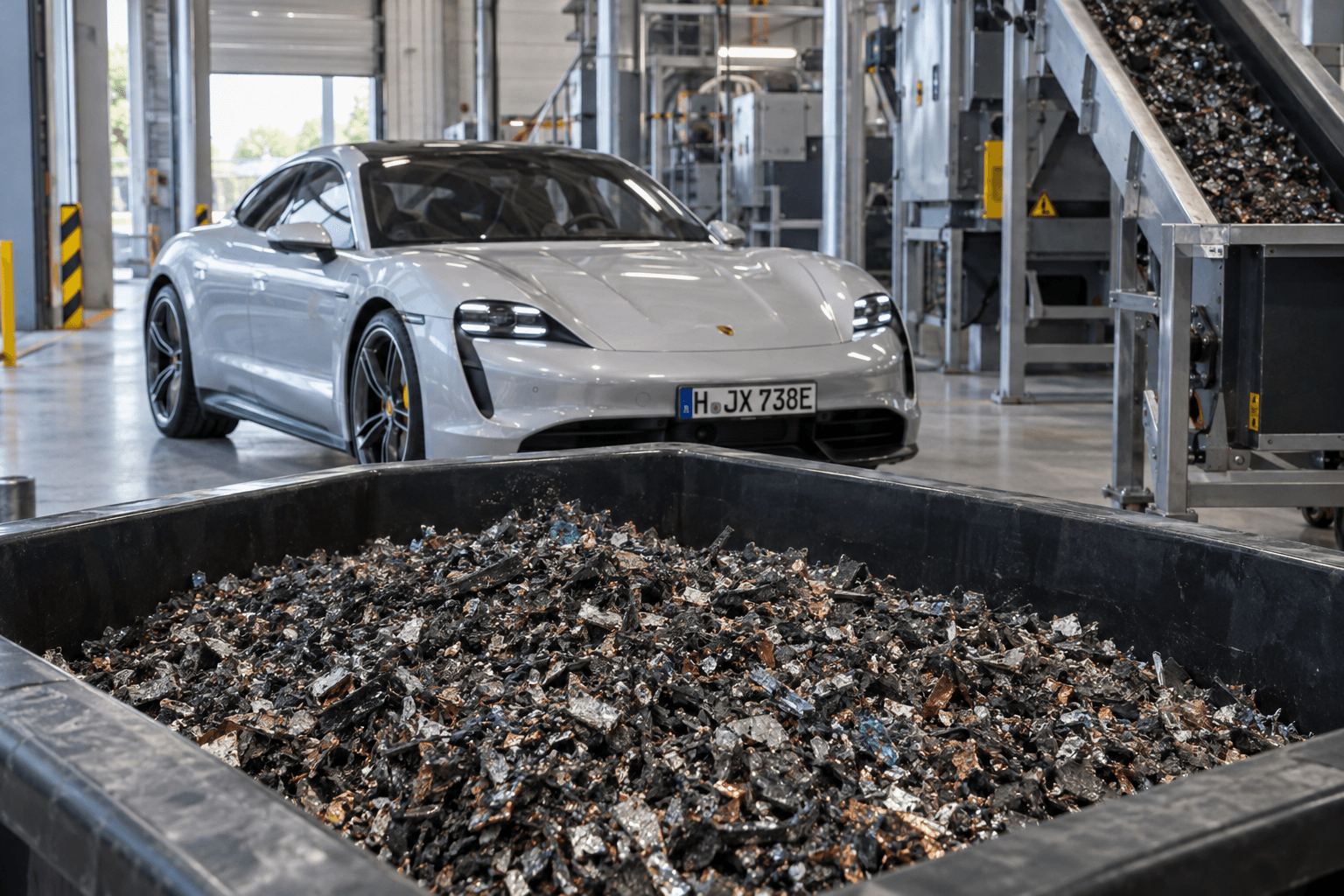
Together with Aachen-based recycling company Cylib, Porsche is pursuing a closed material loop. Instead of simply being disposed of, end-of-life batteries are gradually processed into usable raw materials for new high-voltage battery systems.
| Project phase | Process | Result |
|---|---|---|
| Phase 1 | Mechanical processing of old high-voltage batteries | Black mass containing lithium, nickel, cobalt, and manganese |
| Phase 2 | Separation and refinement of the black mass | Processed raw materials for new cells |
| Phase 3 | Production and testing of new battery cells | Cathode material made entirely from recycled raw materials |
The project has now entered its third phase. Initial studies indicate that the recovered materials could be technically suitable for new high-performance cells. Tests in Porsche development vehicles will now follow, with further results expected later in 2026.
The crucial advance lies not only in recovering the metals, but also in reusing them in demanding traction batteries.
Why the cathode material is so important
The cathode is one of the key factors determining a battery cell’s energy density, performance, service life, and cost. It also contains a large share of the critical and expensive raw materials. If Porsche can reuse these materials without any significant loss of quality, an old battery can genuinely become a source of raw materials for the next generation of cells.
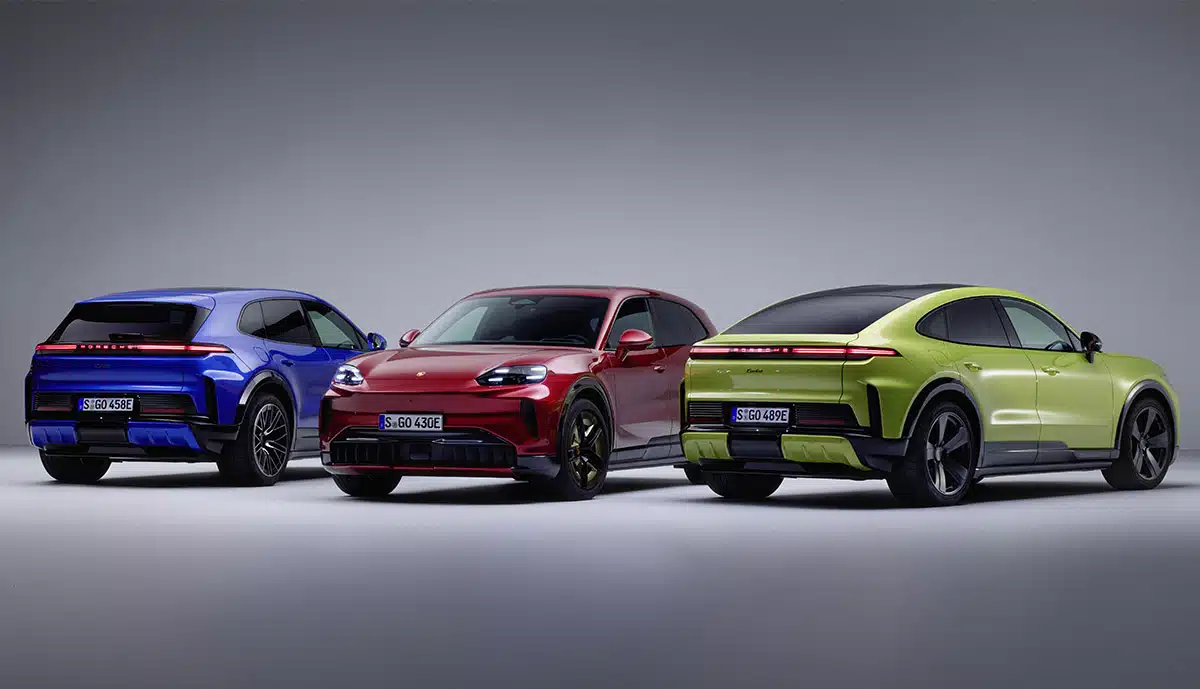
Use in vehicles such as the Porsche Taycan or the electric Porsche Macan has not yet been confirmed. In the longer term, however, the technology could be used in regular Porsche electric vehicles, provided that cell testing, scaling, and quality control are successful.
Water-based recycling is already underway
Since May 2026, batteries from Porsche Centers in Germany have been recycled using a water-based process. The recovered raw materials are recorded in a materials ledger and are expected to be available to Porsche and selected partners for cell production from 2028.
This accounting model makes it possible to allocate material flows transparently, even if not every individual metal atom returns directly to a specific Porsche cell. Old battery sent for recycling → a verified, calculated share of raw materials for subsequent cell production.
Recycling strengthens Europe’s raw material supply
Battery recycling has long been about more than sustainability. Europe is heavily dependent on supply chains outside the EU for lithium, nickel, and cobalt, as well as for the processing of these materials. Recovered materials cannot eliminate this dependency entirely, but they can gradually reduce it.
There are also requirements under the EU Battery Regulation and the Critical Raw Materials Act. They are increasing pressure to recover more raw materials and use defined proportions of recycled content in new batteries. Manufacturers that establish functioning closed loops early therefore secure not only environmental benefits, but also better access to strategically important materials.
Production use remains the crucial hurdle
Successfully producing the cells is a technological milestone, but it does not yet constitute approval for series production. The key factors now are aging, fast-charging performance, temperature stability, power output, and reproducible quality across large production volumes.
If the cells pass these tests, Porsche could keep valuable battery raw materials within the European economy for longer. This would reduce the need for newly mined materials and make supplies more resilient without compromising the performance expected of modern electric vehicles.