Nio August 2026: Deliveries Rise, Onvo Holds Growth Back
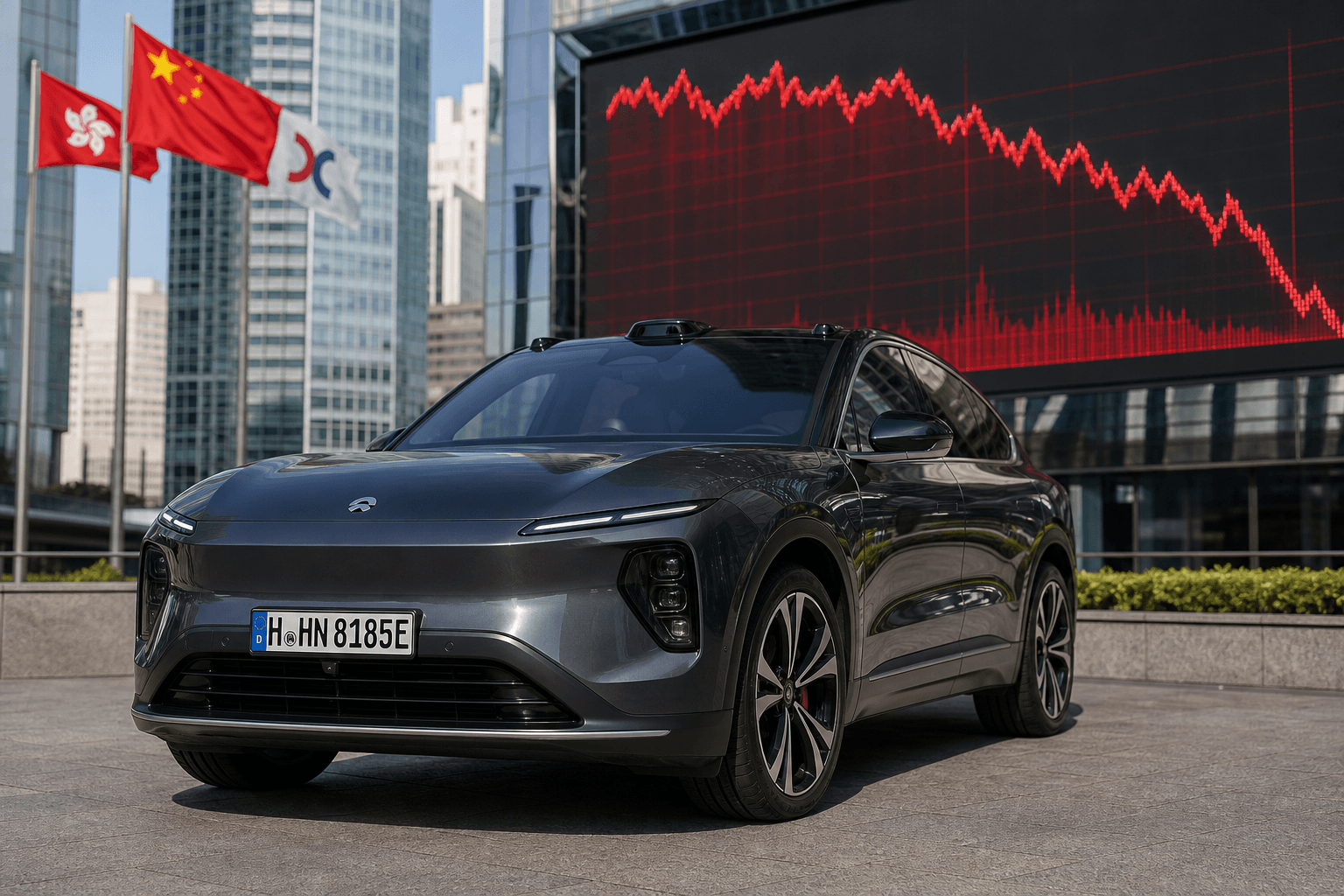
Nio reported 35,836 deliveries for August. This represents an increase of 14.5% year over year but is 0.3% below the July figure. The combination of growth and internal shifts in the brand mix unsettled the stock market, with the company’s Hong Kong-listed shares falling sharply at one point.
For readers in the DACH region—Germany, Austria and Switzerland—this is particularly interesting as a signal: In China, the most important single market for electric cars, it is no longer just about selling “more units,” but about which brand is delivering the growth and how well a multi-brand strategy works.
The Figures at a Glance: Nio, Onvo and Firefly
The overall figure remains stable above the 35,000-vehicle mark, but a great deal is shifting beneath the surface. The core Nio brand was the clear driver in August, while Onvo continued to lose momentum.
| Brand | August Deliveries | Change Year over Year | Change from July | Share of Monthly Mix |
|---|---|---|---|---|
| Nio (core brand) | 21,174 | +101.2% | +5.8% | 59.1% |
| Onvo | 8,810 | -46.4% | -13.2% | 24.6% |
| Firefly | 5,852 | +34.7% | +1.4% | 16.3% |
Why Onvo’s Weakness Matters So Much
At first glance, 35,836 deliveries look solid. However, investors are increasingly focusing on the quality of growth and whether Nio is executing its multi-brand strategy effectively.
August marked Onvo’s third consecutive month of decline compared with the previous month. At the same time, Onvo’s share of the overall mix has fallen noticeably year over year. There may be several reasons for this, such as the model cycle, pricing pressure in the mass-market segment or simply a shift in demand. In the short term, however, it is a setback for the narrative that “Nio is growing on multiple pillars.”
Q2 Results in the Background: Guidance Narrowly Missed, Margin in Focus
Adding to the tension, Nio is due to report its quarterly results shortly after releasing the August figures. In the second quarter, it delivered 107,658 vehicles. While that was 49.4% higher year over year, it fell short of the company’s own forecast of 110,000 to 115,000.
More important to the company’s valuation than any single monthly figure will likely be whether Nio continues to reinforce its path toward profitability. In the first quarter, the company had already reported an adjusted operating profit and a gross margin of 19.0%, its highest level in four years. If this trend continues, it could also cushion short-term weakness at individual brands over the medium term.
Perspective for Europe and the DACH Region: What Does This Mean for the Market?
Although Nio and its sub-brands have so far played only a minor role in Germany, Austria and Switzerland, the patterns are relevant: China’s market is extremely competitive, and it is there that the intensity of competition in the mass-market segment becomes clear. Onvo’s decline is therefore not automatically a “Nio problem”; it may equally reflect the current competitive landscape.
The same broadly applies to European manufacturers and Tesla: Companies operating several product lines or trim ranges in parallel must manage them very precisely so that growth looks strong not only overall, but also in the segments that are critical to margins and scale.
On a related note, if you are interested in market trends, our look at the European EV boom and its 25% market share is also worth reading. And for context on “China and battery trends,” the article on the Chinese battery market, where LFP accounts for 84.6% of installations, provides a useful reference point.
What Matters in the Short Term
- Overall volume remains high, but growth is uneven across the brands.
- Onvo is the weak point in the monthly mix and is raising questions about the multi-brand strategy.
- Margins and profitability are becoming the decisive benchmarks, not just deliveries.
Anyone seeking to assess competitive pressure in the broader market will also find a useful reference in our overview of electric compact SUVs in Germany in 2026, because that is precisely where volume is generated—and where mistakes are most costly for many brands.