Electric trucks and buses pass the 500,000 mark in 2025
Electric trucks and buses achieved significant scale worldwide in 2025: Sales exceeded 500,000 vehicles for the first time, rising 86% year over year. This means the market has nearly doubled for the second consecutive year. Overall, that translates into a global market share of almost 14%.
The figures come from an analysis by the independent research organization ICCT covering 34 countries. These countries account for around 80% of global truck and bus sales and 99% of zero-emission truck and bus sales. This makes the dataset particularly meaningful, even though it does not cover every country.
China drives the market, with electric heavy-duty trucks already claiming a huge share
China remains the main engine of growth. According to the study, the country accounted for nearly 90% of global electric truck and bus sales in 2025. The market for medium- and heavy-duty trucks in particular has accelerated dramatically in a short period.
Sales of medium- and heavy-duty electric trucks in China have more than quintupled within two years. Particularly remarkable is that almost 30% of heavy-duty trucks sold in China in 2025 were already fully electric. The study identifies falling battery costs and strong local incentives as the main drivers—the two factors that have an immediate impact on total cost of ownership in the commercial vehicle sector.
Electric buses grow globally, with clear signals from the EU and Chile
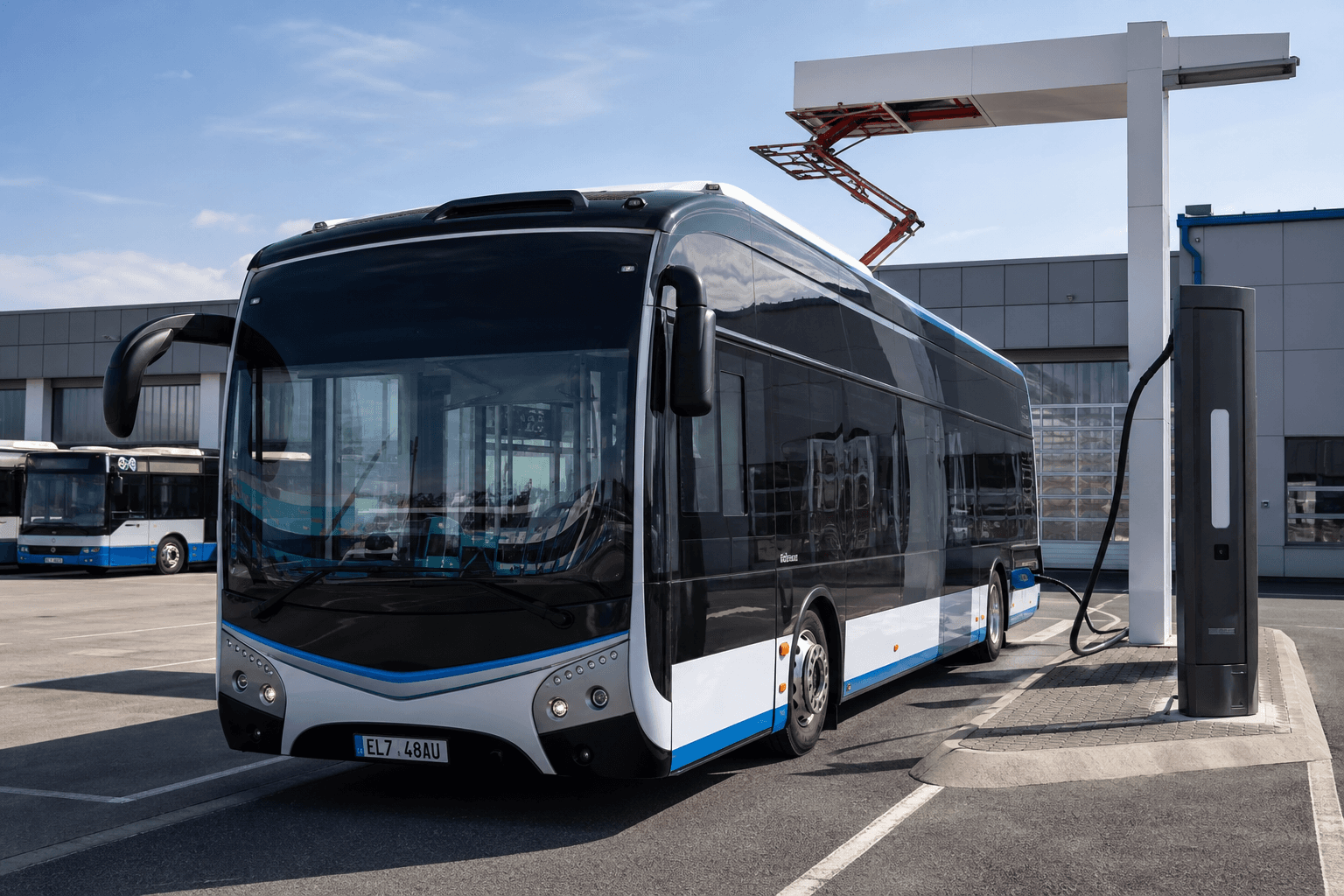
Buses have traditionally led electrification because fixed routes, depot charging and predictable range requirements make the transition easier. In 2025, battery-electric buses accounted for 17% of total bus sales worldwide.
Markets beyond China’s domestic boom are also worth examining: Excluding China and the US, battery-electric buses represented 56% of zero-emission medium- and heavy-duty vehicle sales. Around 9,800 battery-electric buses were sold in the EU in 2025, compared with roughly 5,000 in India.
Chile attracted particular attention, with sales growing by 299%. Market share rose from 26% in 2024 to 45% in 2025. This demonstrates how quickly the transition can reach a tipping point when procurement, infrastructure and operating models are aligned.
Electric truck sales outside China remain modest
Despite the high overall figure, the electric truck market outside China remains comparatively small. The study reports around 41,000 battery-electric truck sales outside China in 2025, representing only a fraction of the global market.
About 24,500 electric trucks were sold in the US, primarily medium-duty delivery vehicles. Sales in this category rose by 5% compared with 2024, while sales of heavy-duty electric trucks declined slightly. Overall US sales volumes therefore remained largely stable.
EU: Strong growth, but electric trucks hold just 4.5% of the market
Electric truck sales in the EU grew significantly in 2025, rising by 71% to reach a market share of 4.5%. That is a clear signal, but still far below the shares seen in the bus sector or in China.
One important regulatory factor is the CO2 emissions targets for truck manufacturers introduced in the EU in July 2025. They initially require a reduction of 15%. Such requirements have an indirect effect by pushing manufacturers toward broader electrified fleet offerings, increased production and lower prices.
This is particularly evident in the medium-duty electric truck segment, where market share doubled from around 10% in 2024 to 21% in 2025. Many applications, such as regional distribution, can already be readily electrified if charging infrastructure and vehicle availability are adequate.
The UK and India gain momentum, albeit from a low base
The UK and India also reported rising electric truck sales, although from lower starting points. In the UK, sales increased from 345 in 2024 to 677 in 2025. India recorded 767 units, more than twice as many as in the previous year.
Why this trend matters in everyday life
The expansion of electric buses and trucks is more than just a statistical trend. More electric commercial vehicles generally mean fewer local emissions and noticeably less noise in urban traffic, particularly during early and late delivery windows. At the same time, growing sales volumes increase the pressure to rapidly expand charging infrastructure at depots, fleet facilities and along major transport corridors.
It is also an indicator for the passenger car market: If battery prices continue to fall and supply chains scale up, all segments will benefit in the long term. Readers interested in the role of battery chemistry and cost trends can also find an overview of China’s battery market and the share of LFP batteries.
Context: Why China is so far ahead in the electric commercial vehicle market
- Scale: Very high production volumes accelerate cost reductions and learning curves.
- Incentives: Strong local support is available for fleets and operators in some areas.
- Suitable operating profiles: Many predictable urban or regional routes.
For Germany, Austria and Switzerland, this means the market is growing, but the breakthrough for heavy-duty electric trucks depends heavily on total cost of ownership, depot charging capacity and public charging hubs for long-distance transport. Readers who want a more detailed look at charging can also see our analysis of 800 volts versus 400 volts. Many of the principles governing charging times and system performance are similar, even though commercial vehicles have their own standards and operating profiles.