Audi Rethinks the Range Extender, Starting With Quattro
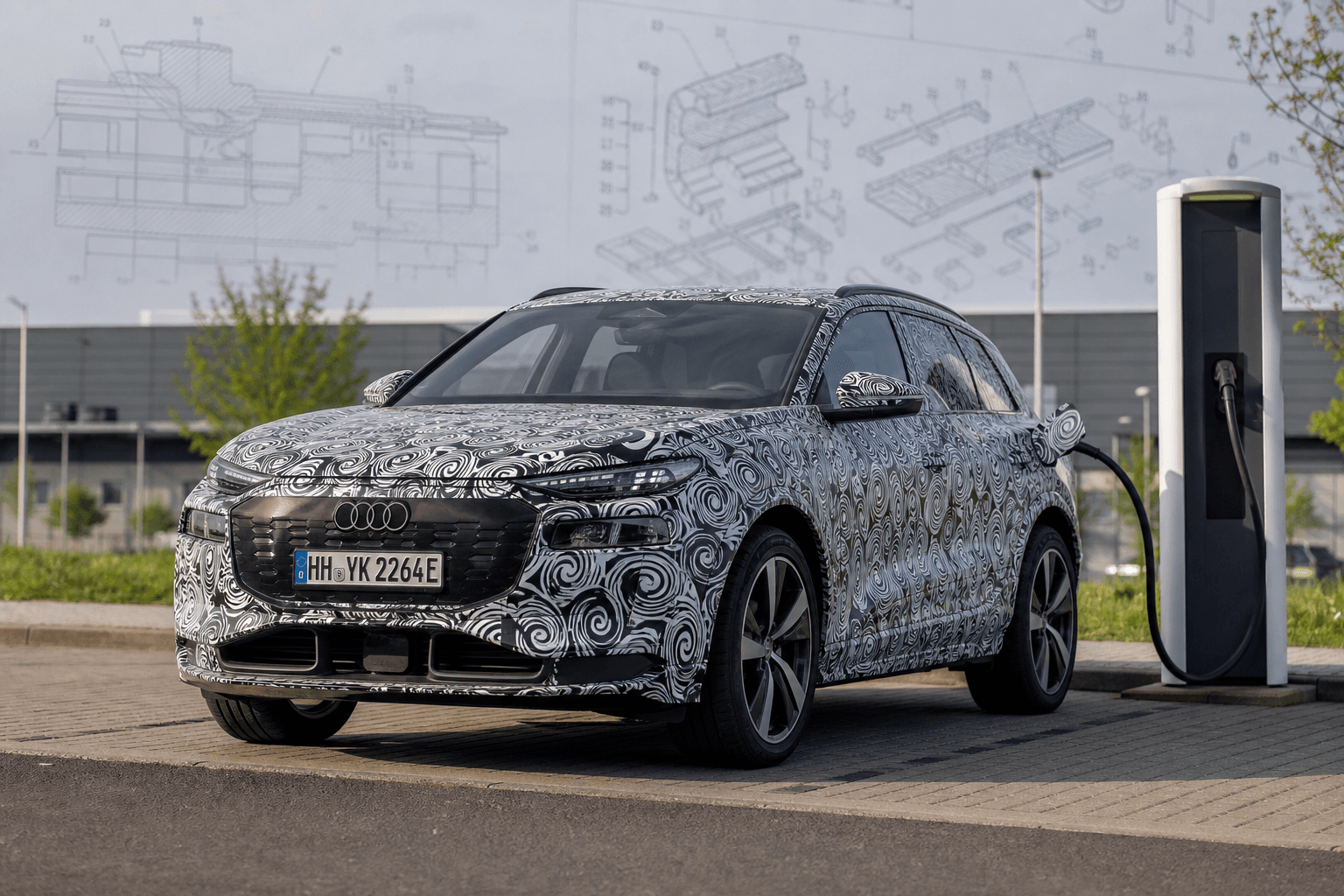
Range extenders have so far remained relatively niche in Europe, but they are a genuine volume segment in China. The reason is simple: Many buyers want long range and quick “refueling” stops without being entirely dependent on charging infrastructure. Audi has now filed a patent that combines this idea with Quattro all-wheel drive.
Importantly, a patent is initially a collection of possible options, not a promise of a production model. Nevertheless, it indicates the direction Audi is considering for electrified powertrains, particularly with an eye to markets where EREV concepts (electric vehicles with range extenders) are currently in strong demand.
How the Powertrain Is Intended to Work: Electric, Hybrid, and Variable
According to the patent application, the vehicle would normally operate with only one electrically driven axle. When more traction or power is needed, the second axle would also engage, using its own drive unit. In addition, an internal combustion engine could supply electricity to the battery when required.
The interesting part is that Audi describes a solution in which the second electric motor would not only propel the vehicle but could also generate electrical energy for the battery when needed. The second electric motor would therefore perform two roles, depending on the driving situation.
Highway Scenario: The Combustion Engine Could Also Drive the Vehicle Directly
Another option in the patent is even more unusual: The internal combustion engine would not operate solely as an electricity generator but could also propel the vehicle under certain conditions, such as when cruising at a consistently high speed on the highway. This is clearly aimed at efficiency at an operating point where combustion engines have traditionally performed well.
In practice, this would be a system capable of switching between several modes, depending on whether efficiency, traction, or performance is the priority. Battery empty → range extender stabilizes the power supply, battery full → more electric driving, sustained high-speed driving → direct combustion-engine operation if appropriate.
Why It Is Technically Challenging
All-wheel drive, two electric motors, and a combustion engine that performs different tasks depending on the situation: Managing all of this is technically demanding. That is precisely where the patent comes in, as the control system must decide when each energy pathway makes sense without compromising the driving experience.
Audi also appears to be deliberately seeking to avoid a conventional “generator-only” architecture in order to reduce the number of components. Instead, the functionality would be integrated more extensively into the existing powertrain.
The Potential Benefit: Less Hardware, Less Weight, Lower Costs
Ultimately, the idea appears to be about reducing the number of components, thereby lowering weight and production costs. If an electric motor can both propel the vehicle and function as a generator, it could eliminate separate components that would otherwise be required in a range-extender layout.
This could be particularly useful in everyday driving where large batteries become expensive and heavy: A smaller battery combined with a range extender could reduce range anxiety without scaling the battery up to its “maximum size.” If you are interested in the subject more generally, our guide to EV range anxiety is also worth reading.
What It Means for the DACH Region: Could This Really Come to Europe?
In Germany, Austria, and Switzerland—the German-speaking DACH region—battery-electric vehicles are becoming increasingly attractive thanks to dense fast-charging networks, company-car schemes, and greater predictability for long-distance travel. At the same time, manufacturers around the world are developing intermediate solutions because not every market and user profile can immediately shift to “100% BEV.”
EREV and range-extender concepts are particularly widespread in China, which also has an indirect influence on Europe. We can see this in models being considered for Europe, such as the off-road-focused Denza Bao 5 with a range extender.
What This Means for the EV Market, Including Tesla
Tesla remains firmly committed to fully electric vehicles and the combined advantages of efficiency, software, and its charging ecosystem. For many drivers in Europe, this is a highly compelling overall strategy, especially for those who regularly use fast chargers. Readers interested in the range and efficiency of conventional BEVs can also find an overview in our 2026 range ranking.
Audi’s patent shows, however, that some manufacturers want to keep their options open in parallel to appeal to customers who do a lot of highway driving or remain skeptical about charging. Whether Audi turns the concept into a production vehicle, and which market would receive it first, remains unclear. Nevertheless, the message is clear: Range is not being addressed solely through larger batteries, but also through smarter powertrain architectures.