New ID Names Hint at VW’s Export Plans
Volkswagen is currently expanding its electric vehicle lineup in China much faster and with greater variety than in many other markets. Models such as the ID. Unyx 08, ID. Unyx 09, and ID. Era 8X are initially aimed at Chinese customers, but could eventually also be offered outside the country.
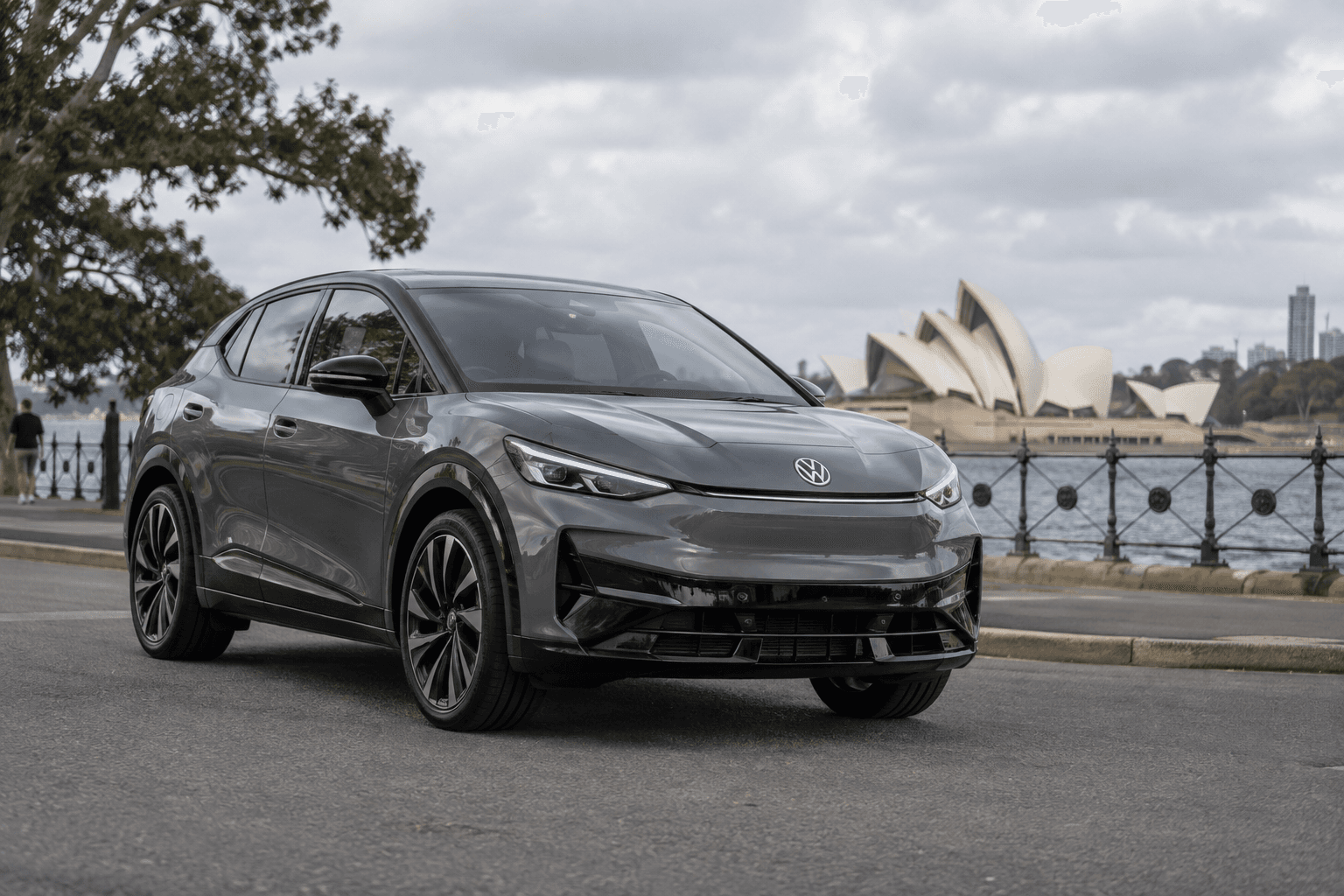
New trademark applications in Australia support this possibility. Volkswagen has registered the names ID7 X, ID8 X, and ID9 S there. The names could be intended for export versions of Chinese ID. models.
A trademark application is an important indication, but it confirms neither a market launch nor a vehicle’s technical underpinnings.
Which Chinese Models Could Be Behind the Names
The numbering suggests a connection to the ID. Unyx family. However, Volkswagen has not yet officially confirmed the associations, so the potential links between the models remain speculative for now.
| Registered name | Potential Chinese basis | Status |
|---|---|---|
| ID7 X | ID. Unyx 07 | Not confirmed |
| ID8 X | ID. Unyx 08 | Not confirmed |
| ID9 S | ID. Unyx 09 | Not confirmed |
The VW ID. Unyx 08 is particularly interesting. The model developed in China demonstrates how quickly Volkswagen can respond there to new competitors, pricing pressure, and shorter product cycles.
The VW ID. Unyx 09 is also part of this model offensive, which is more closely tailored to the Chinese market. The Volkswagen Anhui joint venture is involved in its development, with the partnership with Xpeng playing an important role in providing access to modern vehicle architecture.
Australia Would Be a Plausible First Export Market
Australia is an interesting test market for Volkswagen because Chinese manufacturers are already expanding strongly there. At the same time, the range of electric vehicles has grown, while the regulatory framework can be less complex than in the European Union.
Nevertheless, registering the names does not mean that production-ready vehicles are about to enter the market. Australia would require right-hand drive, regulatory approval, software adaptations, and a suitable sales model, among other things.
Chinese Technology Could Close VW’s 800-Volt Gap
The greater strategic appeal lies in the technology. Volkswagen is using modern electric platforms with 800-volt architecture for its new Chinese model lines and is also developing range-extender solutions for certain segments.
A higher system voltage can enable high charging power at lower currents. This reduces heat losses and facilitates short charging stops, but requires a suitably designed battery, power electronics, and charging infrastructure. Our comparison explains the differences between 800 volts and 400 volts in electric vehicles in detail.
For VW’s high-volume European models, the next major platform generation featuring this technology is likely still several years away. The SSP software-defined vehicle platform is currently not expected until near the end of the decade. Exporting Chinese models or adapting their technology for other regions could bridge that gap.
A European Launch Would Be Considerably More Challenging
For Germany, Austria, and Switzerland, imports would be technically appealing but economically complex. Homologation, cybersecurity requirements, spare-parts supply, and European software localization would create additional work.
Moreover, an electric vehicle built in China would not automatically be competitive on price. Transport costs and potential trade tariffs could reduce the cost advantage. Alternatively, Volkswagen could adopt individual platforms or technology components without bringing the Chinese models to Europe unchanged.
What the Trademark Rights Really Mean
Above all, the registered names show that Volkswagen is keeping its export options open. No specific launch date, prices, or confirmed destination countries have yet been announced.
Strategically, the move would make sense: For Volkswagen, China is increasingly evolving from a market focused purely on sales into a technology hub. If this results in an export program, Australia could be the starting point, while Europe would likely follow only after a thorough technical and economic assessment.