Volvo Turns the Plug-in Hybrid Into a Part-Time EV
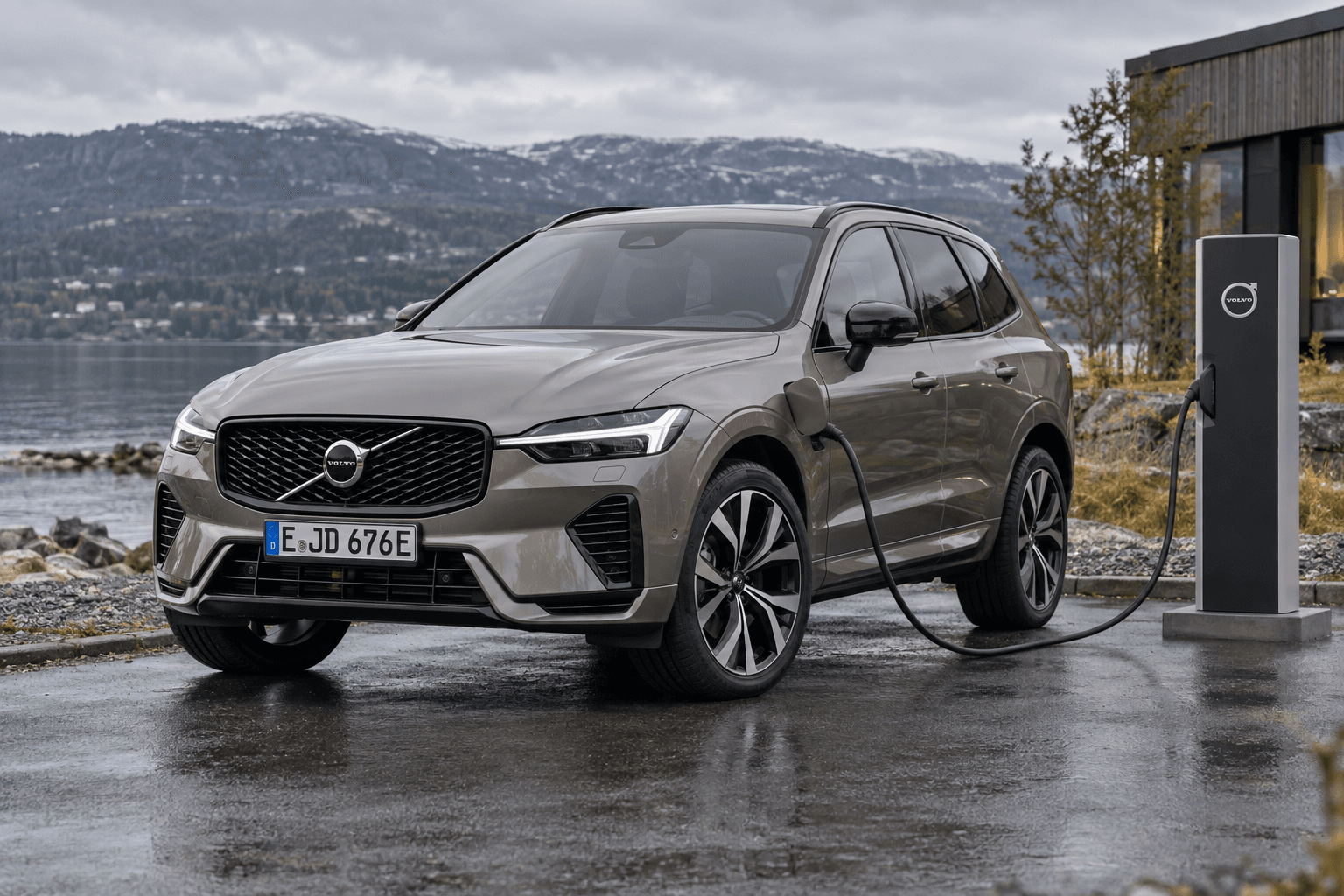
Volvo is significantly expanding the electric capabilities of its plug-in hybrids. According to the manufacturer, the 2027 model-year XC60 will be able to travel up to 200 km on electric power alone, while the larger XC90 will offer up to 163 km.
This gives both SUVs more than two and a half times the electric range of their previous plug-in hybrid versions. In everyday use, that could make a crucial difference: drivers who regularly charge at home or at work could go for many weeks without using the gasoline engine.
With 200 km of electric range, the XC60 is closer to an electric car with a gasoline backup than to a conventional plug-in hybrid.
41.2 kWh Battery Instead of the Previous 18.8 kWh
The increased range is made possible by a battery with a capacity of 41.2 kWh. The previous battery had a capacity of 18.8 kWh. This makes the new battery larger than the energy storage systems in some small electric cars.
The electric motor is also more powerful. Its output increases from 115 to 130 kW. The gasoline engine remains on board as a second power source and takes over when more power is required or the battery is largely depleted.
| Specification | Volvo XC60 Plug-in Hybrid | Volvo XC90 Plug-in Hybrid |
|---|---|---|
| Model year | 2027 | 2027 |
| Battery capacity | 41.2 kWh | 41.2 kWh |
| Electric motor output | 130 kW | 130 kW |
| Electric range | up to 200 km | up to 163 km |
| Starting price in Germany | €69,990 | not yet announced |
It is no surprise that the XC90 cannot travel as far despite having the same battery capacity. The larger vehicle has to move more weight and has a greater frontal area. Prices and equipment specifications for Austria and Switzerland may differ from the German figures.
200 km Changes How a PHEV Can Be Used
In existing plug-in hybrids, one battery charge is often enough for commuting and shorter errands. On paper, however, the new XC60 can also cover longer daily journeys on electric power. Full battery → the gasoline engine could remain unused for extended periods during normal commuting.
This requires consistent charging. A large battery alone does not reduce fuel consumption or CO2 emissions if the vehicle is driven mainly with an empty battery. Information about charging power and the resulting charging time is therefore particularly important, but Volvo has not yet provided specific details.
What Supports the Concept
- Many everyday journeys can be completed without local emissions.
- The gasoline engine reduces the planning pressure associated with long vacation trips.
- The more powerful electric motor should make it possible to drive solely on electric power more often.
Where the Drawbacks Remain
- Two complete powertrains increase weight and technical complexity.
- Without regular charging, the concept loses much of its efficiency advantage.
- The large battery must be factored into both the purchase price and resource requirements.
Positioned Between Lynk & Co and Electric Volvos
One of the few plug-in hybrids with a similarly large battery is the Lynk & Co 08, with a gross capacity of 39.6 kWh. Their technical similarities are fundamentally plausible because Volvo and Lynk & Co both belong to the Geely Group. However, that does not make the two SUVs directly related sister models.
Compared with plug-in hybrids from German manufacturers, Volvo makes a clear statement in terms of electric range. According to their manufacturers, the VW Golf eHybrid and Audi A3 Sportback TFSI e offer a maximum of 142 to 143 km, putting them well behind.
At the same time, Volvo remains committed to fully electric vehicles. The compact Volvo EX30 already demonstrates that the brand offers pure electric cars in other price and vehicle segments. The XC60 plug-in hybrid is therefore not intended to signal a retreat from EVs, but rather to appeal to customers who are not yet ready to switch completely.
Real-World CO2 Footprint Depends on Charging
Plug-in hybrids are under regulatory scrutiny because their real-world emissions depend heavily on charging behavior. An EU analysis of around 320,000 vehicles found that average real-world CO2 emissions were approximately 3.5 times higher than the type-approval values at the time.
The EU has therefore adjusted the so-called utility factor. Put simply, this factor describes the proportion of total mileage driven on electric power. A further tightening is planned for 2027, although it remains the subject of political debate.
This is precisely where the XC60’s larger battery could help. A realistically usable electric range of up to 200 km increases the likelihood that owners will actually drive a large proportion of their journeys on electric power. Those who can rarely charge, by contrast, may find that a fully electric car or a more efficient hybrid is the more suitable solution. Our guide also examines the causes and strategies surrounding range anxiety in EVs.