The future of Volvo estates has yet to be decided
For many drivers, Volvo and estate cars are inseparable. Yet the range has now become limited: Following the end of V90 production, the V60 remains the brand’s last traditional estate model.
For now, the V60 is set to remain in the line-up as a mild hybrid and plug-in hybrid. How long that remains viable will depend primarily on demand, regulatory requirements and commercial sustainability.
A new Volvo estate has not been ruled out, but it needs a compelling business case.
Why Volvo is hesitant about a new estate
The main issue is the continuing shift among buyers towards SUVs. Volvo therefore needs to assess whether there are still enough customers outside this vehicle class to justify a dedicated estate programme.
Spacious estates continue to have a loyal following, particularly in the DACH region—Germany, Austria and Switzerland. However, emotional loyalty to the brand alone is not enough to justify developing a new model if the required global sales volumes cannot be achieved.
Arguments in favour
- Strong historical association between Volvo and the estate body style
- Practical cargo space in a lower body than an SUV
- Potential for better aerodynamics and lower energy consumption
Arguments against
- Strong global demand for SUVs and crossovers
- Additional development and production costs for a smaller target market
- Uncertain sales figures outside traditional estate-car markets
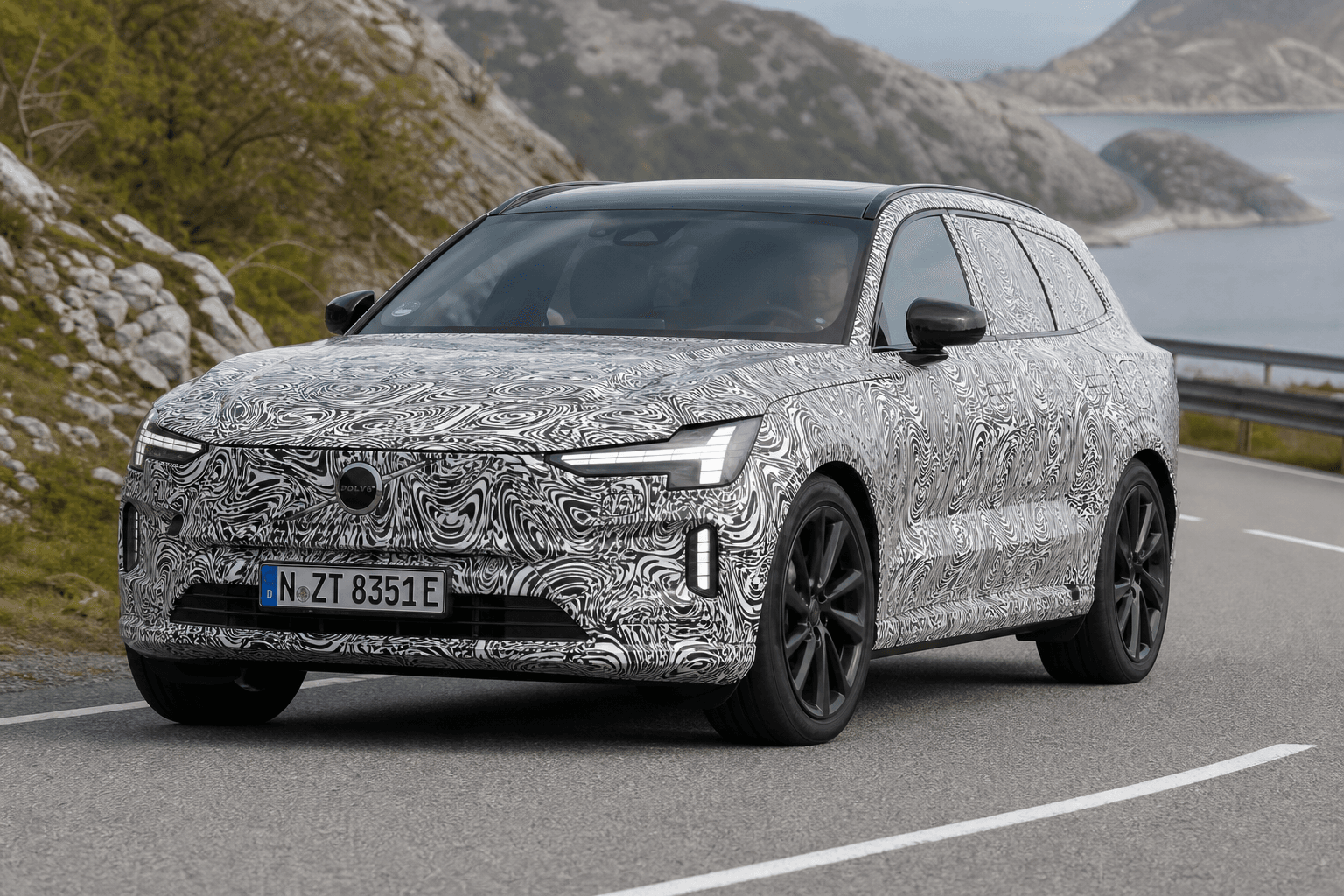
SPA3 could make an electric Volvo estate possible
From a technical perspective, Volvo is not restricted to tall SUV bodies. The new SPA3 architecture is designed to be flexible and support different types of vehicles, including lower models in principle.
The platform is expected to make its debut in the Volvo EX50 with SPA3 technology. It is then intended to provide the basis for further electric cars from the brand.
| SPA3 technology | Potential everyday benefit |
|---|---|
| 800-volt system | High charging power and shorter charging stops with a suitable battery and charging station |
| Cell-to-body integration | More efficient use of installation space and potentially more room in the cabin |
| Megacasting | Fewer individual parts, lower complexity and potential weight savings |
| Flexible vehicle proportions | Suitable for SUVs as well as lower body styles |
In particular, the 800-volt system compared with 400 volts would be of interest for an electric long-distance estate. A lower body can reduce aerodynamic drag, while fast charging improves long-distance usability.
No electric Volvo estate confirmed yet
However, technical feasibility does not amount to a model announcement. So far, Volvo has described an electric estate merely as an interesting option and has provided neither a timeline nor specific details.
SPA3 does at least lower the technical barriers: Flexible platform → greater freedom in body and interior design. Whether this actually leads to an electric successor in the tradition of the V60 or V90 will ultimately depend primarily on expected demand.
For estate-car enthusiasts, this is a cautiously positive sign. Volvo is not abandoning the body style altogether, but it only intends to develop a new model if the technology, costs and sales potential all align.